
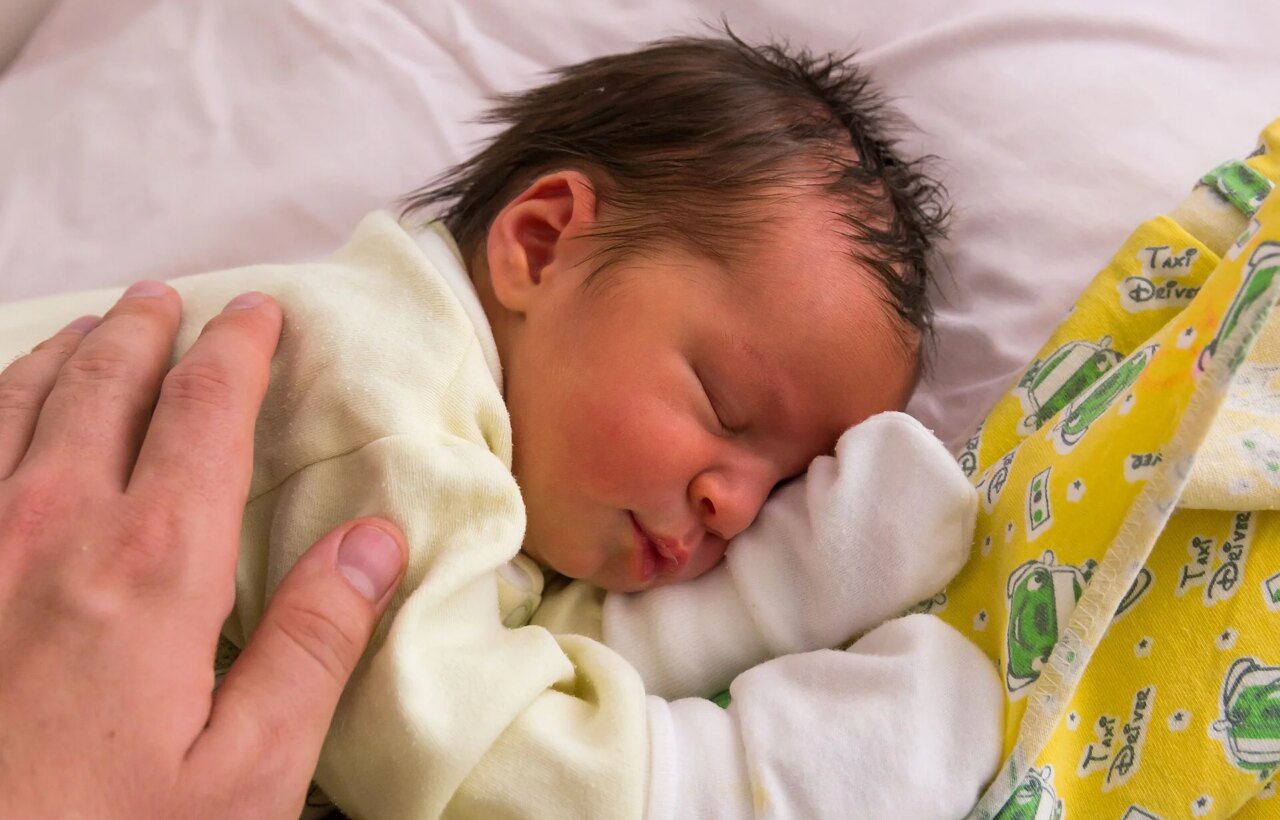
Small red or white bumps on a newborn’s cheeks can be unsettling, especially when they seem to appear almost overnight. Newton Hush describes baby acne as a common, usually harmless newborn skin issue that most often shows up on the face and fades without special treatment.
This guide explains what the source reports about why baby acne happens, what parents can do at home, and which signs are worth raising with a pediatrician.
Key takeaways
- Newton Hush reports that baby acne, also called neonatal acne, may affect an estimated 20 to 30 percent of newborns.
- It commonly appears as small red or white bumps on the cheeks, nose, forehead, or chin.
- The source links it mainly to hormone-related oil gland activity after birth, with naturally occurring skin yeast also discussed in clinical contexts.
- Most cases do not bother the baby and clear on their own without acne creams, scrubbing, or squeezing.
- A pediatrician should be contacted if the rash spreads, looks infected, seems uncomfortable, appears very early, or has not improved after three months.
What baby acne usually looks like
According to Newton Hush, baby acne is a temporary condition that tends to appear on the cheeks, nose, forehead, and chin. The bumps may be red or white, which can make them look more dramatic than they are, particularly on otherwise smooth newborn skin.
The most useful clue is how the baby is acting. The source notes that baby acne generally does not seem to bother newborns. If feeding, sleeping, and temperament are otherwise typical, the bumps are often more concerning to adults than to the baby.
Why it happens in the first place
Newton Hush points to hormones as the main explanation. In late pregnancy, maternal hormones cross the placenta. After birth, those hormones can still be circulating in the newborn’s system and may stimulate the skin’s oil glands. More oil can mean blocked pores, and blocked pores can show up as bumps.
The source also mentions Malassezia, a naturally occurring yeast on newborn skin, as a possible contributing factor discussed in research. For parents, the practical point is simpler: baby acne is not presented as a hygiene problem, a breastfeeding diet problem, or proof that something in the baby’s surroundings is wrong.
When it tends to appear and fade
Newton Hush says baby acne commonly appears between two and four weeks of age, though it may show up as early as the first week or as late as six weeks. It may also look worse for a period before it starts improving.
Most cases, according to the source, resolve within a few weeks. Some babies clear by about eight weeks, while others may have spots that linger for a few months. The source reports that baby acne almost always goes away completely without treatment or scarring.
Heat, friction from clothing or car seats, and contact with drool or spit-up can make irritated skin look temporarily angrier. That does not necessarily mean the condition has changed, but it is a reason to keep the area gently clean and dry.
What to do at home, and what to avoid
The least dramatic approach is usually the right one. Newton Hush recommends gentle care: wash the baby’s face with plain warm water once a day, pat the skin dry, and otherwise leave the bumps alone.
Several common adult skin-care instincts do not translate to newborn skin. The source specifically warns against scrubbing or exfoliating, using acne products with ingredients such as benzoyl peroxide, salicylic acid, or retinoids, applying lotions, creams, or oils to the bumps, and popping or squeezing them.

That guidance matters because newborn skin is delicate. Adding friction or strong products can irritate the skin barrier and may make the area look worse instead of better.
When it may be something else
Not every newborn rash is baby acne. Newton Hush distinguishes it from several other common skin issues: milia are tiny white bumps, often on the nose or cheeks; eczema is more likely to appear later and may look dry, scaly, or itchy; heat rash tends to show up in warm, sweaty areas; and cradle cap has a yellow, crusty texture, usually on the scalp but sometimes extending to the face.
A routine pediatric visit is often enough to identify a harmless rash. More urgent advice is reasonable if other symptoms are present or if the pattern does not fit typical baby acne.
Signs to discuss with a pediatrician
Newton Hush advises contacting a pediatrician if the bumps spread beyond the face to the neck, chest, or body; if the skin becomes swollen, warm, or appears infected; if the baby seems uncomfortable or scratches at the face; if the rash appears in the first two weeks of life; or if there is no improvement after three months.
The source also notes that acne appearing after six to eight weeks, sometimes called infantile acne, may be different from typical neonatal acne and can deserve a closer look.
For most newborns, baby acne is a short phase of early skin adjustment. Gentle cleaning, restraint with products, and a low threshold for asking a pediatrician when the signs do not fit are the most practical steps.
Inspired by this post on Newton Hush.