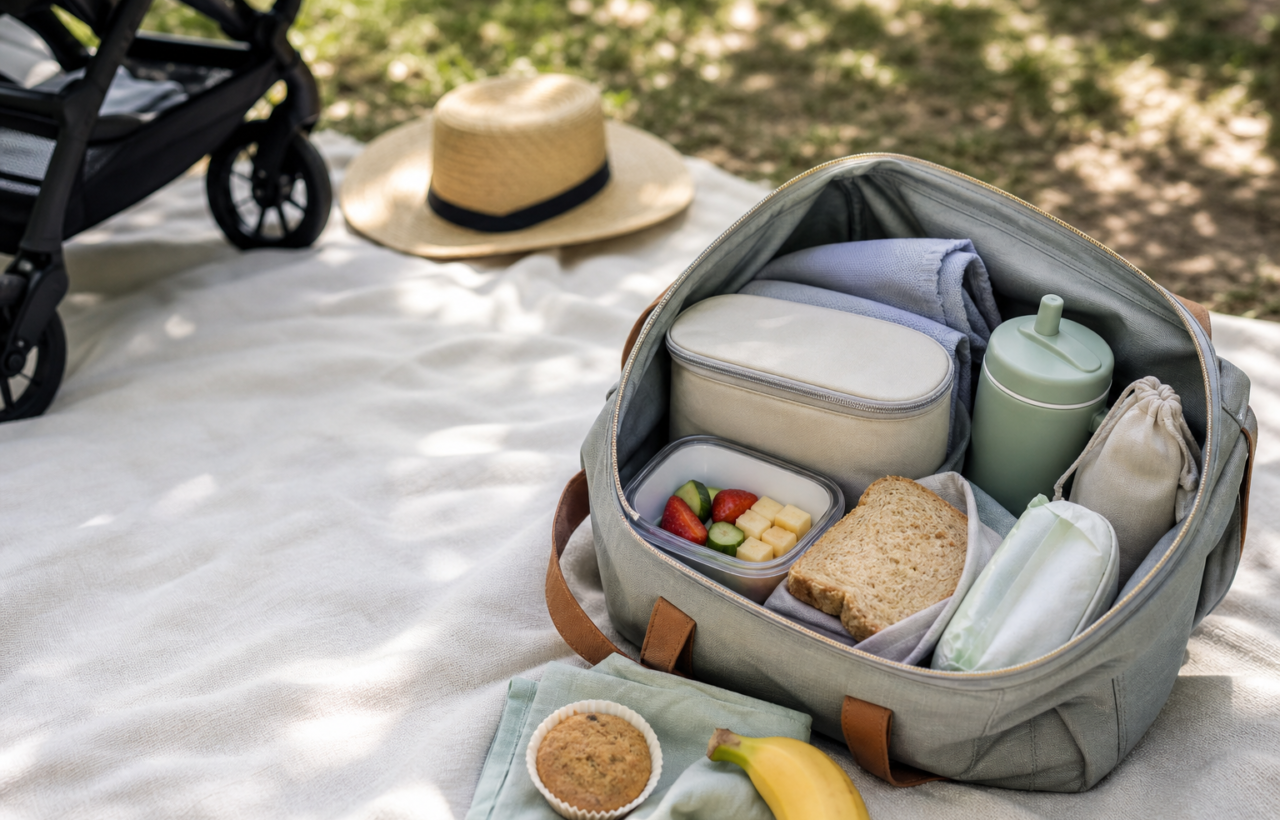
Your baby may not need a snack yet. Your toddler may need something familiar that they can eat safely. And you need enough food to avoid spending the afternoon hungry. Treating those as three separate needs makes a summer snack bag much easier to pack.
The goal is not to carry a miniature pantry. It is to bring the right food for your child’s current feeding stage, a substantial option for the caregiver, and just enough backup to handle a delayed trip home.
Key takeaways
- Pack the foods and textures your child already manages comfortably at home. A busy outdoor outing is not the time to test an unfamiliar food.
- Keep child food separate from caregiver snacks. Whole nuts, roasted beans, chewy candy, crunchy pretzel pieces, chips and adult protein bars are not automatically suitable for a baby or young toddler.
- If your child has not reached the snacking stage, bring the feeding supplies required for their usual routine rather than trying to adapt an adult snack.
- Without a cooler, choose products whose packaging says they can be stored at room temperature. A shaded bag does not replace refrigeration.
- Pack for the end of the snack as well as the beginning: include a wipe, a small rubbish bag and a way to close or contain unfinished food.
Start with the eater, not the snack aisle
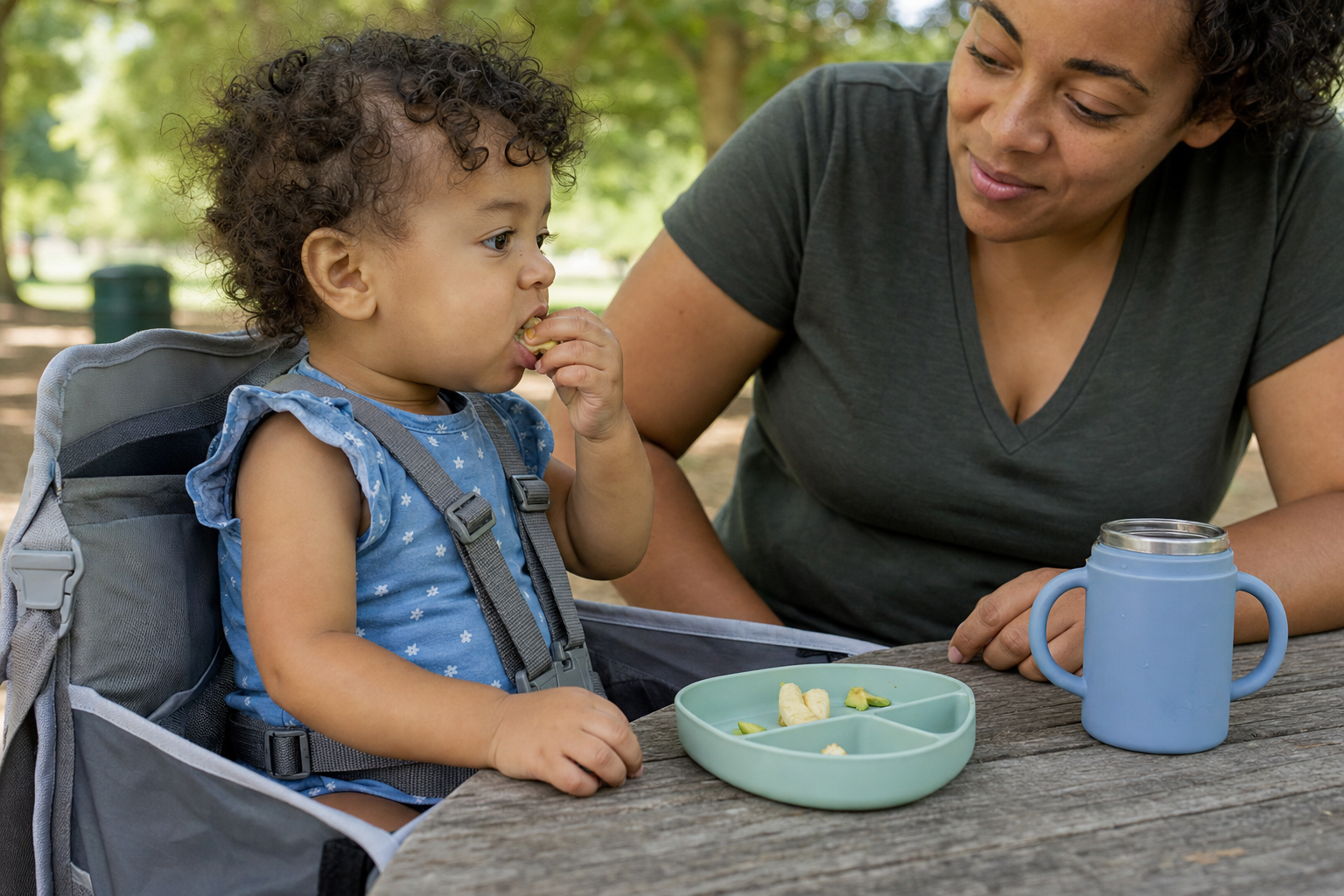
The span from birth to 36 months includes several very different feeding stages. A portable snack list that ignores those differences is not particularly useful. Begin with what your child can currently eat, then decide whether that food can travel.
If your baby is not eating snacks
Do not add a snack simply because the rest of the family is eating one. Pack the milk, feeding equipment and other supplies that belong to your baby’s established routine. If the outing overlaps a usual feed, plan around that feed rather than expecting a shelf-stable adult food to fill the gap.
This distinction also matters when packing drinks. A flavoured hydration packet can make water more appealing to an adult, but it should not be treated as a default baby or toddler drink. Bring whatever drink or feeding supplies are already appropriate for your child’s stage and individual plan.
If your child is eating solids
Use a food your child already eats successfully, prepared in the same safe shape and texture you use at home. Portability does not make a food developmentally appropriate. A package that fits neatly in the stroller may still contain pieces that are too hard, dense, sticky or chewy for your child.
Offer the snack while your child is seated, still and closely supervised. Do not let the convenience of a stroller tray or moving car turn eating into an unattended activity. If your child has a feeding plan, swallowing difficulty or food allergy, use the instructions you have been given for that child rather than a general outing checklist.
If an outing will cross your child’s usual mealtime, pack a familiar meal instead of trying to assemble one from several treats. More snack packages do not necessarily add up to the food your child normally relies on at that point in the day.
Divide the bag into child and caregiver zones
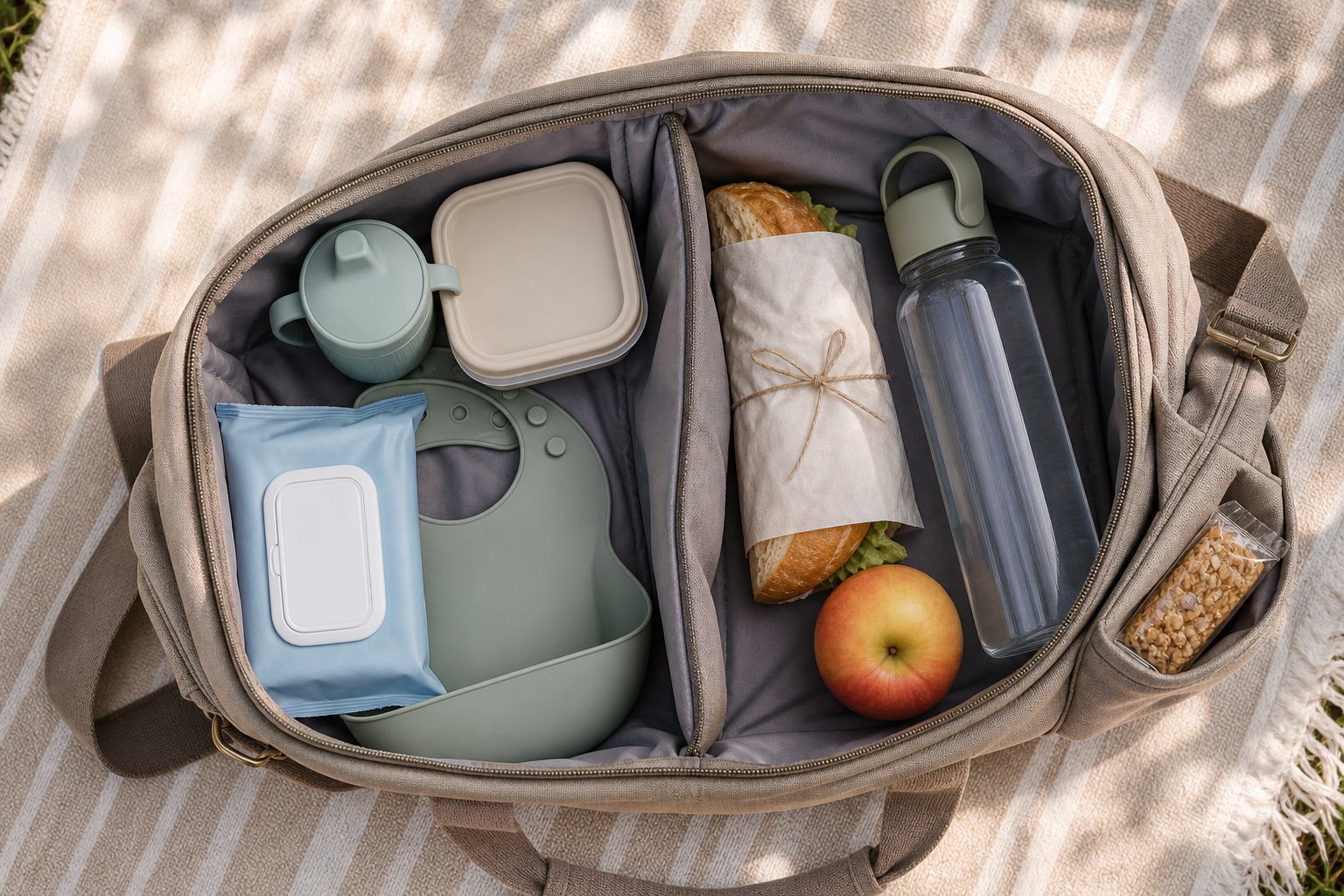
A single loose compartment makes it too easy to grab the wrong item while you are holding a baby, folding a stroller or managing wet hands. Use two pouches, two containers or two clearly defined pockets. The system matters more than the organizer.
The child zone
- The planned food: the familiar snack or meal you expect to serve.
- One practical backup: another familiar option for a delay, spill or sudden refusal.
- Normal feeding or drinking supplies: only what fits your child’s current routine.
- Serving equipment: the bib, spoon, cup or container you actually need.
- Cleanup supplies: a cloth or wipe and a small bag for rubbish or messy reusable items.
Portion the food before leaving when you can. That reduces the number of decisions you have to make with sandy hands and prevents the entire supply from being opened at once. It also lets you inspect the texture and piece size under good light at home.
The caregiver zone
Caregiver food can be more flexible. A practical shelf-stable lineup might include roasted edamame, pretzels, nuts, chips, gummies, a protein bar or a drink-mix packet. You do not need all of them. Choose one item that can carry you through a longer stretch and, if you want it, one smaller salty or sweet extra.
Keep whole nuts, roasted beans, chewy candy and other adult snack foods out of a young child’s reach. If your family manages a food allergy, choose caregiver food that will not introduce an avoidable cross-contact problem. Separation is useful only when the food stays in its assigned zone.
Give every packed item a specific job
Snack bags become bulky when foods are chosen by mood alone: something salty, something sweet, something sour, then another item in case nobody wants the first four. A shorter three-part structure is easier to maintain.
- Choose the anchor. For the caregiver, this is the more substantial item. Roasted edamame is described as high in protein and fibre, nuts as a source of plant-based protein, and a protein bar as a more filling choice for a long outdoor day. For the child, the anchor is simply the familiar food that fits their feeding stage and the outing’s place in their normal routine.
- Add an easy extra only when it helps. A small dry or packaged caregiver snack can cover a delayed departure or provide variety. For the child, the backup should solve a real problem, such as a spill or refusal, rather than duplicate everything already in the bag.
- Pack the appropriate drink or feed. Bring the caregiver’s water bottle and the child’s established drinking or feeding supplies as separate items. Adult drink mixes stay on the caregiver side unless a qualified clinician has advised their use for your child.
This structure also tells you what not to pack. A short walk that ends before the next usual snack may require only feeding essentials and a caregiver backup. A longer pool or park visit may justify the full set. Pack for the outing you are taking, not every outing that could possibly happen this summer.
Pack for heat, mess and the trip home
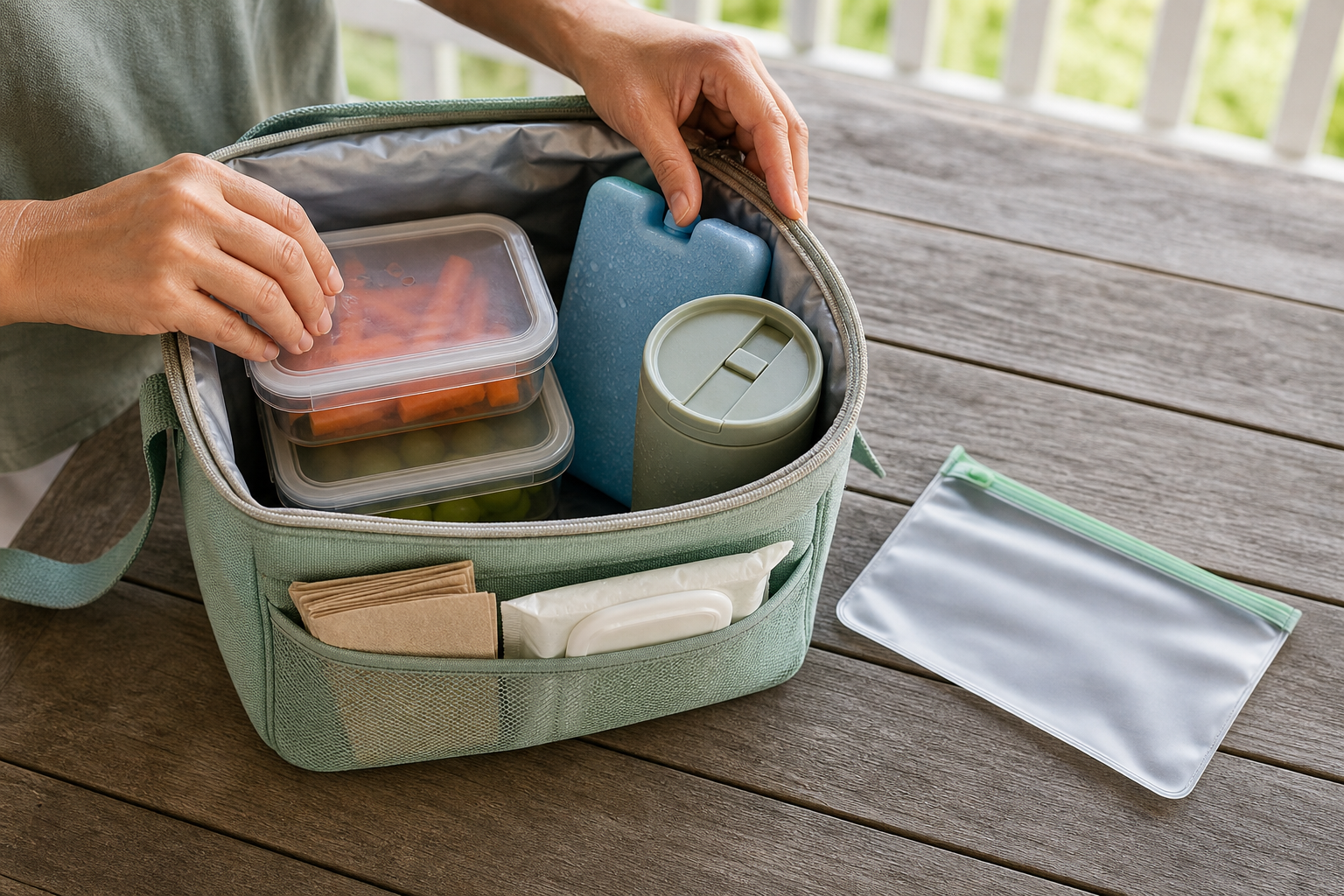
Room-temperature storage is a product instruction, not a guess. If the unopened package is labelled shelf-stable, it can be considered for the no-cooler side of the bag. If it requires refrigeration, use a properly chilled cooler and follow its storage directions, or choose something else. Keeping food in the shade may protect its texture, but it does not turn a perishable product into a shelf-stable one.
Heat resistance and child suitability are also different questions. Licorice and gummy candy may avoid the melting problem associated with chocolate, but their chewy texture still makes them caregiver food in a bag for children under 36 months. Pretzel pieces and seasoned snacks may travel well, yet they can leave enough residue that packing a wet wipe is part of the snack plan.
Before you zip the bag, run this short door-side check:
- Child’s planned familiar food
- One child-appropriate backup, if the outing warrants it
- Usual feeding or drinking supplies
- One substantial caregiver snack
- Caregiver water or preferred drink
- Required cooler and cold-storage supplies
- Wipe or cloth
- Small rubbish or wet-item bag
When you get home, remove rubbish, wash reusable items and replace the caregiver backup immediately. Then check the child’s pouch before the next trip, since its contents may change as feeding skills and routines change. A two-zone bag that is reset after each outing is far more useful than an oversized snack stash you have to reconsider from scratch at the door.