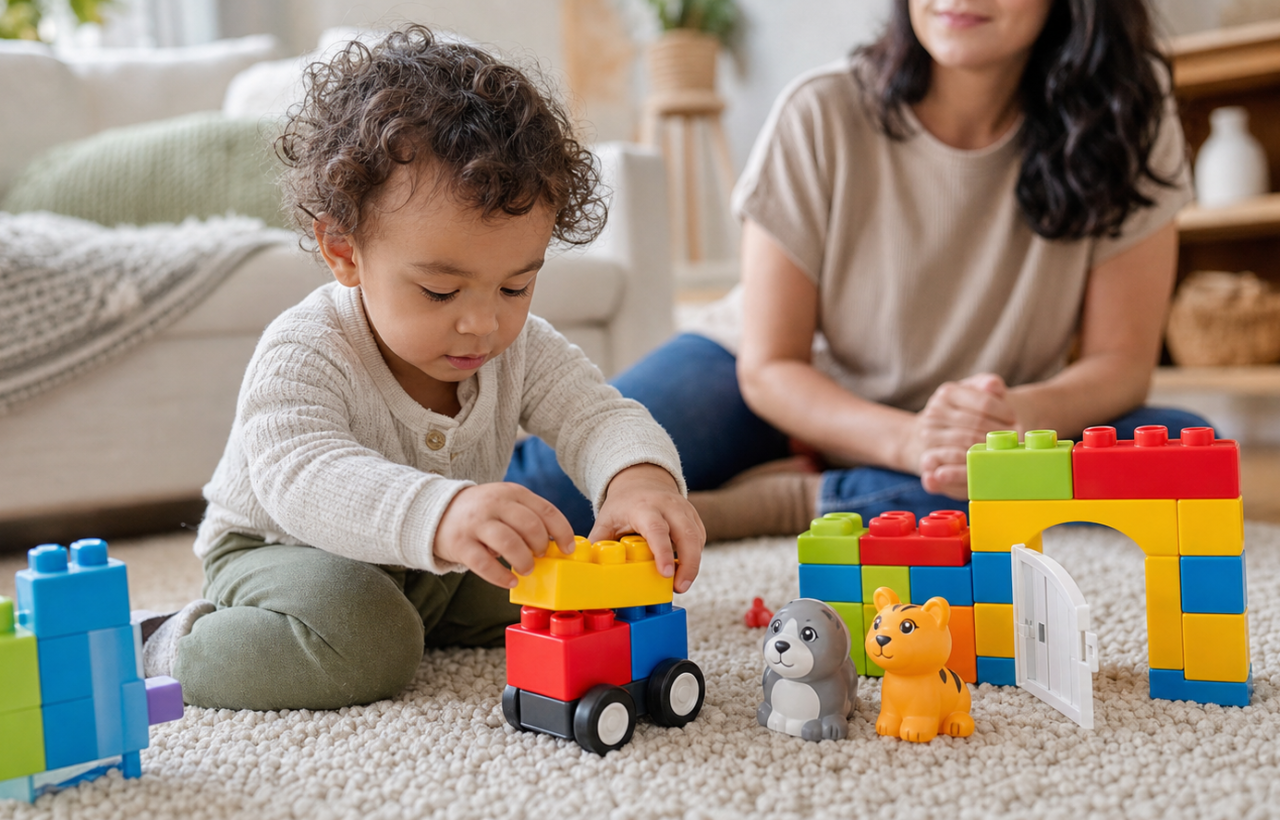
You are not really choosing between animals, vehicles, buildings or favourite characters. You are deciding what your child will be able to do after the excitement of opening the box has passed.
For a first set, the strongest choice is usually one that supports three kinds of play: joining and stacking pieces, making something move or change, and inventing a simple story. The DUPLO range stretches from basic block collections to superheroes, princesses and other themes, but the biggest-looking box is not necessarily the one that will earn a place in your child’s daily play.
Key takeaways for choosing a first DUPLO set
- Use the age label on the specific box as a safety gate, then use your child’s current play habits to choose among eligible sets.
- Start with ordinary bricks plus one or two engaging features, such as wheels, a door, an animal or a figure.
- Choose a theme your child already recognizes from daily life or genuinely enjoys. Do not buy for an interest you hope will appear later.
- Look past the total piece count. Ask how many different actions the pieces make possible.
- Plan storage before buying. A set that is easy to reach, play with and put away will be used more often.
- Keep standard LEGO pieces and other small toys out of a young child’s DUPLO bin.
Match the set to what your child does now
A birthday printed on your calendar does not tell you how your child plays. Two children at a similar stage may use the same set very differently: one may spend the whole session joining bricks, while another immediately gives every figure a name and a destination.
Begin with the age guidance and warnings on the box. If your child is younger than the labelled age, the right move is to wait, even if the pieces look large. Check the complete set rather than judging it by the main bricks; figures, accessories and interactive elements can have different shapes from the pieces pictured most prominently.
Once a set is age-appropriate, watch one ordinary play session before shopping. The following behaviours tell you more than a long feature list:
- Your child mainly grasps, carries, stacks and knocks down: choose a straightforward brick collection with easy-to-handle shapes and only a few special elements. A complicated scene gives the adult more to assemble but may not give the child more to do.
- Your child likes making objects move: look for a vehicle, wheels, a hinged element or pieces that can be loaded and unloaded. The useful feature is the repeatable action, not the realism of the finished model.
- Your child reenacts familiar routines: choose an everyday setting that can support feeding, sleeping, travelling, caring for an animal or going somewhere. Familiarity makes it easier to begin a story without an adult supplying the entire script.
- Your child repeatedly seeks a particular character: a licensed theme can provide an immediate reason to engage. Check that the box still contains enough reusable building pieces for play that is not dependent on that character.
- Your child gets upset when pieces will not connect as intended: favour a simpler build with several valid outcomes. Save elaborate models for a stage when following a sequence is part of the fun rather than a barrier to it.
The useful distinction is simple: the age label decides whether a set belongs in the play area; your child’s behaviour decides which suitable set belongs there.
Decide how much theme the set needs
Basic bricks offer the longest creative runway
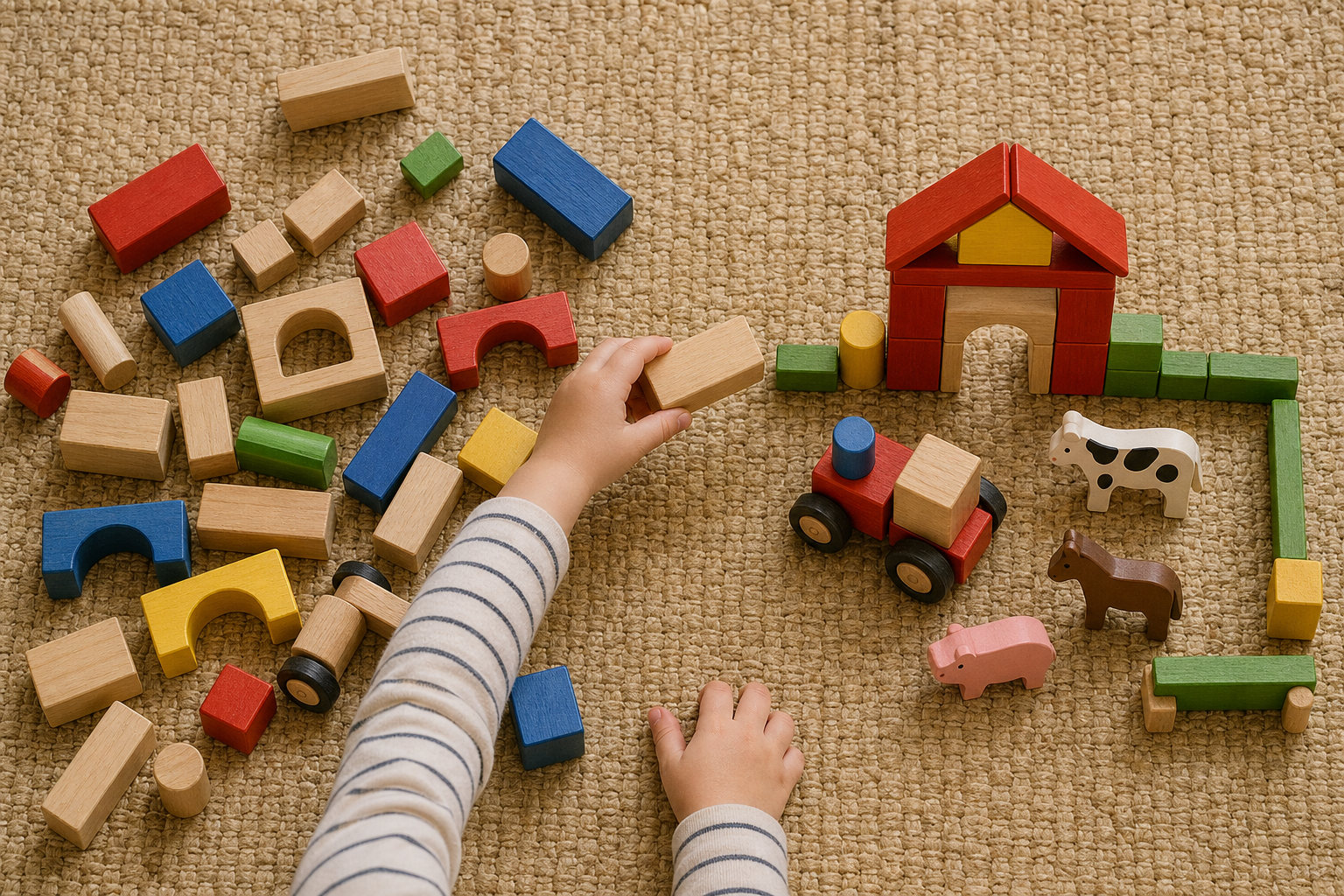
A collection built mostly from ordinary bricks can become a wall, tower, bed, enclosure, road marker or imaginary meal. It also combines easily with a later set. This is the safest starting point when your child enjoys construction itself or moves quickly between interests.
The trade-off is that a box of bricks may need a small invitation at first. You do not need to build an impressive model. Make a short wall, place an animal behind it or create a tiny bridge, then let your child change or dismantle it. That single purpose is often enough to start the play.
Everyday themes make pretend play easier to enter
A recognizable setting gives the pieces an obvious first job. A child can put someone to bed, drive somewhere, open a door, care for an animal or move an object from one place to another. These sets work well when your child already reenacts small parts of the day.
Look for a scene that can be rearranged rather than one that makes sense only when an adult completes the pictured model. Doors, windows, wheels, furniture, figures and animals tend to be more useful when they can move between several stories. A highly specialized decorative piece may look appealing in the box while contributing only one fixed idea.
Character sets work best when the interest already exists
A familiar character can turn hesitation into immediate play. It can also become the only piece your child wants, leaving the rest of the set untouched. Before buying, imagine removing the character from the box. If the remaining bricks still support building, movement and a simple story, the set has a better chance of staying useful after that particular interest fades.
For a gift, do not assume the adult’s nostalgia and the child’s interest are the same. Ask the parent what the child currently points to, talks about or reenacts. A modest set connected to a real interest is a more considered gift than a larger set chosen for brand recognition.
Use this six-point check before you buy
- Read the specific box. Confirm the age label, warnings and included elements. Do not assume that suitability carries over from a different DUPLO set.
- Name the first action. Complete the sentence, “My child can immediately…” with something concrete: stack, roll, open, load, match, feed, hide or build. If the answer depends on an adult completing the whole model, keep looking.
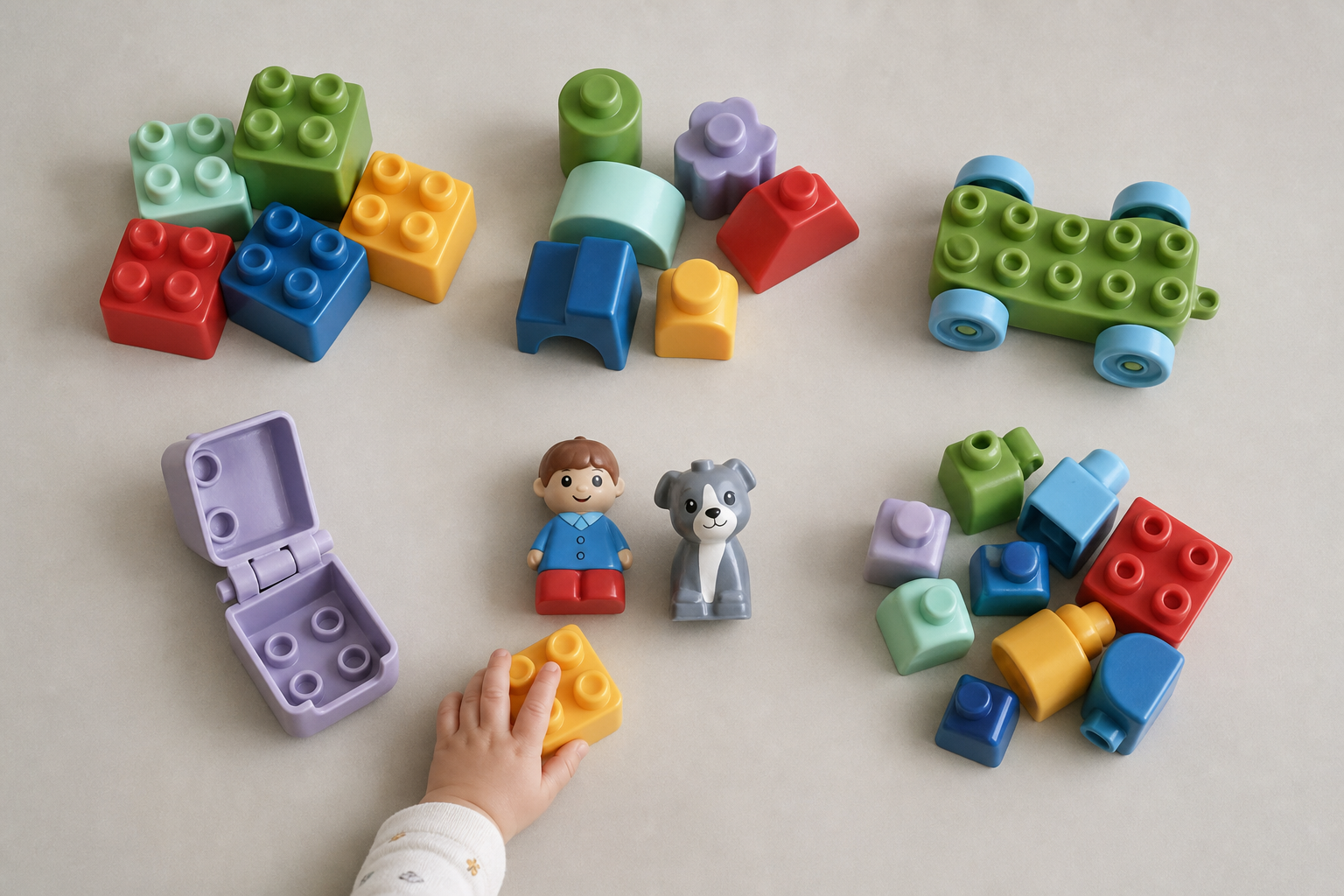
- Count uses, not just pieces. A brick that can become part of many structures may add more play than a large piece with one visual purpose. Figures and special elements are valuable when they create stories or actions, but ordinary bricks are what let the set change.
- Check for more than one path. A good young-child set should still work when the pictured model is taken apart. Mentally rearrange its major pieces into a second idea before you buy.
- Compare it with what is already at home. A new set is most useful when it adds a missing action, setting or character. Another vehicle may be perfect for a vehicle-focused child, but it should be an intentional choice rather than an accidental duplicate.
- Picture the cleanup. Decide where the set will live and whether your child can help return it there. If the only available home is an overfilled container or a high shelf, the set is likely to become an occasional adult-managed activity.
Price per piece is a weak shortcut here. Figures, wheels and large moulded elements can distort that comparison, while a box full of small variations may not create meaningfully different play. Compare the jobs a set can do: build, move, transform, sort and support a story. You do not need every job in one box, but you should be able to identify more than one.
If you are buying for another family, ask four practical questions: Do they already own DUPLO? Which themes does the child currently enjoy? Is there a younger sibling who shares the play space? Would the family prefer one compact set or an expansion for an existing collection? Those answers prevent most gift mismatches without spoiling the surprise.
Make the set easier to use after opening day
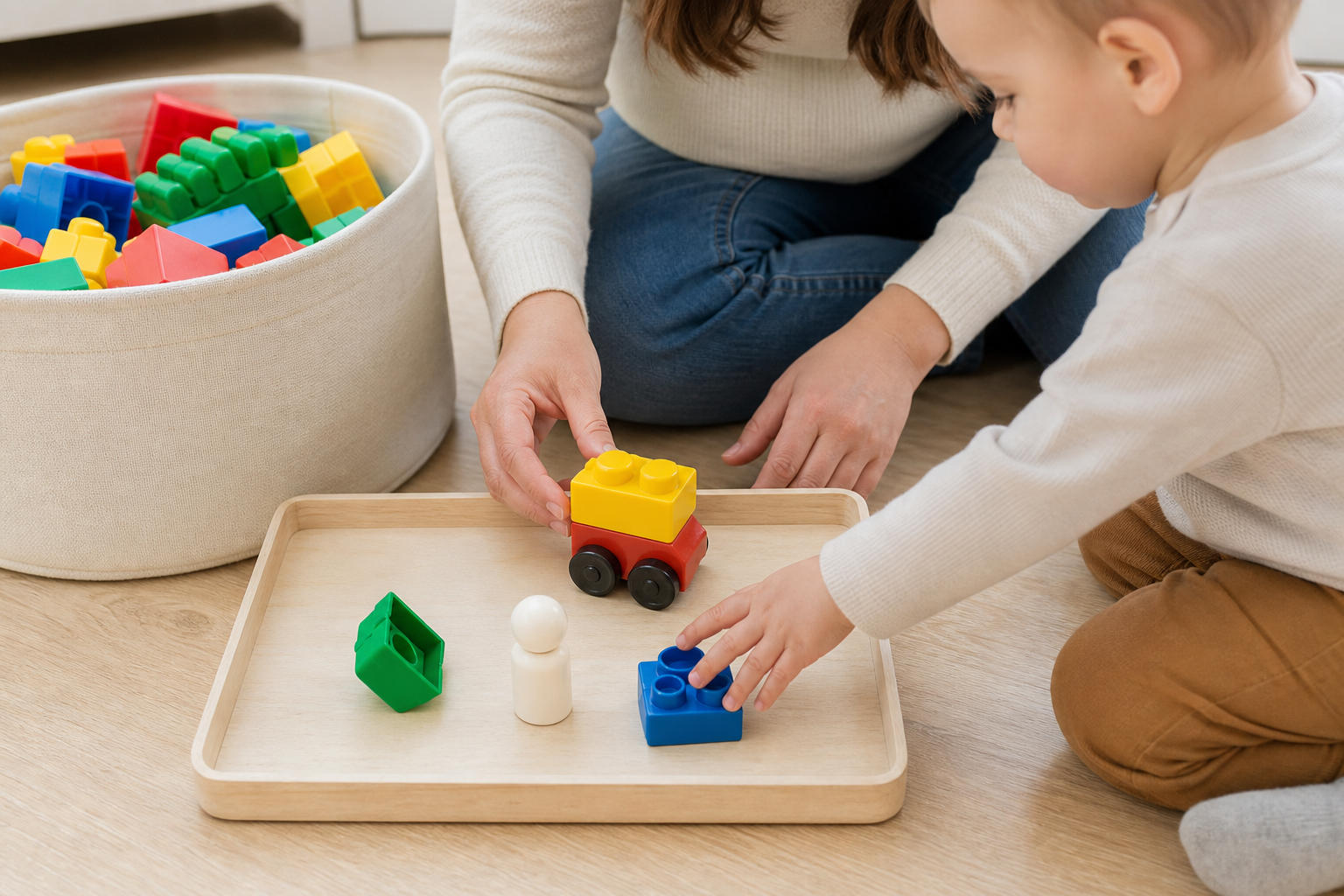
Do not let the instruction model become a museum piece. Build a small example if your child needs an entry point, then treat taking it apart as part of the activity. Young children do not need to preserve the adult’s work to use the toy correctly.
If a large pile leads to dumping and walking away, offer a shallow selection instead of the entire collection. Add more pieces when your child begins looking for something that is missing. This reduces visual clutter without turning play into a test.
Simple prompts can reveal whether a set has lasting range:
- Copy and change: make a tiny structure your child can copy, then invite one change. Use words such as “on top,” “under,” “beside,” “same” and “different” as they naturally fit.
- Build for a job: make a bed for a figure, a shelter for an animal, a garage for a vehicle or a bridge for something to cross.
- Deliver something: choose one piece as a parcel or snack and move it between two locations. This gives vehicles and figures a purpose without requiring a complicated plot.
- Replay a routine: act out getting ready, leaving home, eating or settling down. Let your child decide what happens next, even when the sequence is not realistic.
- Turn cleanup into the last activity: collect one colour, find all the wheels or return figures before bricks. Keep the request small enough that your child can participate.
Your role is to create an opening, not control the result. If the bridge becomes a bed or the roof becomes food, the set is doing exactly what an open-ended toy should do. Correct only what affects safety or causes the child to ask for help.
Store DUPLO so it stays playable and safe
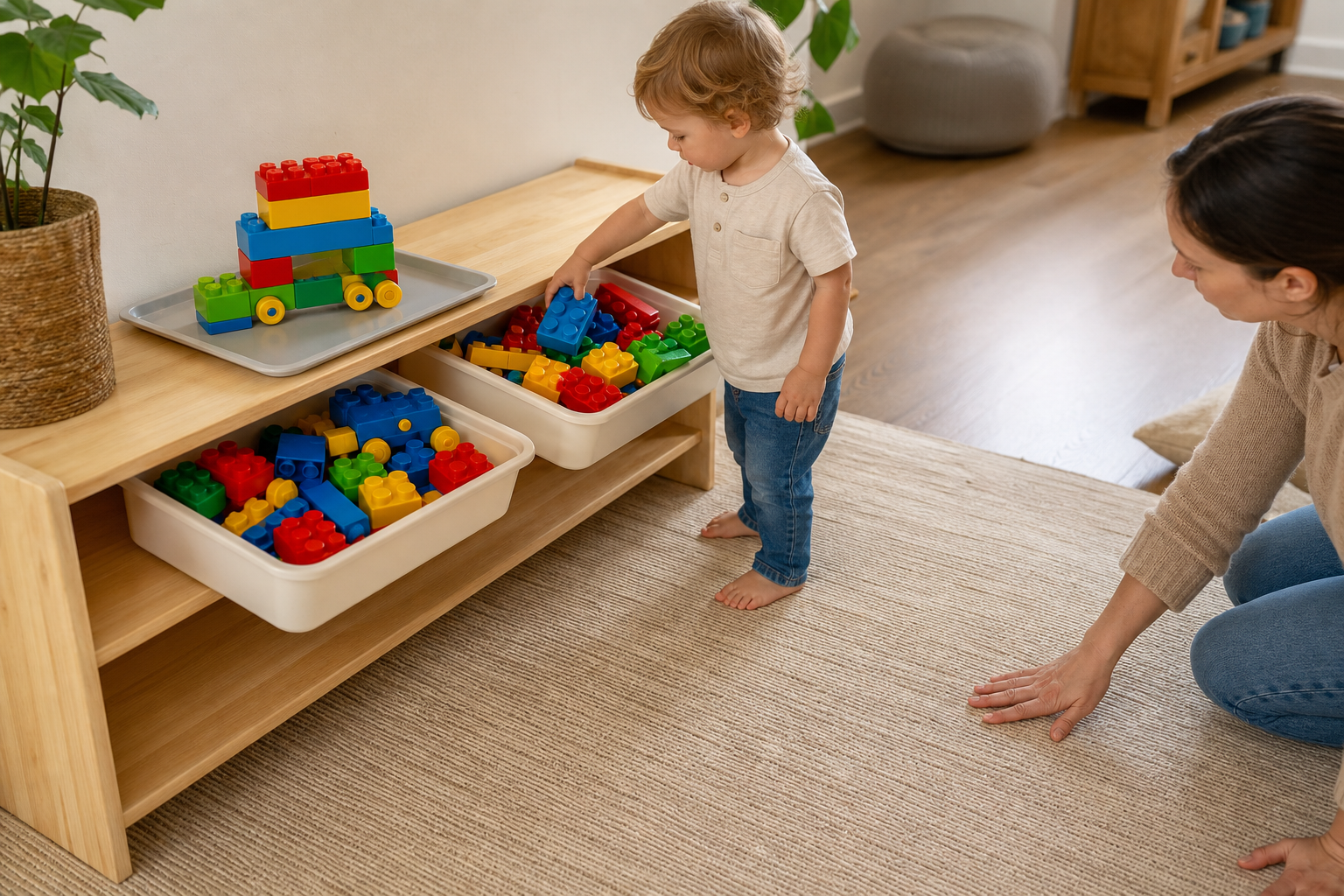
A shallow bin is usually more workable than a deep container because your child can see and reach pieces without emptying everything onto the floor. Keep the instruction booklet or a picture from the box nearby if rebuilding the original model might be enjoyable later, but do not sort every brick back into its original set unless that organization helps your family.
Keep standard LEGO elements, craft supplies, coins and older siblings’ small accessories in separate, inaccessible storage. A DUPLO bin can look like a safe zone to both children and adults, so one stray small object is easy to overlook. If a child still mouths toys, supervise closely and check the play area when pieces have been shared, carried between rooms or mixed with another child’s collection.
Inspect pieces during cleanup. Remove anything cracked, sharply damaged or no longer functioning as intended, and follow the manufacturer’s instructions for cleaning rather than improvising with high heat or harsh products. Storage should also allow pieces to dry fully before the container is closed.
Before you buy, choose the set you can picture your child using this week, not the one that might become appropriate eventually. Start with one clear action, one familiar point of interest and enough ordinary bricks to change the idea. Then watch what your child repeatedly reaches for; that behaviour will tell you what, if anything, the next set should add.
References