Maybe your baby rarely smiles for other people. Maybe your toddler spent the morning protesting everything, including the snack they requested. If you are wondering whether your child is happy, counting cheerful moments will give you a misleading answer.
For a child from birth to age 3, happiness is better understood as a pattern of safety, connection, curiosity and recovery. Look at what happens across ordinary days, including the difficult parts, rather than treating one expression or one hard afternoon as a verdict.
A happy child does not look happy all the time
A crying baby can be a generally content baby. A toddler who becomes furious about the wrong cup can still feel secure and joyful. Happiness is only one emotion, and being able to express a broad range of feelings in a supportive environment is more meaningful than maintaining a cheerful face.
Instead of asking, “Was my child upset today?” ask what surrounded the upset. Could your child express it? Was a trusted adult available? Did connection, interest or play eventually return? Recovery does not have to be fast, independent or tidy. Babies and young toddlers depend heavily on an adult’s calm presence to help them settle.
Constant smiling is not a better standard. Forced cheerfulness or unusually rigid compliance can sometimes conceal feelings, especially when a child believes that difficult emotions are unwelcome. You do not need to talk a child out of sadness to protect their happiness. You need to show that the relationship can hold sadness too.
Key takeaways
- Judge happiness from a pattern across ordinary days, not one smile, tantrum or photograph.
- Look for connection, spontaneous enjoyment, curiosity, growing independence and a return to engagement after distress.
- Compare your child with their own usual behavior, accounting for age, temperament, illness and changes in routine.
- Support happiness through responsive connection, open-ended play, emotional acceptance and predictable daily anchors.
- Discuss a lasting or marked change in play, connection, sleep, eating or activity with your child’s health-care provider.
Six signs that are useful from birth to age 3

No single behavior proves that a child is happy. What matters is whether several of these signs appear naturally, in forms that fit your child’s age and personality.
- Spontaneous enjoyment appears in everyday moments. Your child may smile, laugh, squeal, relax their body or become animated during a familiar game, a song, bath time or an ordinary interaction. The useful word is spontaneous. A smile produced after repeated prompting tells you less than enjoyment that emerges on its own.
- Your child seeks connection in their own way. Depending on age and temperament, this might look like turning toward your voice, reaching for you, leaning into contact, bringing you an object, checking that you are nearby or accepting comfort. Happy children often show interest in affection and connection, but that does not require enthusiastic cuddling or friendliness with everyone.
- Play and curiosity keep returning. A content child often studies, touches, repeats, experiments and explores. An older toddler may build, draw, tell a simple story or use an object imaginatively. Playfulness and curiosity can signal that a child feels safe enough to engage with the world. Focus on the depth of engagement, not whether the activity looks impressive.
- There is room for initiative. Reaching for an object, attempting a difficult action, communicating a preference and trying again are early forms of confidence. Your child does not have to complete the task. The willingness to investigate or attempt something can matter more than the result.
- Emotions can change shape. Distress may be intense, especially in toddlerhood, but it is not the child’s only state. With support, your child can eventually reconnect, notice something interesting, accept comfort or resume play. Resilience is part of overall well-being; it does not mean avoiding disappointment or recovering without help.
- Basic routines are reasonably steady for this child. Sleep, eating and activity naturally fluctuate, and disruptions can have many causes. Still, physical routines and emotional well-being are closely connected. A broad change across several areas deserves more attention than one skipped nap or rejected meal.
You do not need to find every sign every day. Some commonly discussed signs of childhood happiness, such as maintaining friendships, expressing gratitude or honouring commitments, are designed for older children. They are not fair tests for a baby or young toddler. At this age, watch for the foundations underneath them: interest in people, shared enjoyment, participation and growing trust.
Read the behavior in context before drawing a conclusion
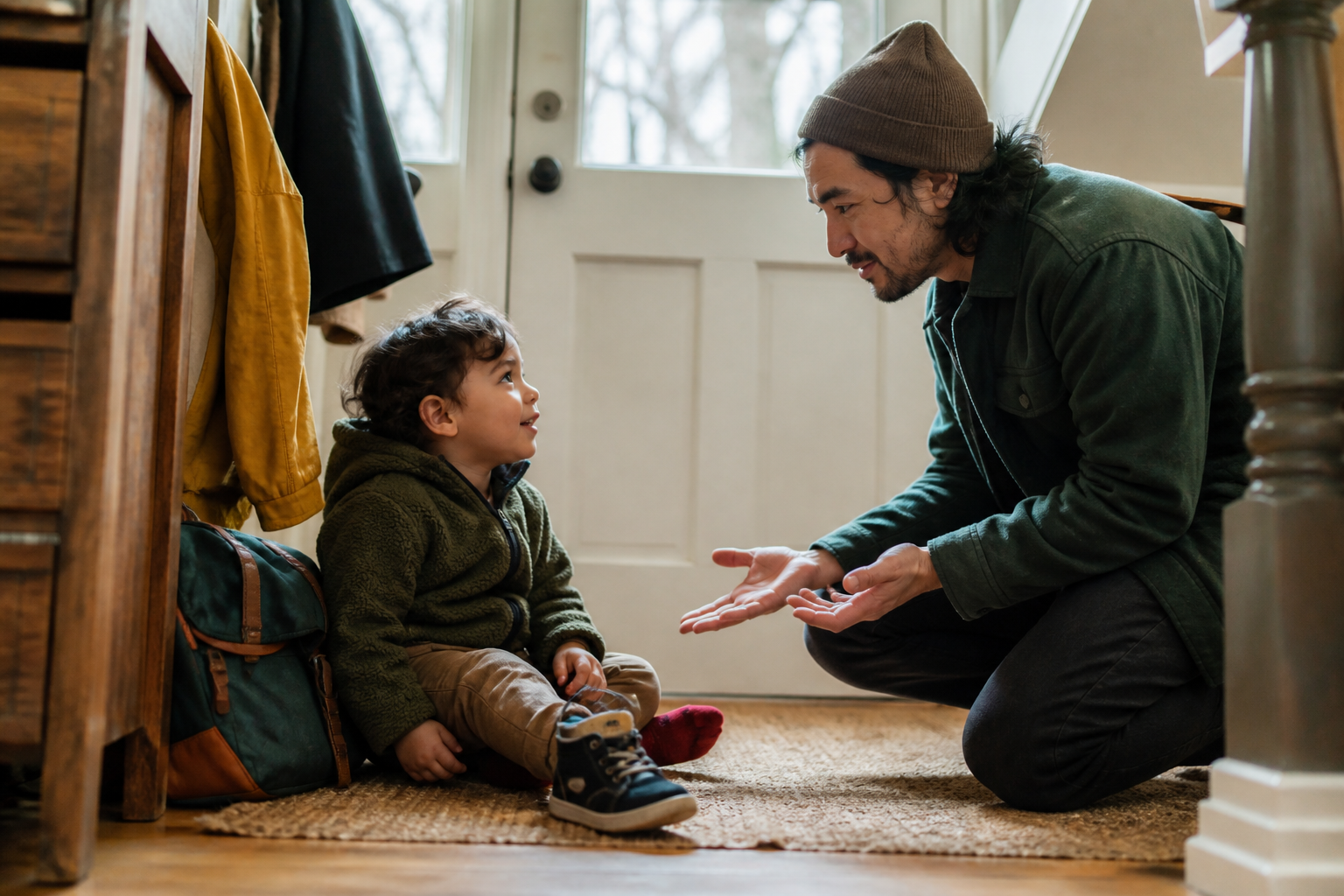
A serious-faced baby is not necessarily unhappy. A cautious toddler is not less content than the child who runs into every room. Temperament affects how visibly children express pleasure, how quickly they approach people and how much stimulation they enjoy.
Use these four questions when a behavior leaves you unsure:
- Did it happen spontaneously? Unprompted connection, laughter, exploration or affection is more informative than a performance requested by an adult.
- Is it part of a broader pattern? One withdrawn morning, difficult outing or restless night has limited meaning. Look across play, relationships, routines and different parts of the day.
- Does it fit this child’s age and temperament? A quieter expression can still be genuine. Evaluate the form your child’s engagement takes instead of expecting a particular social style.
- Is it different from this child’s baseline? A marked change in a usually curious, connected child tells you more than a comparison with a sibling, a playgroup peer or a short video online.
This approach also prevents two common misreadings. The first is assuming that an easy child must be a happy child. Cooperation can reflect comfort, but it can also reflect tiredness, caution or a reluctance to express a need. The second is assuming that loud protest means unhappiness. Protest may simply show that your toddler feels safe enough to communicate a strong preference while still needing help with the feeling.
Create the conditions for happiness instead of chasing smiles
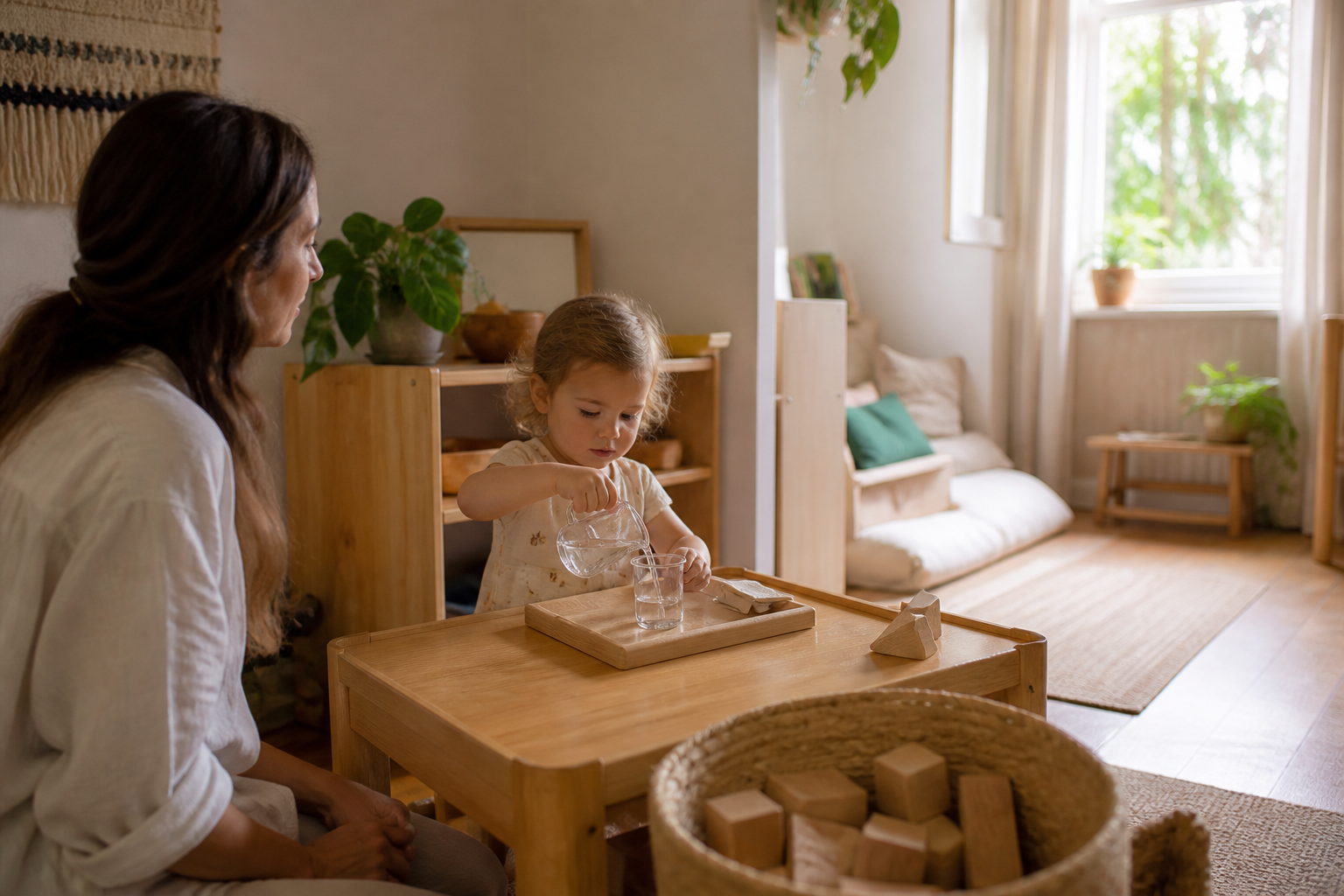
You cannot manufacture a particular mood, and you do not need to entertain your child continuously. Your job is to make connection, exploration and emotional expression safe enough to happen.
- Follow your child’s play for a while. Offer a few safe objects, wait to see what attracts attention, and then imitate or describe what your child does. This creates room for unstructured play and exploration without turning playtime into a lesson or test.
- Answer small bids for connection. When your child looks toward you, points, vocalizes or brings something over, respond with attention when you can. The exchange matters even when the object or sound seems ordinary to you.
- Accept the feeling while holding the limit. A simple response such as “You wanted to keep playing, and it is time to leave” recognizes disappointment without reversing a necessary boundary. Do not require an immediate smile to prove that the child is fine.
- Keep a few daily anchors predictable. Familiar patterns around waking, meals, rest, movement and bedtime can make the day easier to understand. Predictability should support family life, not become a rigid schedule that creates more stress.
- Invite age-appropriate participation. A toddler can choose between two suitable options, carry a diaper to the change area or place a spoon on the table. Small responsibilities can build competence and belonging without making affection or praise conditional on helping.
- Let your child see recovery. When you are mildly frustrated, describe a safe coping action in plain language: “I am frustrated, so I am slowing down.” Children learn that difficult feelings can pass without threatening the relationship.
A new toy or treat may create a burst of pleasure, but lasting happiness is more closely tied to relationships, security and a sense of meaningful connection. When you are tempted to fix every difficult mood with something new, try contact, rest, food, movement or a change of pace first. The goal is not to withhold enjoyable things. It is to avoid teaching that every uncomfortable feeling must be purchased away.
Know when a change deserves professional attention
This is not a diagnostic checklist. Teething, illness, disrupted sleep, travel, a new caregiver and changes at home can all affect behavior. Pay closer attention when a change is marked, lasts rather than passing, or appears across several areas at once.
Examples include a clear loss of interest in play or people, persistent withdrawal, or noticeable changes in sleep, eating and activity compared with your child’s usual pattern. None of these proves that your child is unhappy or has a mental-health or developmental condition. They are reasons to look more closely.
Write down what changed, when you first noticed it, where it happens, and what you see in connection, play, sleep, eating and activity. Include recent illness or changes in routine. Bring those observations to your child’s pediatrician or family doctor if the pattern persists, interferes with everyday functioning, accompanies a developmental concern or simply keeps worrying you. Seek urgent medical help for an immediate health or safety concern rather than using a happiness checklist.
For now, choose one ordinary part of tomorrow and watch without testing your child. Notice what draws their attention, how they invite you in and what helps them return after frustration. Those small, repeated exchanges will tell you far more than a perfectly timed smile.
References