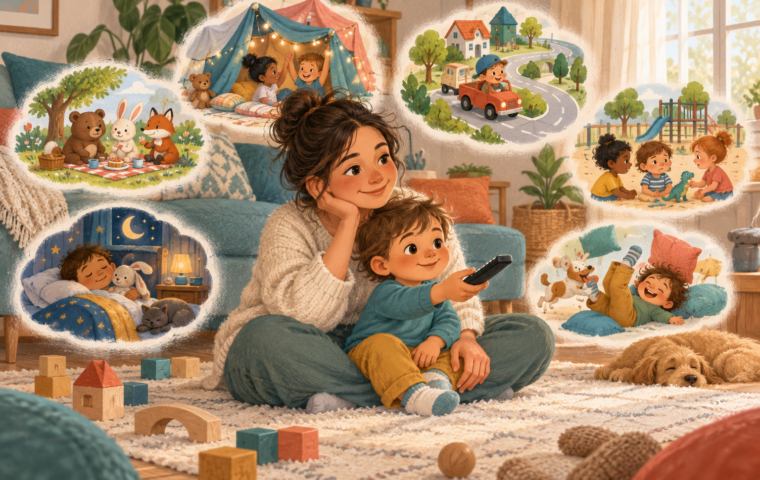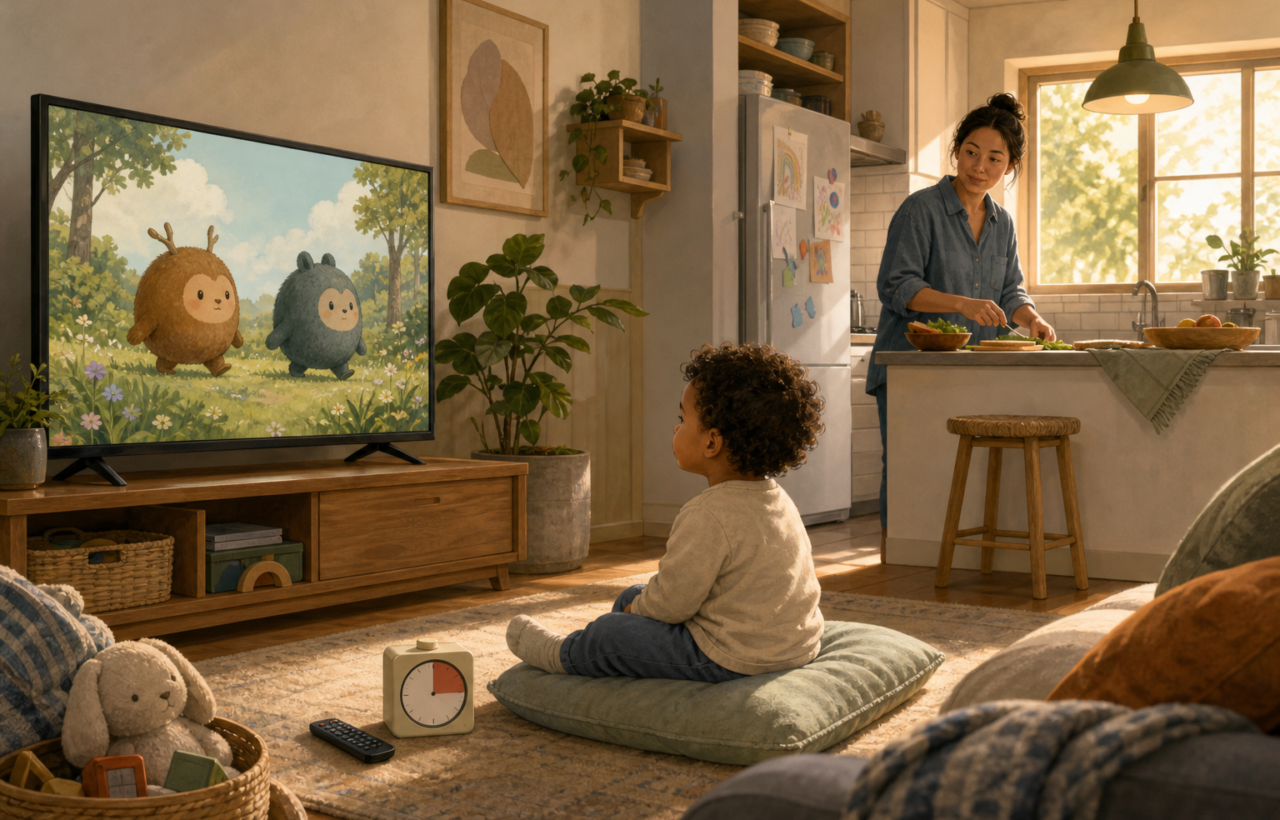
You press play because you need to make lunch, answer a message, or simply sit down for a moment. Your toddler is happily absorbed—until the episode ends and the next-video prompt turns a useful break into a difficult negotiation.
The useful question isn’t whether a show is universally “calm.” It is whether a particular episode works for your child, in your home, at that point in the day. This framework helps you judge that fit without treating every lively song as a problem or every favourite character as an automatic recommendation.
Define “calm” across the whole viewing experience
A calmer program doesn’t have to be dull. A toddler can laugh, sing, copy movements, call out a character’s name, and remain genuinely engaged. In fact, holding a toddler’s attention with less intensity is a more useful goal than eliminating music, colour, or excitement.
Judge the entire arc, not just how still your child becomes while the screen is on:
- Before: What state was your toddler already in? A difficult transition after a tiring morning doesn’t tell you the same thing as a difficult transition on an otherwise settled day.
- During: Are they enjoying the story, music, or characters, or does the stream of sound and movement seem to leave no breathing room?
- At the ending: Can you point out that the story is finishing and have that boundary register, even if your child would prefer more?
- After: Can they move into the next ordinary activity, or does the demand for more dominate the handoff?
Excitement during a favourite song isn’t, by itself, evidence that a show is a poor choice. Nor does a protest at the end prove that the content caused harm; toddlers also protest the end of playground visits and bath time. Look for a repeated pattern across ordinary viewings. The pattern is more informative than one unusually easy or unusually hard day.
Preview the sensory load, not the show’s reputation

Labels such as “educational,” “gentle,” or “popular” don’t tell you how an episode actually feels. Preview its opening, a section from the middle, and the ending. That gives you a quick view of the elements your toddler will encounter and, just as importantly, what will happen when the story stops.
Pay attention to these features:
- Pacing: Do scenes give the child a moment to understand what just happened, or does the focus change almost immediately?
- Sound: Can you clearly distinguish speech, music, and effects, or are several audio layers competing throughout?
- Visual competition: Is the important action easy to locate, or are characters, backgrounds, captions, and transitions all moving at once?
- Story clarity: Can you identify what the characters are doing and why? A simple, legible story gives you something concrete to talk about with your child.
- Emotional intensity: Does the episode repeatedly use peril, conflict, shouting, or urgent music, or does tension rise and resolve in a way your toddler can follow?
- Predictability: Repeated phrases, familiar structures, and recognizable endings can help a toddler understand where they are in the episode.
No single feature settles the decision. A quick musical sequence may work well when the rest of the episode is clear and predictable. A visually simple program may still be a poor fit if its sound or emotional tone unsettles your child. It is the combination—and your child’s response to it—that matters.
If you need possible titles to preview, use this selection of lower-intensity toddler entertainment as a shortlist rather than a verdict. You still need to check the specific episode, because a standalone story, a song compilation, and a continuous playlist can create very different viewing experiences.
Run a one-episode fit check in your own home
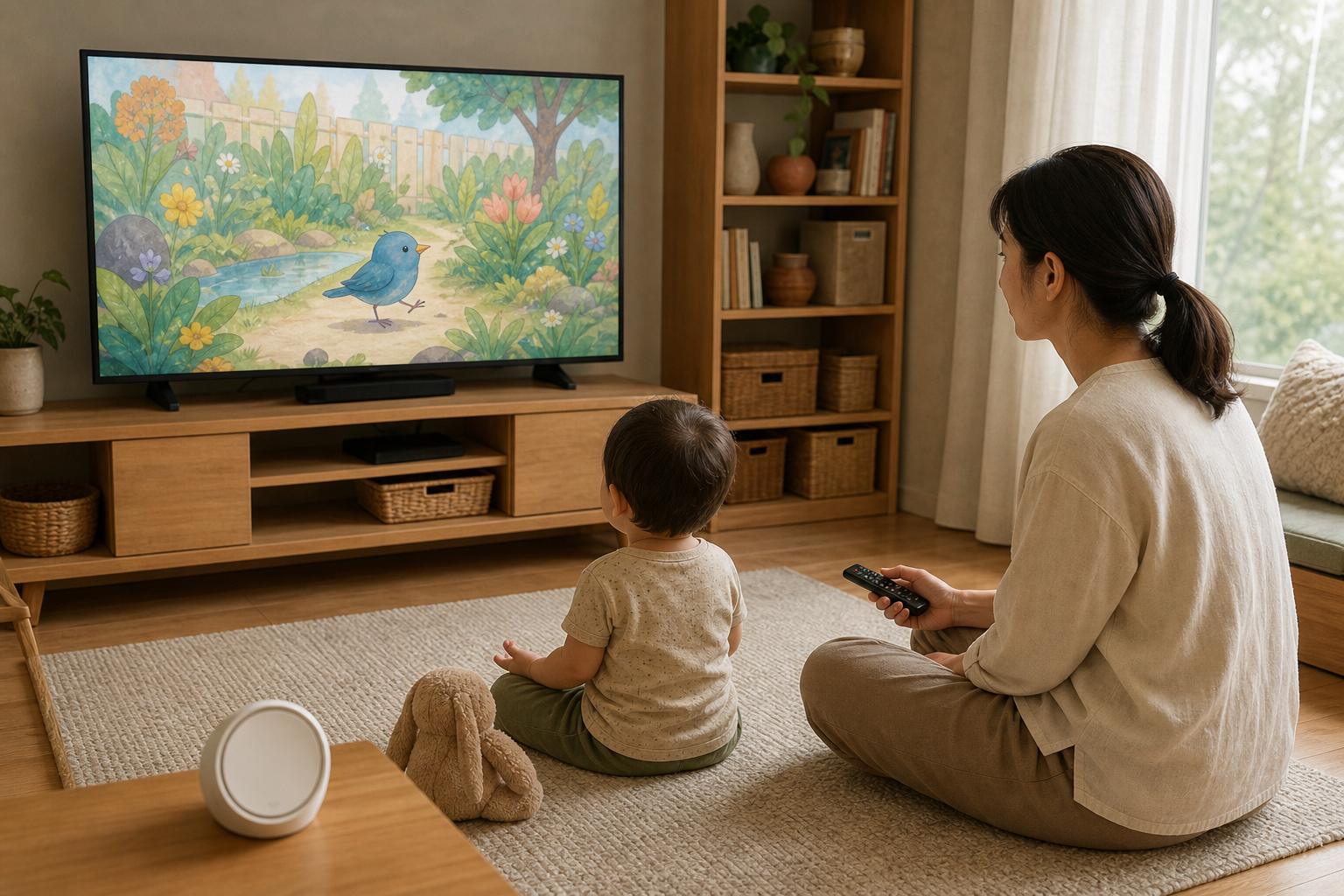
You don’t need a complicated screen log. A short, repeatable check will tell you more than a broad argument about whether a whole franchise is “good” or “bad.”
- Select a named episode. Avoid beginning with an endless feed or an open-ended compilation. You need a visible finish line.
- Choose the next activity before pressing play. It can be lunch, blocks, getting dressed, a bath, or going outside. The important part is that you aren’t inventing the transition after the credits begin.
- Stay nearby for the first viewing. You don’t have to quiz your toddler or turn entertainment into a lesson. Notice which parts hold their attention, prompt interaction, or cause discomfort.
- Observe the handoff. Give a simple warning as the story nears its natural end, then follow the plan you stated at the beginning.
- Classify the result. Keep the episode if the whole experience works. Adjust the container if the content is fine but autoplay or an unclear ending creates conflict. Skip it for now if the same unwanted response keeps appearing.
If the result is ambiguous, try the episode again under ordinary conditions before making a sweeping decision. A toddler who was already hungry, tired, or frustrated may have struggled with any transition. On the other hand, a consistently difficult pattern is useful information even when other families love the program.
Keep your notes plain: the episode, the situation before it started, what happened during it, and how the ending went. That is enough to separate a content problem from a boundary or timing problem.
Use familiar characters without handing over the queue
CoComelon is a common example of a program that attracts strong opinions. The show’s popularity doesn’t prove that every episode suits your child, but familiarity doesn’t make it unsuitable either. The decision still belongs at the level of your toddler, the episode, and the viewing setup.
Character recognition can make that setup more intentional. If your toddler requests someone by appearance, family role, or a half-remembered name, a who’s-who of the CoComelon characters can help you work out whom they mean. You can then look for a defined episode involving that character instead of opening a general feed and letting recommendations decide what comes next.
Use your child’s familiarity to make one of three practical decisions:
- If they enjoy the character and move on reasonably after the episode, the choice is probably working for its intended purpose.
- If they enjoy the episode but repeatedly demand whatever appears next, treat the queue as the first problem. Choose the episode in advance and disable autoplay when the service offers that setting.
- If the same program repeatedly produces an experience you don’t want in your home, rotate it out. You don’t need to prove that the franchise is universally harmful before choosing something that fits your family better.
This distinction matters. Sometimes parents keep changing shows when the real source of friction is an endless playlist. Sometimes they keep changing boundaries when the program itself isn’t a good match. Alter one variable at a time so you can see what actually helps.
Design the ending before you press play

A carefully chosen show can still end badly if the boundary appears as a surprise. Make stopping part of the viewing routine rather than an interruption imposed at the last second.
- Pick a natural endpoint. “This episode” is clearer than “a little screen time.” Avoid starting content you know you won’t have time to finish.
- Remove the automatic invitation to continue. Turn off autoplay if possible, and avoid leaving a tempting queue on screen while you negotiate.
- Name the boundary in concrete language. Tell your toddler that the story will finish and what will happen next.
- Make the next activity visible. Put the blocks on the floor, bring the shoes to the door, or set out what you need for the next routine before the episode ends.
- Use the same brief closing phrase. A familiar statement such as “The story is finished; now we’re getting dressed” is easier to follow than a new explanation or debate each time.
If the handoff remains difficult, change one part of the setup: replace a compilation with a standalone episode, move the viewing to another part of the routine, remove the recommendation queue, or choose a more appealing next activity. Changing everything at once leaves you guessing about which adjustment mattered.
Key takeaways
- Judge a show by what happens before, during, and after it—not by stillness during the episode alone.
- Preview pacing, sound, visual competition, story clarity, emotional intensity, and the ending.
- Test a specific episode instead of making a decision about an entire franchise.
- Separate content problems from queue, autoplay, timing, and boundary problems.
- Choose the endpoint and the next activity before the screen turns on.
For your next viewing, make just three decisions in advance: the exact episode, the stopping point, and what comes after. Watch the whole arc and look for a pattern over ordinary days. That will give you a more trustworthy answer than any universal list of “good” and “bad” toddler shows.
References
- Parents — 15 Shows That Keep Toddlers Engaged Without Overstimulating Them
- Parents — A Guide to All the ‘CoComelon’ Characters