
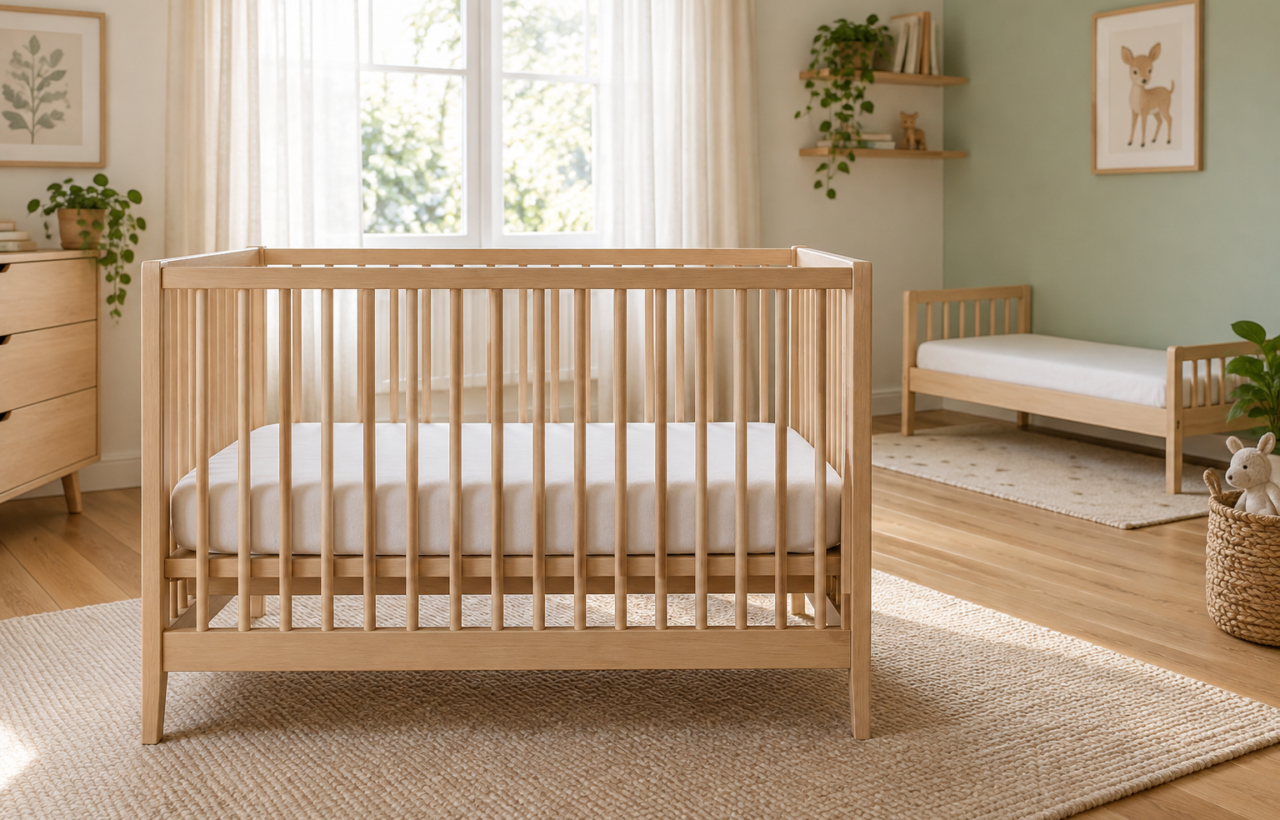
Buying a mattress for a child under three can feel strangely difficult. Your baby cannot review the firmness, your toddler may change their answer every few minutes, and product pages tend to bury the practical differences under layers of marketing.
You do not need to find a universally best mattress. You need one that is appropriate for your child’s current sleep space, firm enough for their stage, easy to protect from accidents and covered by a return policy you could realistically use.
Key takeaways
- For a baby, safety comes before comfort preferences: use the firm, flat mattress intended for the bassinet, crib or other approved sleep space.
- Do not use 18 months as an automatic moving date. When your child is ready for an appropriate toddler or larger bed, medium-firm is a sensible starting point.
- Judge firmness by how much your child sinks, not by how the mattress feels under an adult’s heavier body.
- Plan for leaks before the first night. A fitted waterproof protector or genuinely washable cover is usually more useful than an elaborate comfort feature.
- Independent certifications cover different materials and claims. Check exactly what each label verifies, then examine the trial and return terms.
Start with your child’s age and sleep space
For babies still sleeping in a crib
The American Academy of Pediatrics calls for a firm, flat infant sleep surface. Use the mattress designed for your baby’s bassinet, crib or other approved sleep product, and follow that product’s instructions. Do not add a foam topper, second mattress or other cushioning to make the surface feel more comfortable to an adult.
A dual-sided crib mattress may have a firmer infant side and a somewhat softer or more water-resistant toddler side. Keep using the infant side until the manufacturer’s directions say your child can use the toddler side. A label that says toddler does not override the instructions for your specific mattress and sleep space.
For a toddler moving to a larger bed
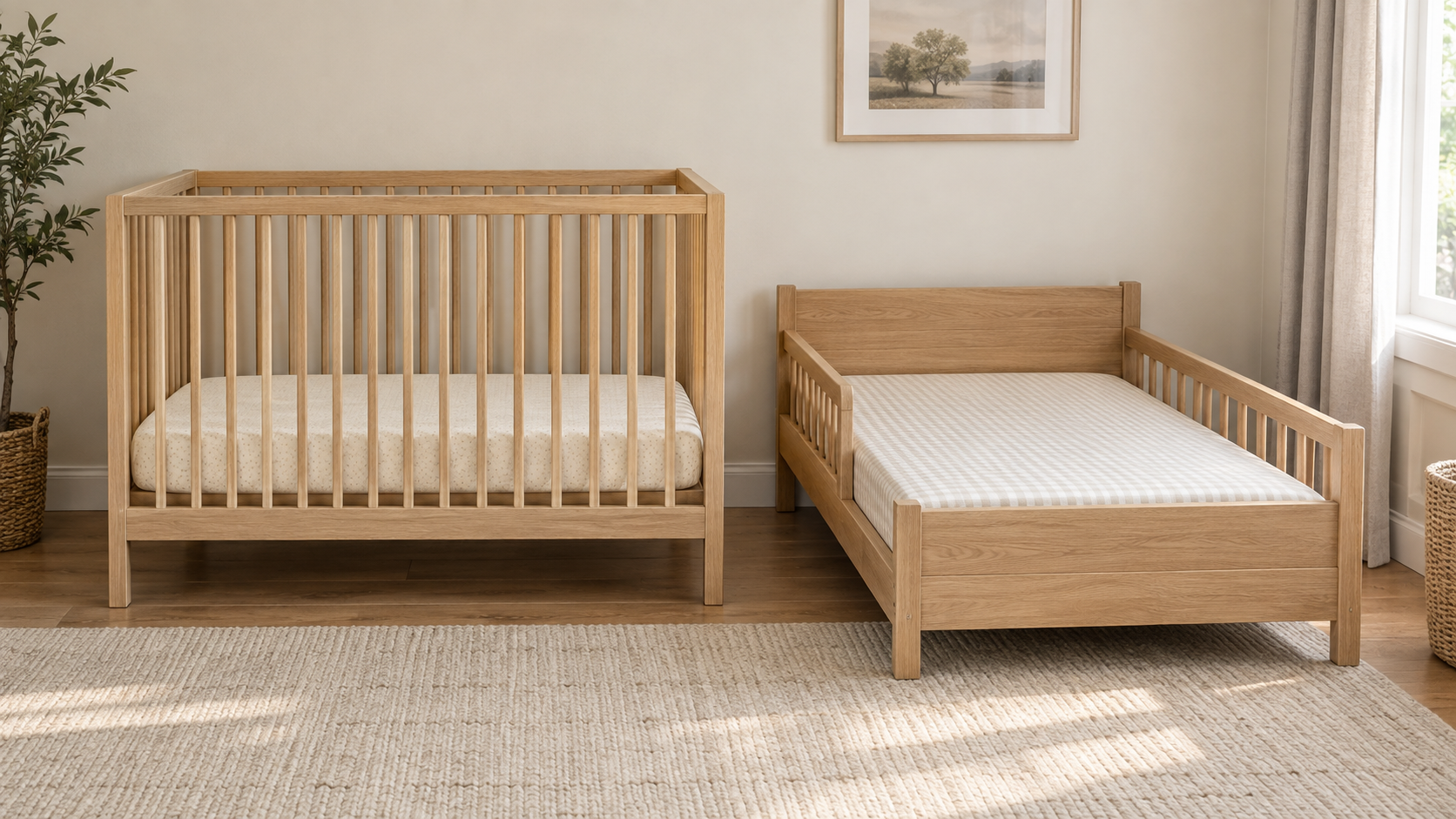
A child’s eighteenth month is not, by itself, a reason to leave the crib or replace a suitable crib mattress. The timing of the bed transition is a separate decision based on your child’s development and the crib manufacturer’s limits.
Once a child is older than 18 months and ready for an appropriate bed, mattress construction becomes largely a comfort preference. That does not mean every soft mattress is a good choice. Your toddler should rest on the surface rather than disappearing into it, and the mattress still needs to fit the frame exactly as its manufacturer requires.
Do not assume a bigger bed automatically requires a luxury mattress. First decide whether you need a crib-size mattress, a toddler-bed mattress compatible with your frame or a larger mattress that can remain useful as your child grows. Measure the frame and room before shopping; a familiar size name is not a substitute for checking the actual dimensions.
Match firmness and construction to a real need
Use medium-firm as the toddler starting point
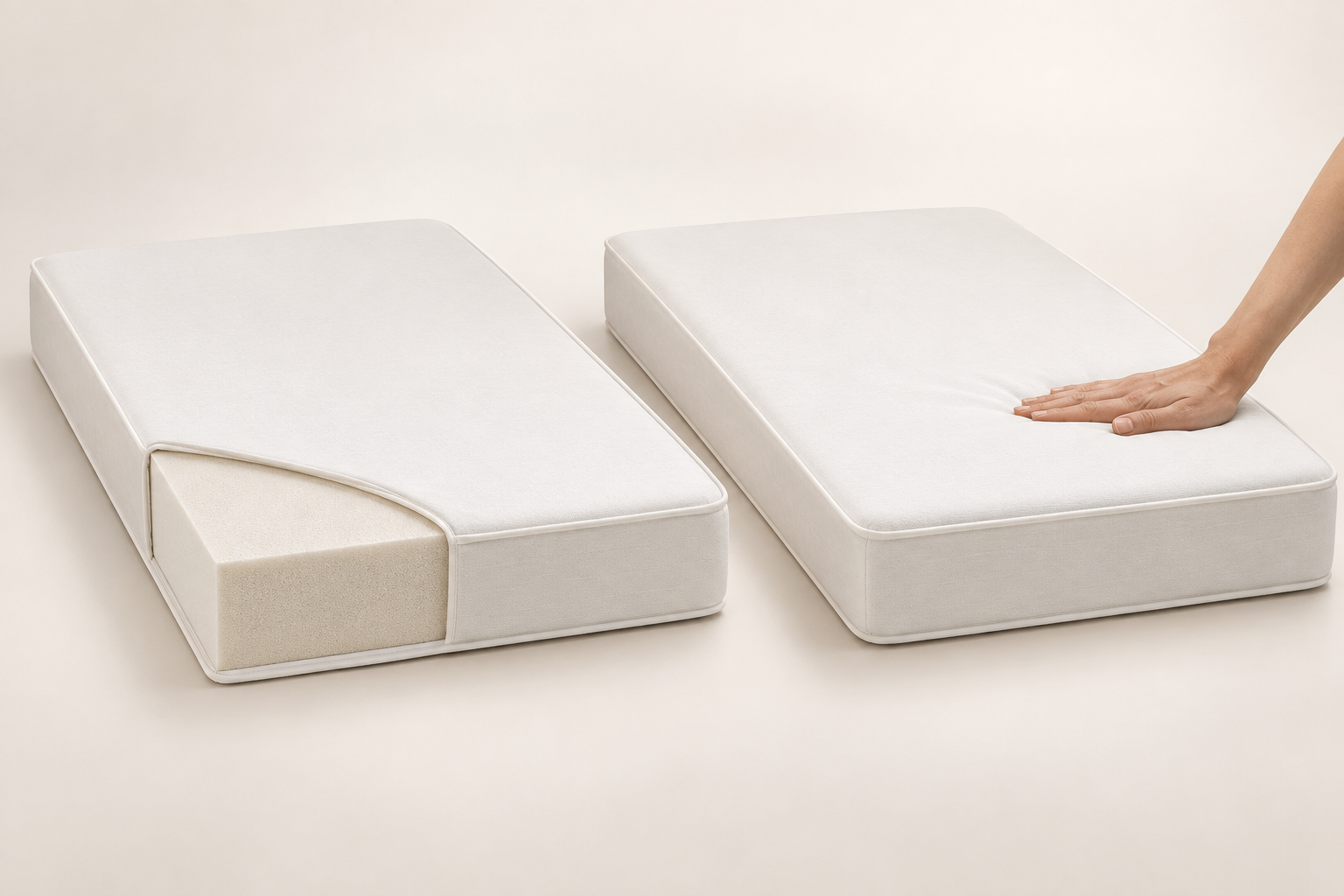
For a toddler in an appropriate bed, medium-firm is a practical place to begin. The surface should support the body while allowing some give around the hips and shoulders. Deep sinking is not the goal.
Children weigh much less than adults, so your body is a poor firmness gauge. A mattress that feels pleasantly cushioned when you sit on it may feel quite different beneath a toddler. Have your child lie in their usual sleeping position. Look for a surface that remains level and supportive without a deep hollow beneath the torso or hips.
Ask questions your child can answer: Does it feel too hard or too squishy? Do they feel hot? How do they feel after waking? For a child who cannot explain, watch for visible indentations, unusual overheating, repeated attempts to avoid one part of the bed and changes in how settled they appear overnight. These clues are more useful than a firmness number invented by a brand.
If an otherwise comfortable new mattress initially seems too firm, an adjustment period of up to two weeks may be reasonable. Do not wait out visible sagging, persistent pain or a clear deterioration in sleep. A child with ongoing pain, a musculoskeletal condition, pressure-care needs or another medical concern should have their sleeping surface discussed with an appropriate clinician.
A mattress also cannot repair every sleep problem. If your toddler is comfortable once asleep but resists bedtime, start with the routine and sleep environment instead of assuming the bed is at fault.
Choose the construction after identifying the problem
- Traditional innerspring: Interconnected coils offer a durable, supportive surface. This can be a straightforward choice when longevity matters more than portability.
- Pocket coils: Individually wrapped coils move more independently. They can limit movement transfer while retaining the airflow and support associated with springs.
- Foam: Foam is quiet, relatively easy to move and often less expensive. Check carefully for excessive sinking, heat retention and whether the foam returns to shape after pressure.
- Hybrid: A hybrid combines foam comfort layers with a coil system. It can offer support and airflow, but it is often heavier and more expensive.
No construction wins automatically. Foam may suit a tight budget or a room reached by narrow stairs. Pocket coils or a hybrid may appeal if airflow and long-term durability are priorities. In general, coil and hybrid mattresses tend to outlast foam, which can compress over time, but build quality and care still matter.
A dual-sided design can extend the useful life of a mattress by offering different firmness levels. Check the age labels and flipping instructions before treating that second side as a future upgrade.
Make cleanup, material labels and returns part of the decision
Build an accident plan before the first night
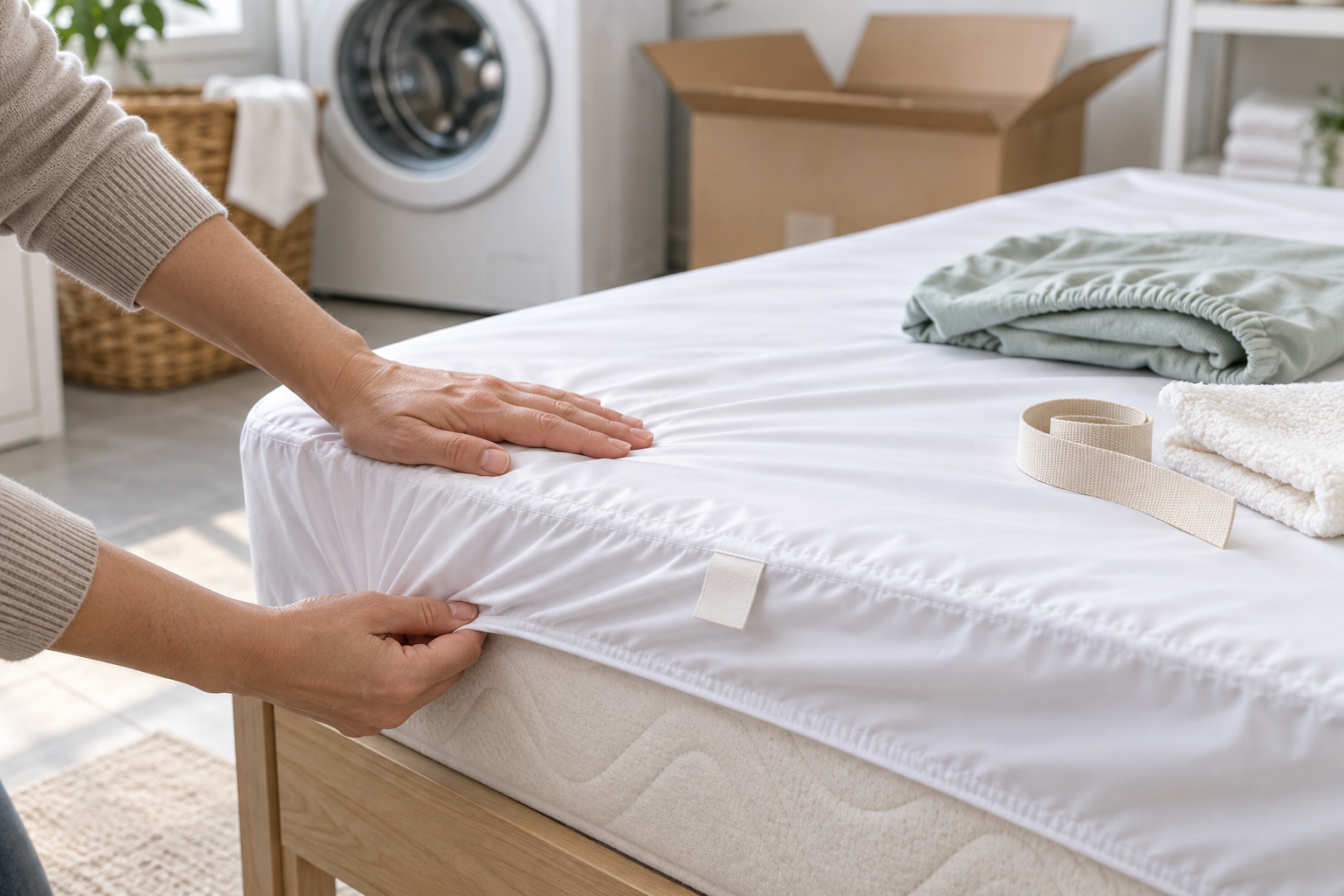
Potty training, overnight leaks and spilled drinks can shorten the life of a mattress long before its support wears out. A waterproof protector is especially useful for younger children, even when the mattress cover is described as water-resistant.
- Confirm whether the outer cover is removable, machine-washable or merely suitable for spot cleaning.
- Check the washing and drying directions now, rather than during the first overnight accident.
- Remember that a washable cover does not make the foam, springs or inner core washable.
- Use a fitted protector that does not bunch or change the feel of the mattress. For a crib, use only a protector permitted by the crib and mattress instructions.
- Keep a spare protector and fitted sheet ready if changing the bed quickly at night matters to you.
A fully washable core can be valuable for frequent accidents, but it is not essential for every family. A replaceable protector may provide the simpler and less expensive cleanup system.
Read certifications by what they actually cover
Certification logos do not all answer the same question, and none replaces age-appropriate firmness or correct fit.
- CertiPUR-US applies to foam. It addresses substances including ozone-depleting chemicals, certain flame retardants, phthalates, formaldehyde, mercury, lead and other heavy metals, along with low volatile organic compound emissions.
- Greenguard Gold indicates that a product has met low-emission standards developed with sensitive settings, including spaces used by children, in mind.
- Global Organic Textile Standard concerns organic textiles and their processing through the supply chain, including restrictions on synthetic pesticides, herbicides and genetically modified organisms, as well as worker-related requirements.
Look at which component carries the certification. A certified foam layer does not automatically certify every fabric, adhesive and treatment in the finished mattress. Likewise, an organic textile claim is not a measurement of firmness or proof that your child will find the bed comfortable.
Even a certified mattress may have a noticeable smell after unboxing. If it does, let it air in a well-ventilated space for several days until the odour is gone. If the smell persists, is unusually strong or causes irritation, keep your child away from it and contact the manufacturer or retailer rather than simply covering it with bedding.
Inspect the trial as closely as the mattress
A young child’s preference can be difficult to predict in a showroom. That makes free shipping, a meaningful home trial and free returns more valuable than a long list of features.
Before ordering, get clear answers to these questions:
- When does the home trial begin, and how long does it last?
- Must the mattress stay in the home for a minimum period before it can be returned?
- Does the retailer arrange pickup, or would you have to package and ship it?
- Are return transport, restocking or disposal fees deducted from the refund?
- Is a protector required to keep the trial or warranty valid?
- Do the manufacturer’s terms apply when you buy from this particular retailer?
A warranty covers specified defects; it does not necessarily let you return a mattress because your toddler dislikes it. Save the receipt, photograph the mattress when it arrives and keep the trial deadline somewhere you will see it.
Make your shortlist in this order: correct sleep-space compatibility, appropriate firmness, manageable cleanup and usable return terms. Once every option clears those tests, choose the one that fits your budget and is easiest to live with. That is a more dependable decision than paying extra for the longest feature list.
References




