
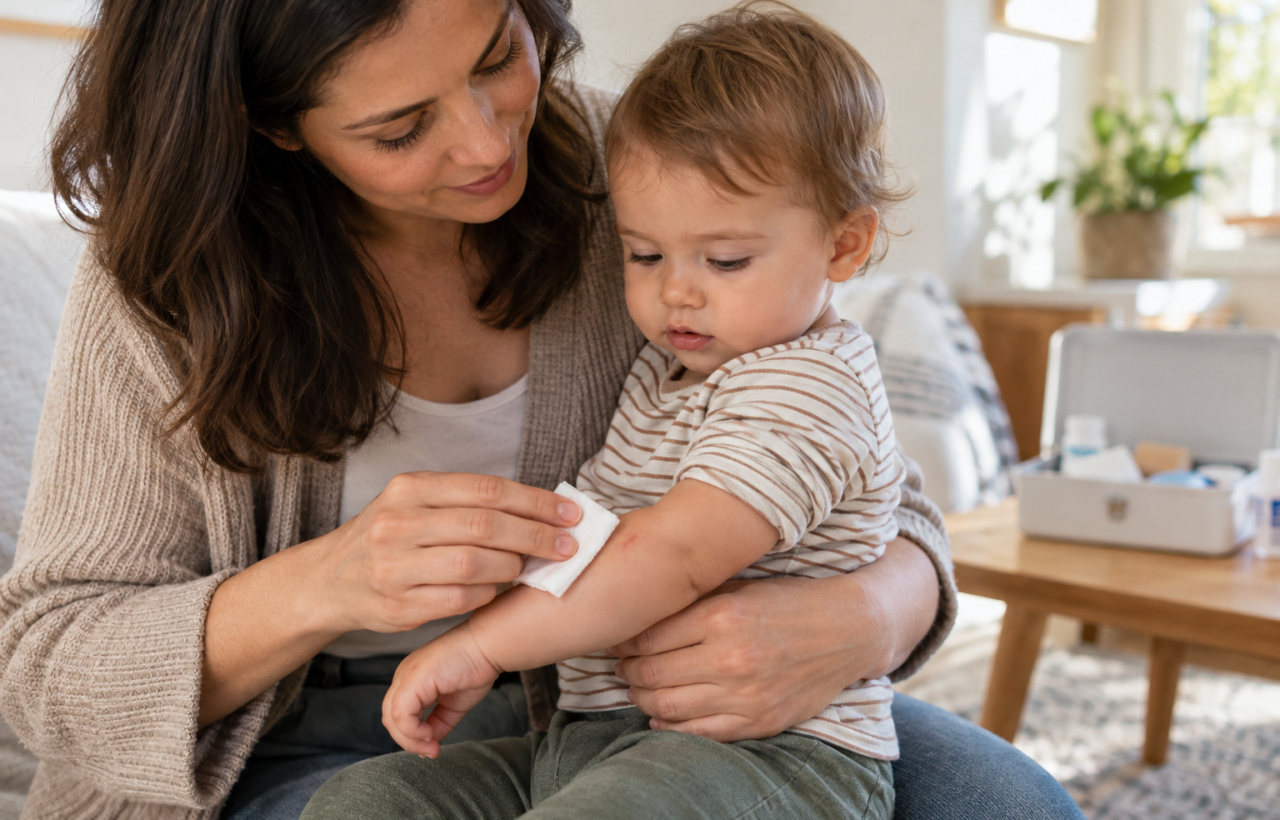
When your baby starts bleeding, the immediate question is whether you can treat the injury at home or need medical help. For a small cut or scrape, use a simple sequence: stop the bleeding, wash gently, keep the wound moist and covered, and watch how it changes.
If the wound is deep, jagged, heavily bleeding, near an eye, or holding dirt you cannot remove, skip the rest of the home-care routine and contact a health care professional. Those details matter more than how calm your baby seems once the initial upset passes.
Key takeaways
- Press a clean cloth firmly against the wound for 15 minutes. Contact a health care professional if the bleeding continues.
- Wash your hands, then rinse the wound with water and a gentle, fragrance-free soap or non-soap cleanser. Do not scrub.
- Apply a thin layer of white petroleum jelly once or twice a day during dressing changes until the skin has closed.
- Do not routinely use hydrogen peroxide or topical antibiotic ointment on a clean minor wound.
- Get medical advice for a deep or jagged cut, a dirty puncture, an injury on the face or near an eye, debris that will not rinse away, excessive pain, or possible infection.
Stop the bleeding before you clean the wound
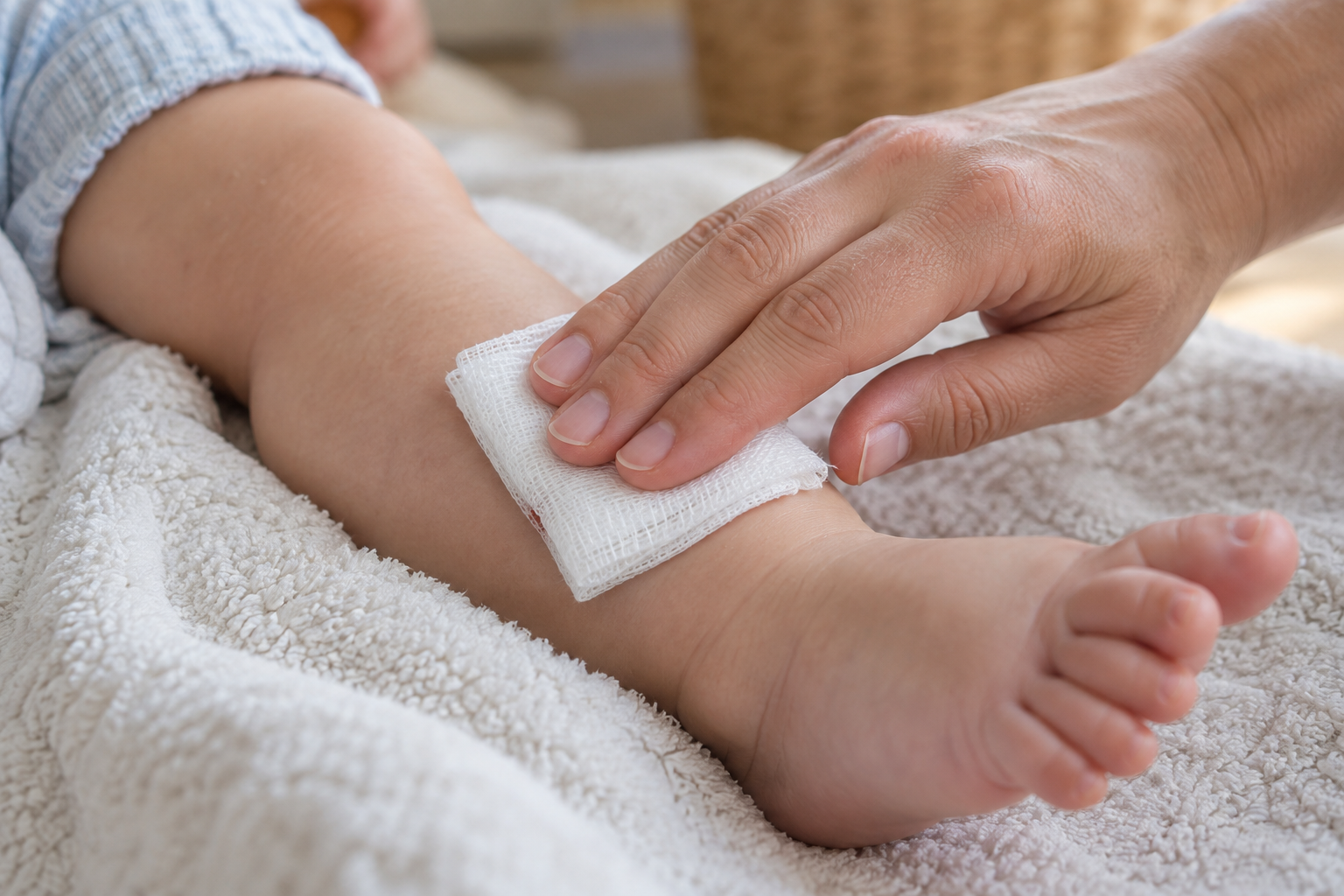
A small injury can produce more blood than you expect because a baby’s skin has many little blood vessels close to its surface. The amount of blood can make the moment look more frightening, but your first task is straightforward: apply pressure.
- Place a clean cloth directly over the cut.
- Press firmly and hold it there for a full 15 minutes. Set a timer so you do not have to guess while comforting your baby.
- If the bleeding has not stopped after that period, contact a health care professional for guidance.
Do not let a wound’s small surface area reassure you if it continues bleeding. A cut that bleeds heavily, has jagged edges, looks deep, or does not close easily needs professional assessment even if your baby settles down.
Clean it gently, without peroxide or scrubbing
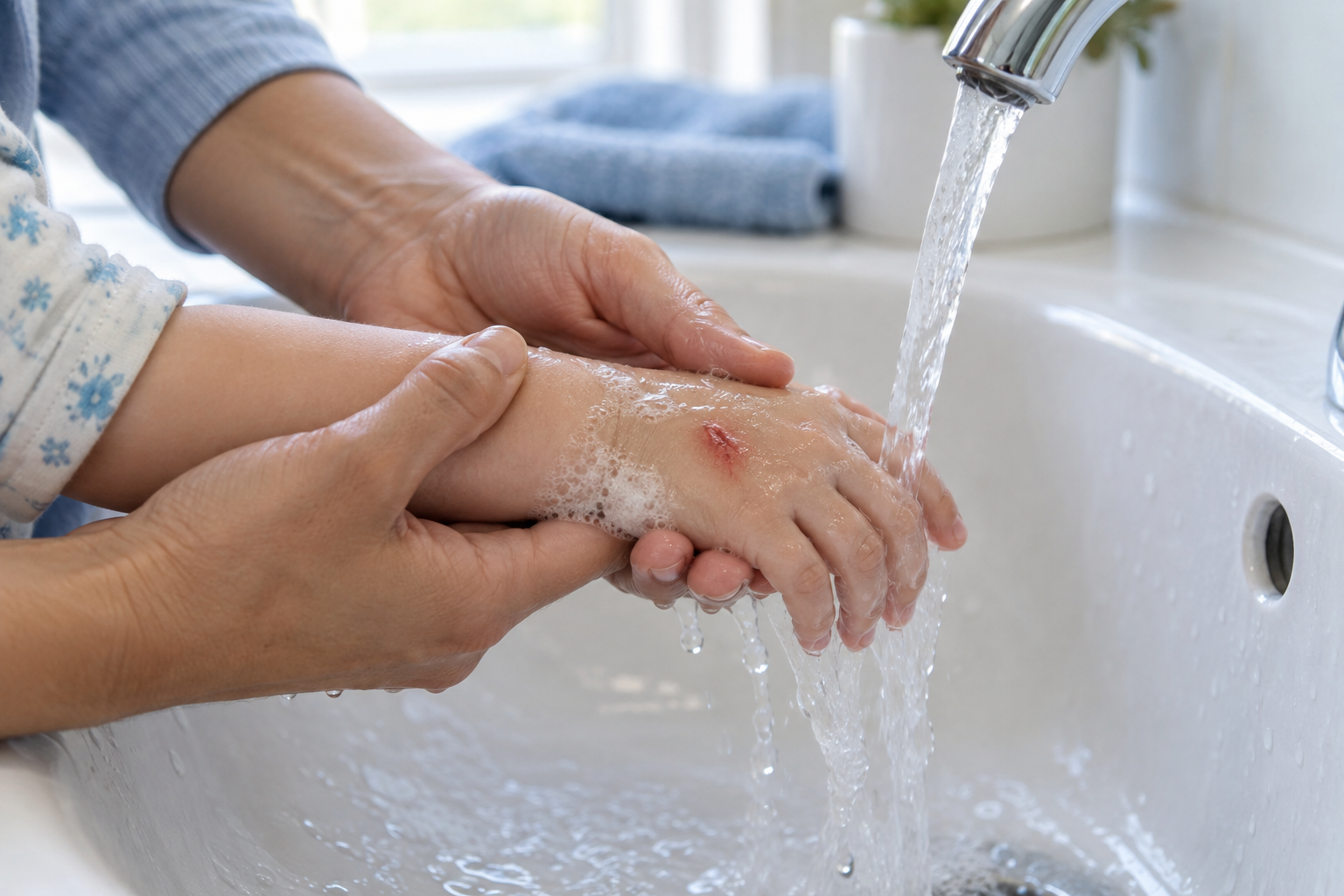
Once the bleeding is controlled, wash your own hands. Then let water run over the injured area and use a gentle, fragrance-free soap or non-soap cleanser. Flowing water should do the work. Scrubbing can further irritate damaged skin.
Look closely after rinsing. If dirt or another material remains embedded in the wound, stop trying to remove it at home and have a health care professional clean and examine the area. Repeated digging or scrubbing can cause more tissue damage.
Hydrogen peroxide is not a better clean. It can harm healthy cells involved in healing, so it should not be part of routine care for a baby’s minor cut. A clean wound also does not generally need an over-the-counter topical antibiotic. These products can cause an itchy, red contact rash in children, and unnecessary antibiotic use contributes to drug resistance. Use one only if your baby’s health care professional recommends it for the specific wound.
Keep the cut moist, covered, and safely out of reach
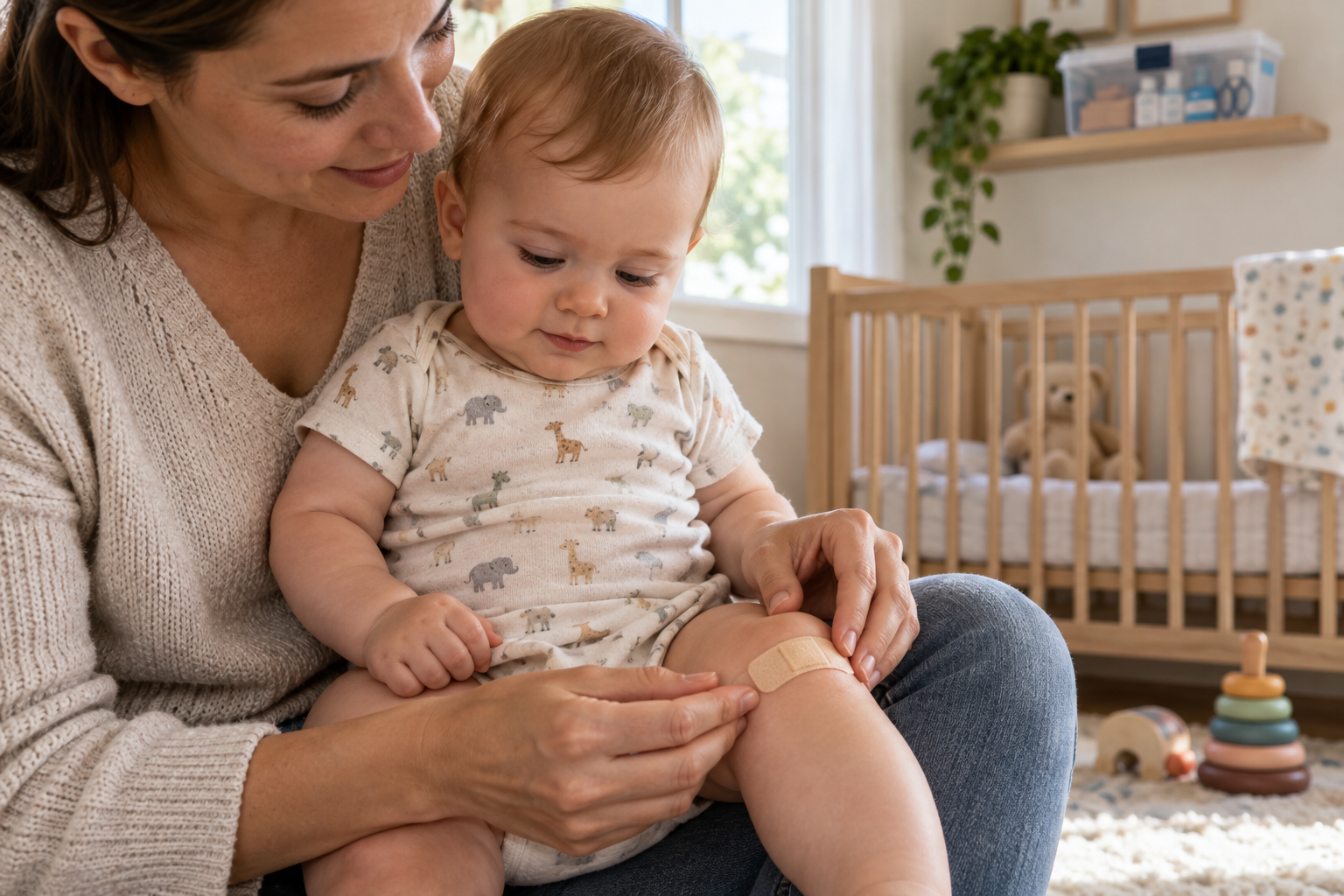
Letting a cut dry out and form a hard scab is not the goal. A moist, protected wound can heal more effectively, and the dressing is less likely to stick to the new skin.
- Apply a thin layer of plain white petrolatum, also called petroleum jelly.
- Cover the area with an appropriate dressing.
- Repeat the petrolatum application once or twice a day when changing the dressing, continuing until the skin has closed.
- At each change, inspect the wound for spreading redness, warmth, swelling, increasing tenderness, or drainage.
The dressing itself requires extra thought for babies. A small adhesive bandage can become a choking hazard for a child younger than 1, particularly when it is placed on a finger where the baby can pull it off and put it in their mouth. A non-stick wound cover secured with paper tape may be a more suitable option. Whatever you use, check that it remains secure and cannot be mouthed or removed. Ask a pharmacist or your child’s health care professional for help if you cannot cover the location safely.
Know exactly when the wound needs medical care

Contact a health care professional promptly rather than continuing home treatment if the cut has any of these features:
- It is bleeding heavily or still bleeding after 15 minutes of firm, direct pressure.
- It is deep, longer than 1 inch, or has jagged edges that do not come together easily.
- It is a puncture caused by a dirty or rusty object.
- Dirt or other debris remains embedded after gentle rinsing.
- It is on the face or around an eye.
- It appears excessively painful for your baby.
- It develops redness, warmth, swelling, increasing tenderness, or excessive drainage.
Infection may become noticeable a few days after the original injury rather than immediately. Pay attention to a wound that becomes more tender, produces new or increasing drainage, or develops redness that tracks away from the injured area. These changes call for an evaluation by your baby’s pediatrician, dermatologist, or another appropriate health care professional; petroleum jelly and a fresh dressing are not treatments for an infection.
Colour alone can be less alarming once the skin has closed. A healing area may look pink, purple, or brown, and that post-inflammatory discoloration can remain for weeks or months. Focus on the direction of change: slowly fading colour differs from increasing warmth, swelling, pain, drainage, or spreading redness. Deeper cuts are also more likely to leave a scar than surface scrapes, which is another reason to have a deep wound assessed.
Before the next tumble, keep clean cloths, a fragrance-free cleanser, plain white petroleum jelly, non-stick dressings, and paper tape together in your first-aid supplies. A small, practical kit makes the safest sequence easier to follow when your hands are busy: pressure, gentle washing, protection, and careful watching.
References




