
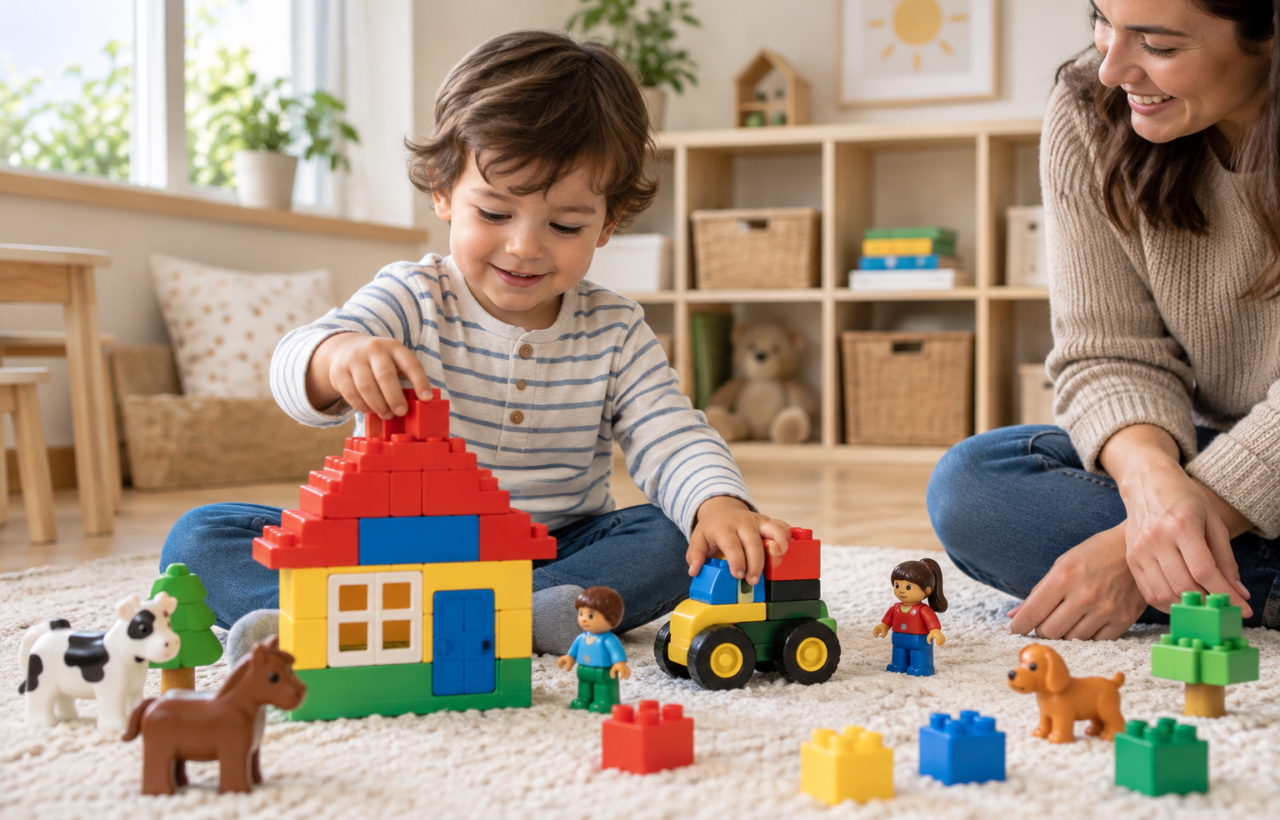
If you are buying a first LEGO DUPLO set, the shelf can make a simple decision oddly difficult. A box of basic bricks, a character house, and a battery-powered train may all carry the same familiar logo, but they ask very different things of a young child.
The best choice is the set your child can begin using now, with enough room for their play to change. Start with the age label, then look at what your child repeatedly does: stack, sort, drive, imitate routines, or tell stories.
The short answer for a first DUPLO set
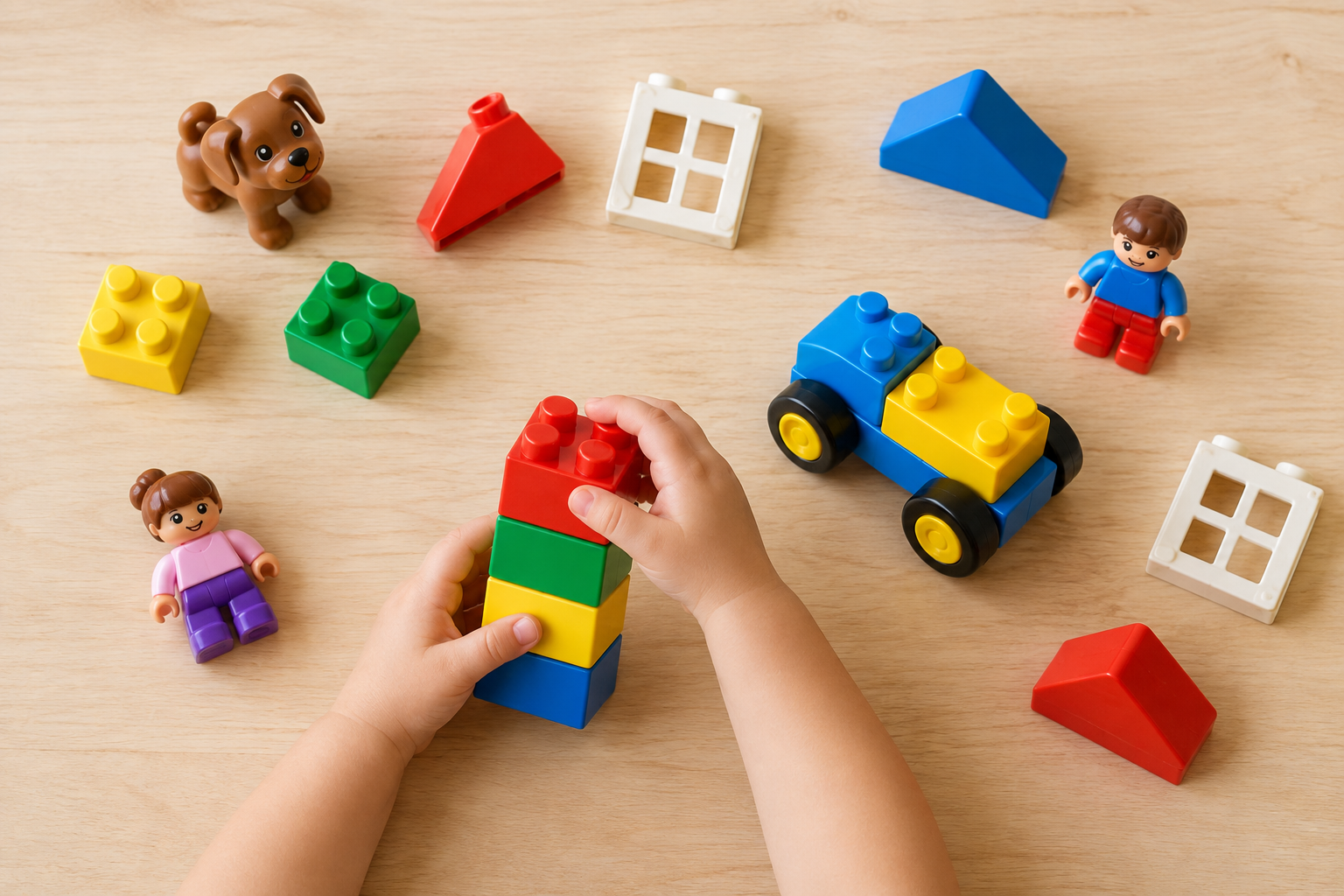
For most first-time builders who meet the age recommendation, we would choose the LEGO DUPLO Classic Brick Box. Its 65 pieces include ordinary bricks, number bricks, figures, a car, and parts for a small house. That mix supports simple stacking immediately but does not lock the child into one finished model. The included storage box also solves a problem that becomes obvious as soon as the set is opened.
At the younger end of the range, the 17-piece LEGO DUPLO Shape Sorter is a more contained starting point. A child can match pieces to openings, build small objects, and return everything to the same container. Fewer pieces are not automatically worse; they can make it easier for a new builder to understand what is available and start without help.
Key takeaways
- For a first all-purpose set, choose the Classic Brick Box.
- For a child beginning at 18 months, consider the smaller Shape Sorter.
- From age 2, choose Fire Truck, Airport, Peppa Pig, or Train sets only when their play pattern fits the theme.
- At age 3, Bluey’s Family House and the 3-in-1 Tree House offer more detailed builds, but their higher piece counts create more setup and cleanup.
- If your child is younger than the age printed on the package, wait. A future-interest purchase should remain stored and inaccessible until it is suitable.
The best LEGO DUPLO sets at a glance
The recommended ages, piece counts, and included play features make the differences clearer. If the package you receive shows a different age recommendation, follow the package.
| Set | Best for | Age label | Pieces |
|---|---|---|---|
| LEGO DUPLO Classic Brick Box | A versatile first collection | 18 months and up | 65 |
| LEGO DUPLO Shape Sorter | A contained first building and matching activity | 18 months and up | 17 |
| LEGO DUPLO Fire Truck | Short rescue stories and moving features | 2 years and up | 21 |
| LEGO DUPLO Town Alphabet Truck | Children interested in vehicles and letter bricks | 2 years and up | 36 |
| LEGO DUPLO Airport Building Toy | Everyday travel and role-play stories | 2 years and up | 23 |
| LEGO DUPLO Peppa Pig Funfair | A Peppa Pig fan ready for a larger scene | 2 to 4 years | 53 |
| LEGO DUPLO Town Interactive Adventure Train Set | Track layouts, routes, lights, and sounds | 2 to 4 years | 57 |
| LEGO DUPLO Bluey’s Family House | A Bluey fan who enjoys detailed pretend play | 3 to 5 years | 83 |
| LEGO DUPLO 3-in-1 Tree House | An established builder ready for a large play world | 3 years and up | 126 |
Treat the piece count as a measure of complexity and household footprint, not a value score. A 17-piece set may get more independent play than a 126-piece set if your child is still learning to connect bricks. The larger set becomes worthwhile when rebuilding and managing a busy scene are already part of the fun.
Match the set to what your child already likes doing
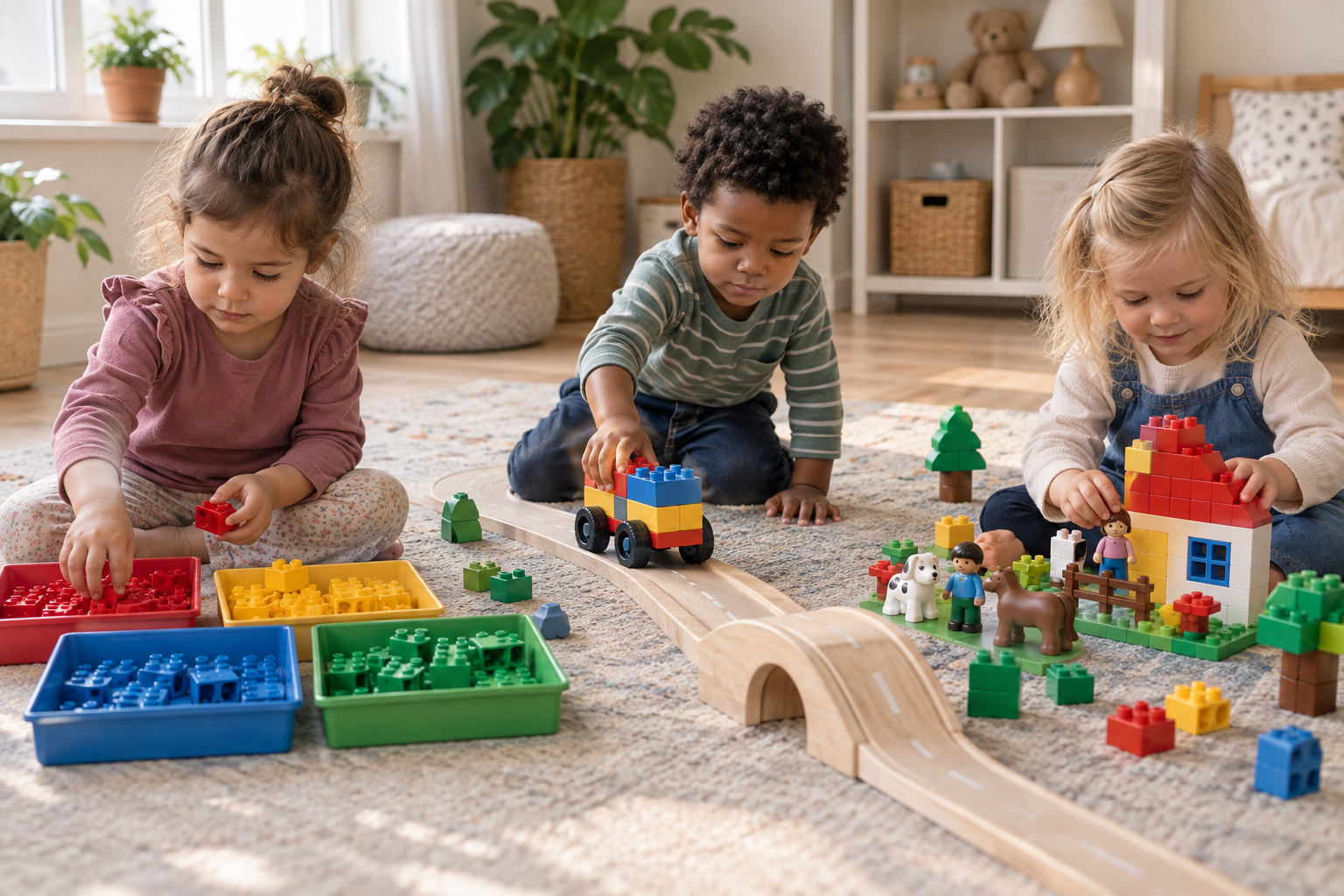
For stacking, separating, and rebuilding: Classic Brick Box
The Classic Brick Box is the safest default when your child does not yet have a strong theme preference. There is no single correct final model, so a tower that becomes a car garage and then a house still feels like successful play. The figures and vehicle add an easy route into pretend play later.
Choose it if you want one set that can become the base of a larger DUPLO collection. Skip it as a first purchase if a large spread of pieces tends to overwhelm your child or if you do not have a realistic place to store and use them.
For matching and putting things in containers: Shape Sorter
The Shape Sorter makes sense for a child who repeatedly fills containers, removes the contents, and starts again. Its lid has shape openings, while the pieces can also form a puppy, an apple tree, and a small house. This gives the set a clear activity without making that activity its only use.
It is also the more manageable choice for a small play area. Because the container is part of the toy, cleanup has an obvious destination rather than depending on a separate bin.
For quick action stories: Fire Truck or Airport
The 21-piece Fire Truck supplies a problem a toddler can understand: a cat is in a tree, and the firefighters need to help. Its ladder rises with a lever, and the basket rotates. Those actions give a child something to do before they are ready to invent a long story from scratch.
The 23-piece Airport set is better for a child who reenacts departures, arrivals, luggage, or family trips. It includes a pilot, a passenger, a buildable plane, a security area, an opening luggage brick, and a suitcase chute. Choose between these sets by listening to the stories your child already repeats, not by deciding which occupation seems more educational.
For letters without turning play into a lesson: Alphabet Truck
The Alphabet Truck combines 36 pieces with a familiar vehicle and letter bricks. That makes it easy to name a letter while loading the trailer, build a short word together, or simply drive the truck. Let the letters remain an invitation. Repeated quizzing can turn a toy the child chose into a task controlled by the adult.
Buy this set for a child who already notices symbols or loves loading vehicles. If neither is true, ordinary bricks may offer more freedom.
For a genuine character attachment: Peppa Pig or Bluey
The Peppa Pig Funfair includes Peppa Pig, Danny Dog, and Candy Cat alongside a rotating Ferris wheel, slide, and juice bar. Its 2-to-4-year age range makes it the earlier character-led choice on this list. It works best when your child already uses those characters to begin stories independently.
Bluey’s Family House is labelled for ages 3 to 5 and has 83 pieces. Opening windows, furniture, Floppy the rabbit, and a spinner-based memory game create more ways to play, but also more elements to organize. For a child just reaching age 3, choose it when the character connection is strong and detailed house play already holds their attention.
A licensed theme is not automatically more engaging. Recognition can help a hesitant child begin, but basic bricks are usually the better purchase if interest in the show is brief or mostly adult-led.
For layouts and cause-and-effect play: Interactive Adventure Train
The Interactive Adventure Train lets a child rebuild the track around a park, beach, or station destination. The working train adds lights and sounds, making this a stronger choice for a child who enjoys routes and moving objects through a space.
It is also a more demanding household purchase. The track needs floor room, and the train requires four AAA batteries that are not included. Check that you have both before presenting the set; a powered feature that cannot be used immediately can distract from the building itself.
Choose manageable complexity, not the biggest box
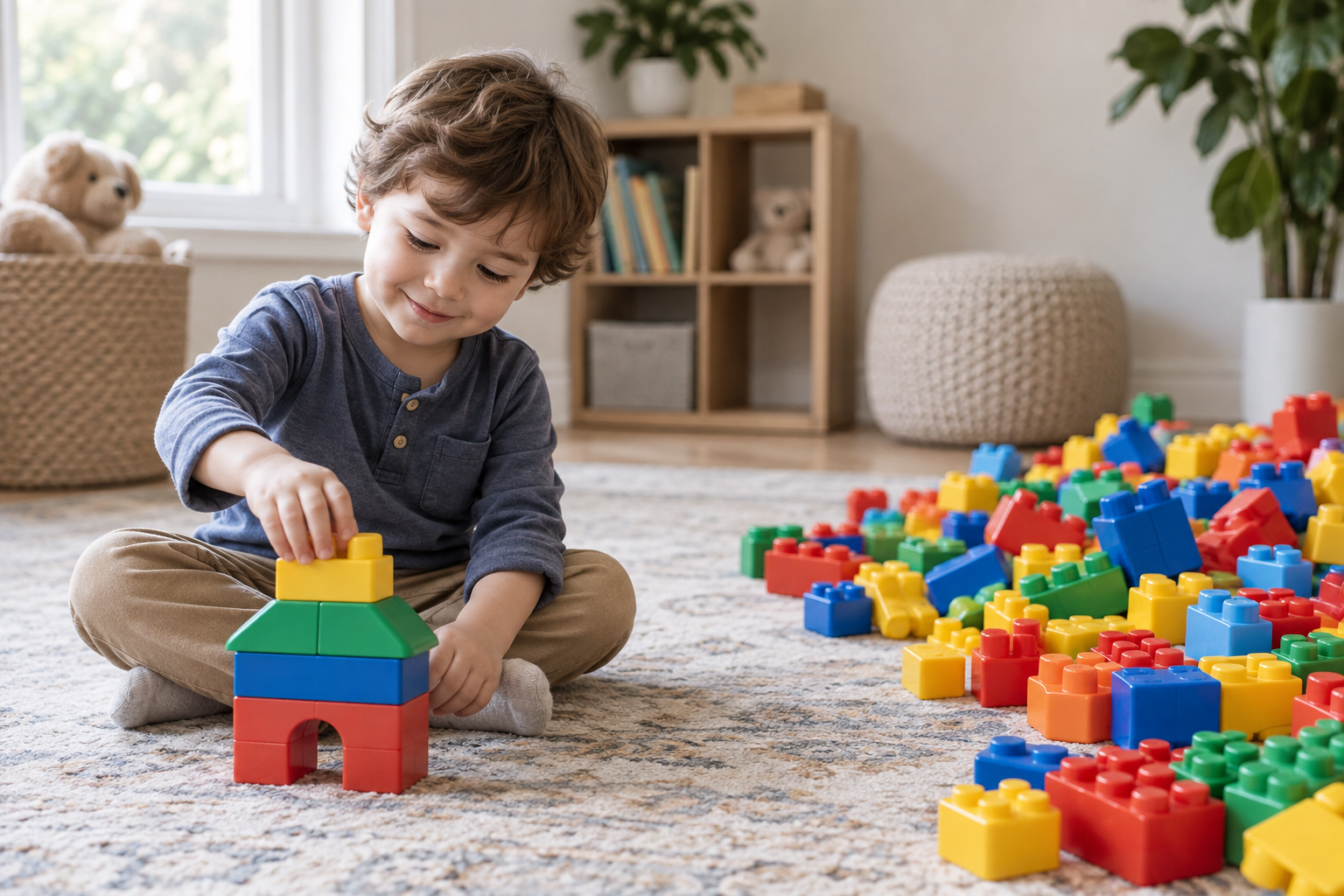
Age is the first filter, but readiness is visible in play. A child who can connect and separate bricks, return to a build after it falls, and stay interested long enough to change it may be ready for more pieces. A child who mainly carries, dumps, or throws pieces needs a simpler setup even when the age label permits something larger.
- Check the minimum age on the exact package.
- Think about several recent play sessions. Identify the action your child repeated without prompting.
- Choose a set that makes that action easy within the first minute: a truck that rolls, a shape that fits, or figures that can enter a house.
- Look for one additional way the set can be used later, such as rebuilding the scene or combining its bricks with an existing collection.
- Decide where the pieces will be played with and stored before choosing the larger option.
If you are buying a gift and do not know the child’s interests, the Classic Brick Box is the broadest choice. The Shape Sorter is the more contained alternative for a child at the beginning of the labelled range. Character sets are better gifts when the parent has confirmed both the child’s interest and the set’s age suitability.
The 3-in-1 Tree House should be treated as a later-stage choice within this audience. It is labelled for ages 3 and up, contains 126 pieces, and can become a treetop play area, tree house, or garden scene. That flexibility is valuable for an established builder; for a first-time builder, it may mostly create a long adult setup.
Make the set safe and livable in your home
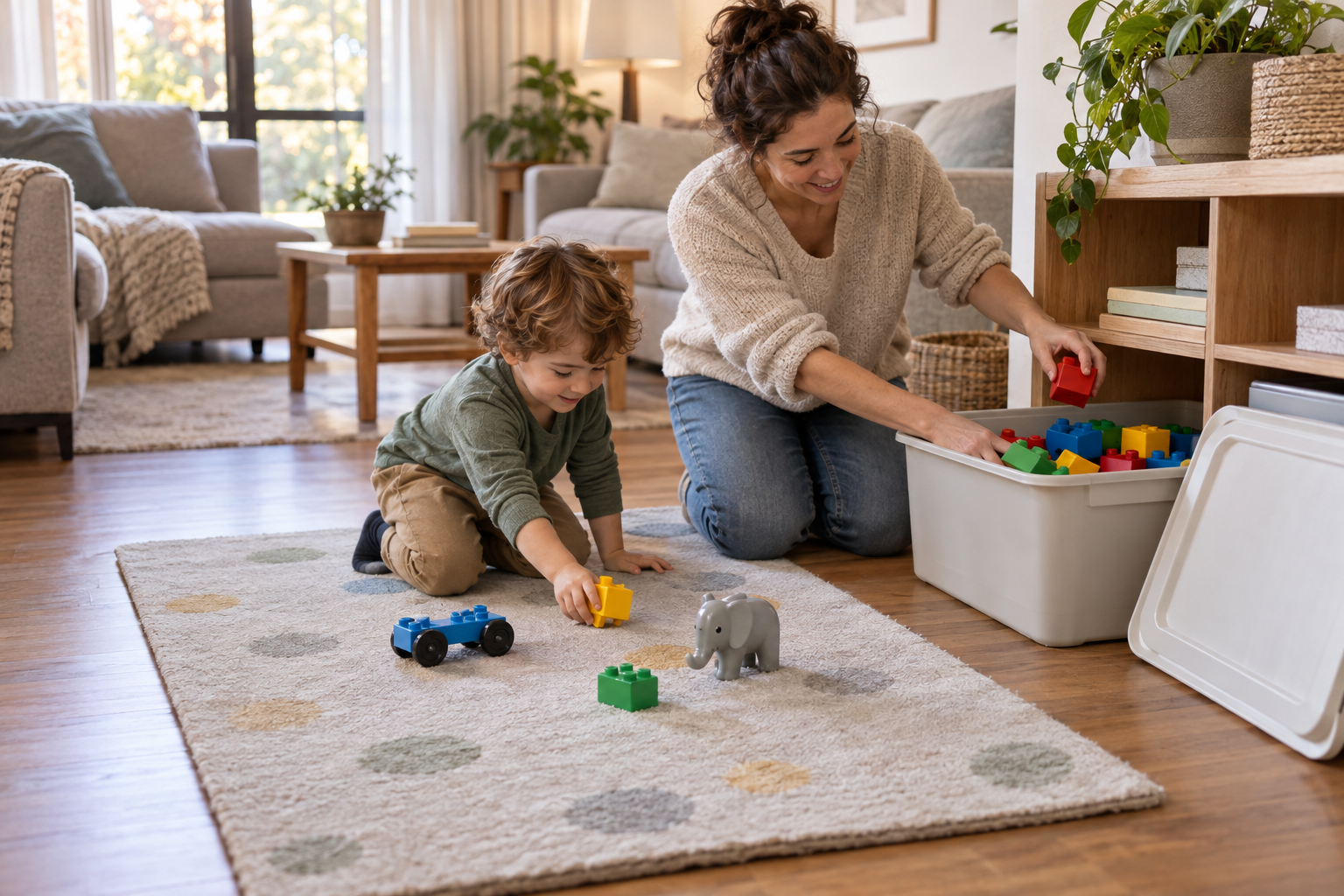
LEGO DUPLO sets generally begin around 18 months, but the exact package label controls. For a baby below the stated minimum, the right DUPLO set is no set yet. Store an advance purchase where the child cannot access it rather than opening it early.
Larger DUPLO bricks reduce choking concerns compared with small building pieces, but they are not risk-free. They can hurt when thrown or stepped on. If older children use standard LEGO bricks in the same home, keep those smaller pieces out of the toddler’s play area and avoid mixing both systems in one floor bin.
Watch how your child handles the first few pieces before emptying the whole set. Put out a small selection, demonstrate connecting and separating once, and then let the child lead. Add more pieces when they are helping the play rather than becoming background clutter.
Choose the set your child can open and begin now. For most first purchases, that means the Classic Brick Box; for a smaller, more structured start, it means the Shape Sorter. A themed set earns its place only when its age label, play action, cleanup burden, and your child’s real interests all line up.
References




