You turn over a baby-food pouch and see more sugar than you expected. Now you are wondering whether fruit is the problem, whether every label needs a calculation, or whether you have already made your baby’s meals too sweet.
You do not need to remove naturally sweet foods or count every gram. The useful goal during weaning is to keep added and free sugars from becoming everyday defaults while giving your baby plenty of flavours, foods and safe textures.
The important distinction is not sweet versus savoury
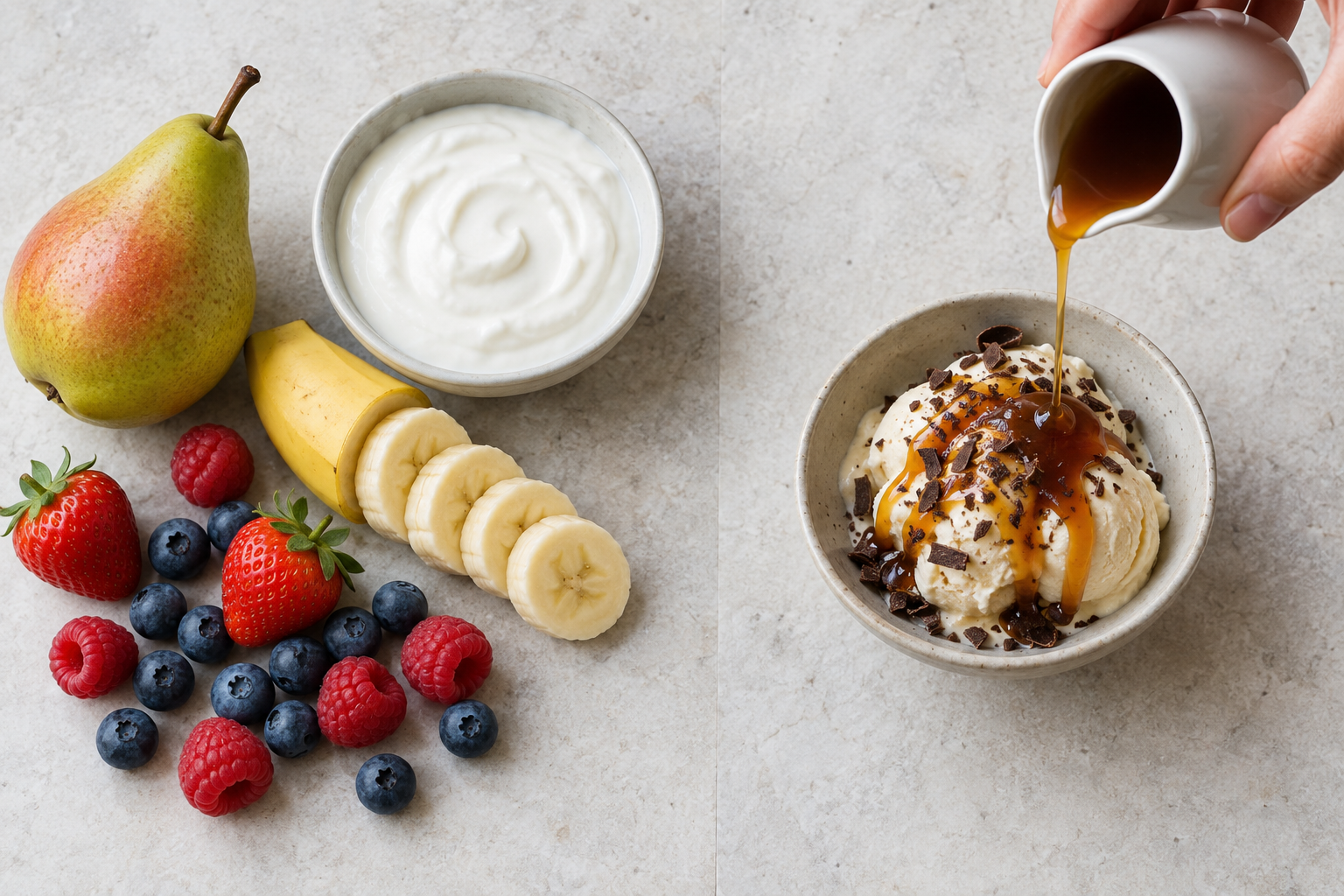
A ripe pear and a sweetened baby dessert may both taste sweet, but they are not nutritionally interchangeable. The practical distinction is between sugars naturally contained within foods and free sugars. Free sugars include sugars added during cooking or manufacturing, as well as sugars supplied by ingredients such as syrups, juice and concentrates.
Sugar naturally present in intact fruit or plain dairy does not need to be treated like added sugar. Those foods come with a wider nutritional package: fruit provides fibre and other nutrients, while plain dairy can provide protein, fat and minerals. Removing them simply because they taste sweet would narrow your baby’s diet without addressing the main issue.
During weaning, there is little value in trying to use up a daily sugar allowance. Use a pattern-based rule instead: do not routinely add sugar or syrup to your baby’s food, keep products dominated by free-sugar ingredients occasional, and continue serving whole or minimally processed foods that happen to contain natural sugars.
An occasional sweet food does not undo an otherwise varied diet. The concern is repetition. If breakfast, snacks, desserts and convenience foods all taste strongly sweet, other flavours and more nourishing choices can get crowded out.
Read the ingredient list before judging the sugar number
The total-sugars figure on a nutrition panel cannot tell you how much came from milk, intact fruit or added sweeteners. That is why a plain yogurt can show sugar even when nobody has sweetened it. It is also why the front of a package rarely gives you enough information to make the decision.
Use this three-pass label check:
- Read the product name, not just the flavour picture. A fruit-based dessert, cereal and plain yogurt serve different purposes even if all three feature fruit on the package.
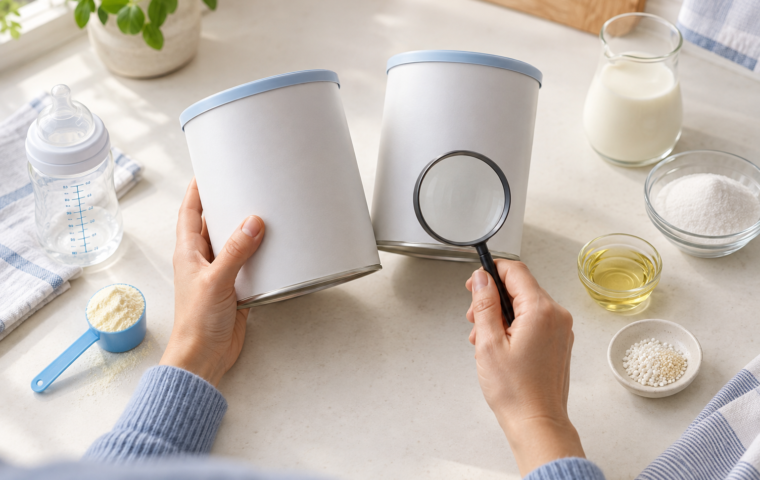
- Scan the ingredient list. Ingredients appear in descending order by weight, so the first few tell you what the product is mainly made from. Notice sugar, syrups, fruit juice and juice concentrates.
- Use the nutrition panel to compare products that do the same job. Compare one plain yogurt with another plain yogurt, or one porridge with another porridge, rather than treating the sugar figures from unrelated foods as equivalent.
A no-added-sugar claim means the manufacturer has not added sugar as an ingredient. It does not guarantee that the food is unsweetened or that it contains little total sugar. A product made mostly from fruit puree or concentrate can still taste intensely sweet. Organic, natural and made-with-real-fruit claims do not settle the question either.
You do not need to memorize every possible name for sugar. If several versions of a food are available, choose the one with a simple ingredient list and no sweetening ingredient near the beginning. For foods such as yogurt, porridge and cereal, starting with a plain version lets you decide whether to add fruit and how much.
Make sweetness one flavour in a much wider menu
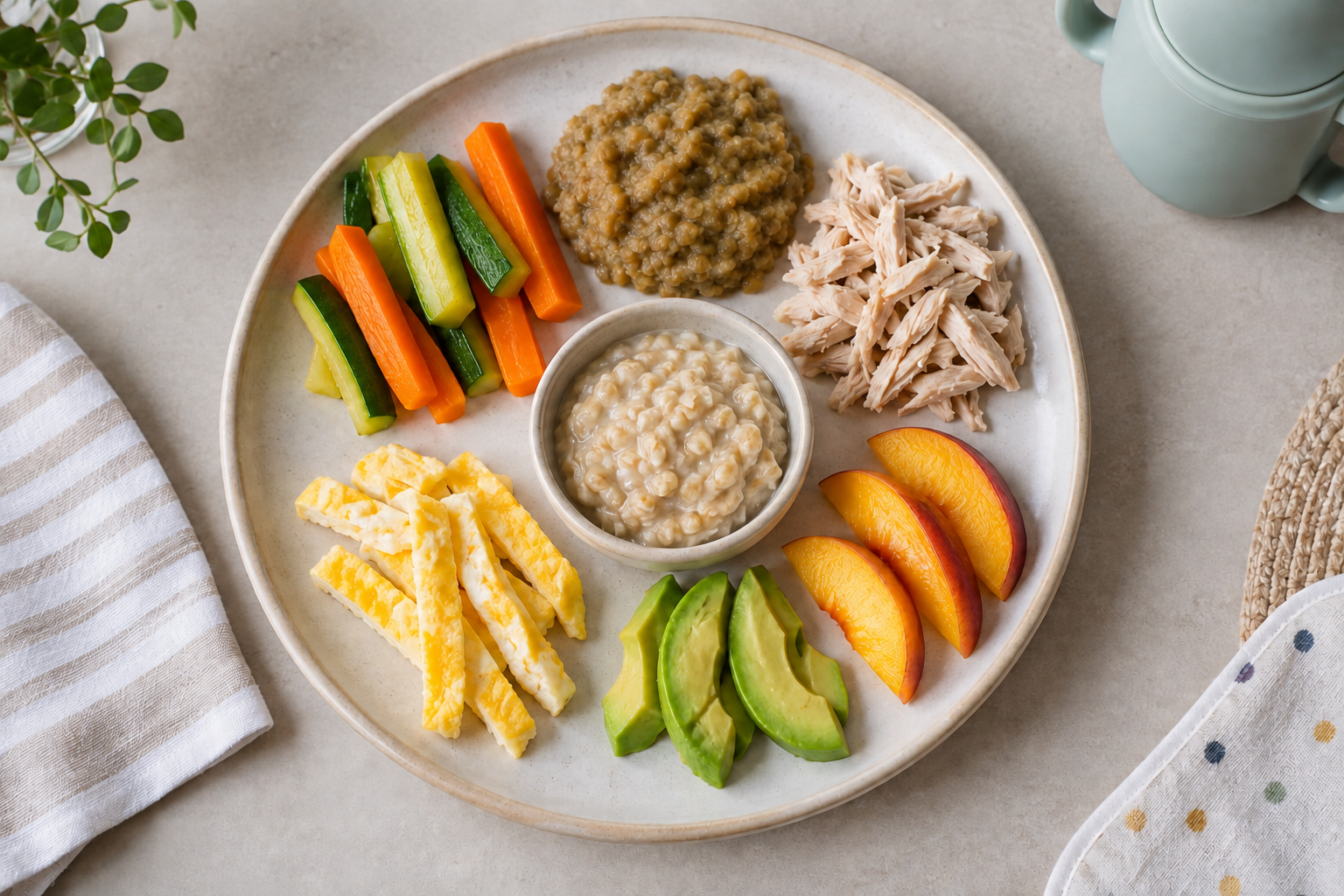
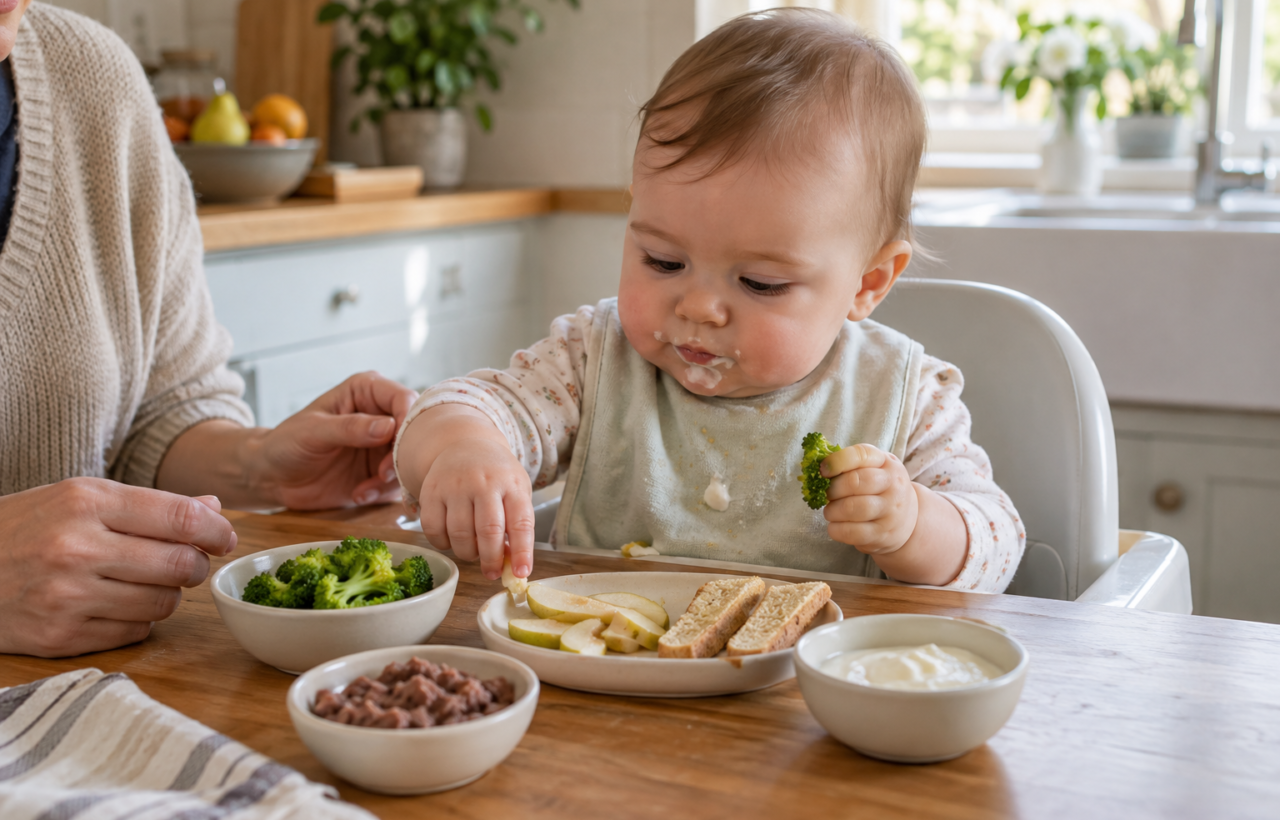
Babies do not need bland food, and avoiding free sugar does not mean every meal must be savoury. It means sweet foods should not become the only reliably familiar part of the menu. Offer vegetables, grains, beans, lentils, eggs, plain dairy and other family foods you use, prepared in a texture your baby can safely manage.
A few practical changes make that easier:
- Choose plain porridge and add mashed or soft fruit yourself instead of beginning with a heavily sweetened cereal.
- Buy plain yogurt and serve it alone or with fruit rather than treating flavoured yogurt as the default.
- Let vegetables taste like vegetables. Fruit can sit beside them, but it does not need to be blended into every savoury meal.
- Offer tart, earthy, mild and savoury foods alongside naturally sweet ones. Your baby does not have to accept every flavour immediately for the exposure to be worthwhile.
- Do not use a sweet food as payment for eating another food. You can decide what is offered while allowing your baby to decide whether and how much to eat.
Texture matters alongside flavour. If most foods arrive as uniformly smooth, sweet purees, your baby gets fewer opportunities to explore soft pieces, mashed foods and lumpier textures as their eating skills develop. Progress at a pace that is safe for your child, with appropriate preparation and close supervision.
Do not impose new restrictions based on general sugar advice if your child has a medically prescribed diet, growth concerns, dental problems or difficulty chewing or swallowing. A pediatrician, pediatric dietitian, dentist or feeding professional can help you make changes without removing foods your child needs. Repeated coughing or choking during meals needs prompt professional assessment.
Fruit pouches are useful tools, not complete meals by default
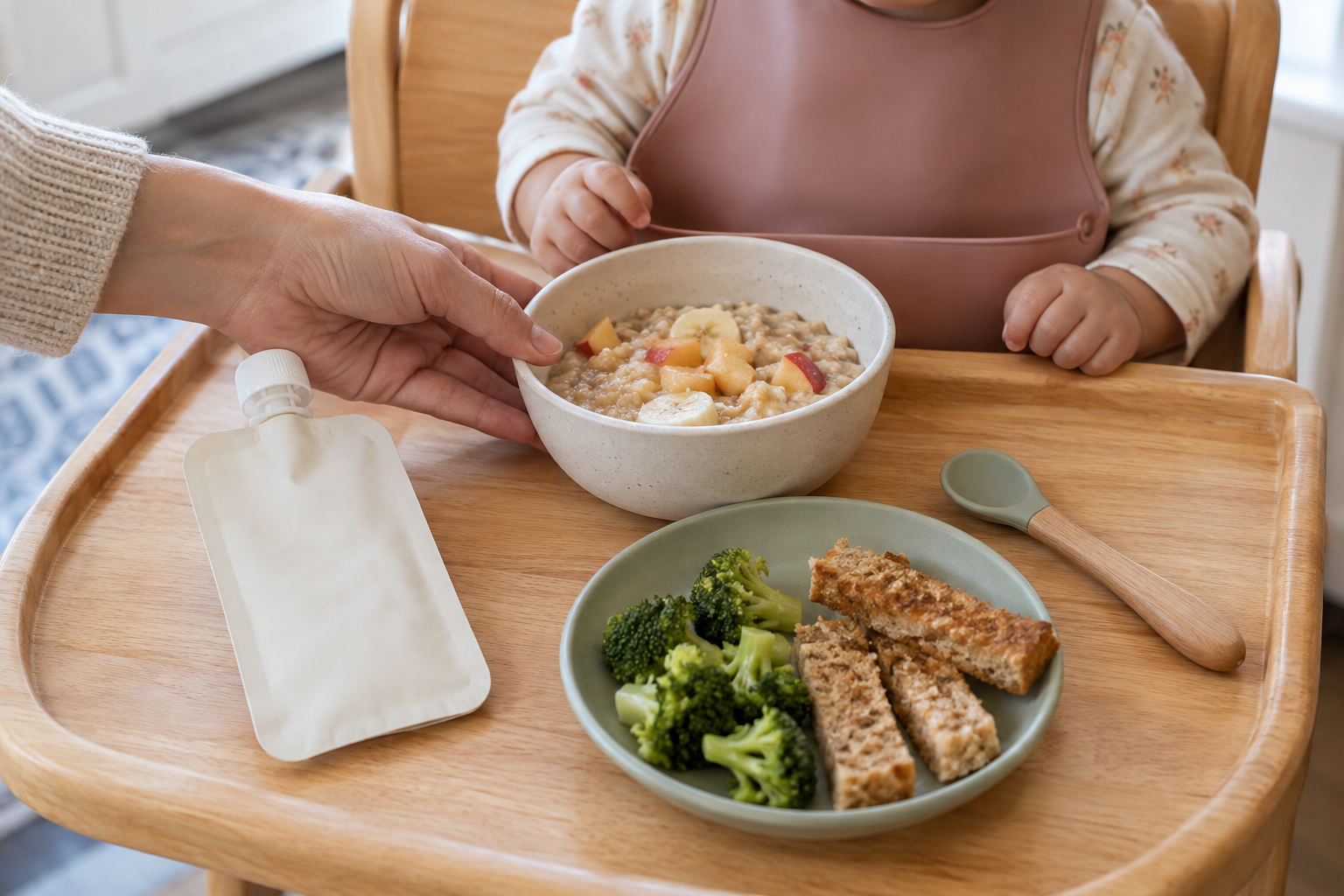
A pouch can solve a real problem when you are travelling, short on time or caught without a prepared snack. You do not need to ban it. You do need to look beyond the reassuring fruit and vegetable pictures on the front.
- Check which ingredient comes first. A pouch displaying several vegetables may still be mostly sweet fruit.
- Rotate flavours instead of repeatedly buying the one your baby accepts most easily. Convenience should not quietly shrink the range of foods offered.
- When practical, squeeze the puree onto a spoon or into a bowl. Seeing, smelling and handling food gives your baby a fuller eating experience than always sucking from a spout.
- Serve an appropriate texture alongside the puree when your baby is ready. A pouch can accompany soft finger food or a mashed family food rather than replacing texture practice.
- Keep the pouch within a meal or snack instead of allowing prolonged sucking over a long stretch. Repeated exposure leaves teeth in contact with sugars more often and can also turn eating into background grazing.
The question is not whether a pouch is good or bad. Ask what job it is doing. A backup food within a varied diet is different from a sweet puree appearing at every meal. If pouches are becoming the default because your child refuses other textures or flavours, that is a feeding issue worth addressing rather than disguising with a different brand.
Key takeaways
- Do not treat the natural sugar in whole fruit or plain dairy as if it were added sugar.
- Keep added sugar, syrups, juice and concentrates from becoming routine ingredients in everyday weaning foods.
- Use the ingredient list to interpret the total-sugars number; the number alone cannot tell you where the sugar came from.
- A no-added-sugar claim does not necessarily mean a product tastes only mildly sweet.
- Offer sweet, savoury, tart and earthy flavours, plus increasingly varied safe textures as your baby’s skills develop.
- Use fruit pouches for convenience without letting them replace varied foods, shared mealtimes and texture practice.
At your next shop, change one repeat purchase rather than trying to rebuild the whole menu: choose plain yogurt, unsweetened porridge or a pouch that is not led by sweet fruit. At the next meal, add one recognisable flavour and one safe, manageable texture. Those small defaults will shape your baby’s diet more than one unusually sweet snack ever could.
References