
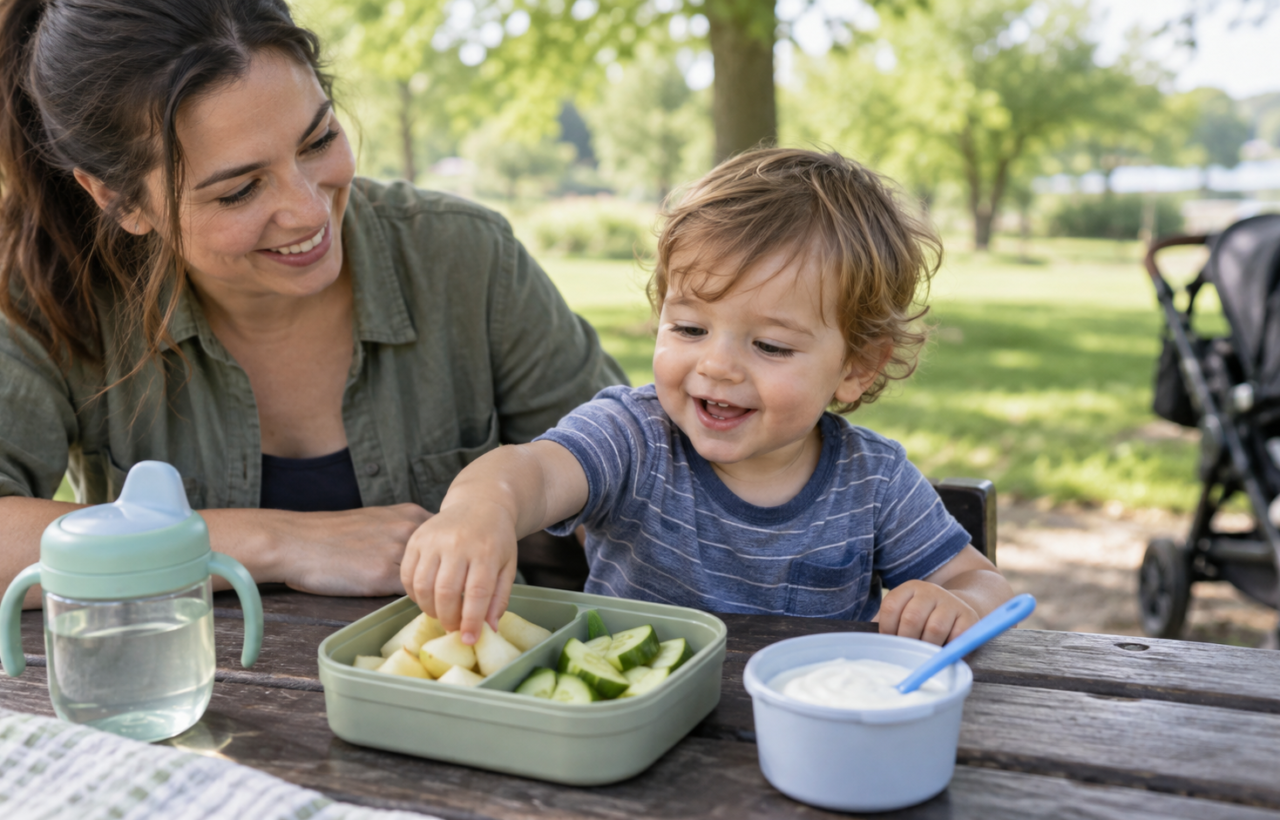
Your toddler has finished a playground session, refused half their drink and is asking for a snack before you have even buckled the stroller. You want something refreshing, portable and substantial enough to prevent another hunger request five minutes later.
The most useful answer is simple: offer an age-appropriate drink alongside a familiar, water-rich food. If the snack also needs to bridge the gap to the next meal, add a more filling food your child already eats safely. Hydrating food can support fluid intake, but it should not be expected to do the entire job.
Key takeaways
- A hydrating snack is a supplement to your child’s usual age-appropriate drink, not a replacement for it.
- Choose texture before ingredients. A food’s water content does not make a firm, slippery or round piece safe for a baby or young toddler.
- For a snack that lasts, pair a water-rich fruit or vegetable with a familiar source of protein, fat or starch.
- An electrolyte puree pouch can be convenient during ordinary busy days, but it is not a treatment for dehydration or a substitute for a filling snack.
- If your child seems ill, cannot keep liquids down or may be dehydrated, contact a pediatric health professional instead of trying to correct the problem with snack food.
Build the snack around three separate jobs
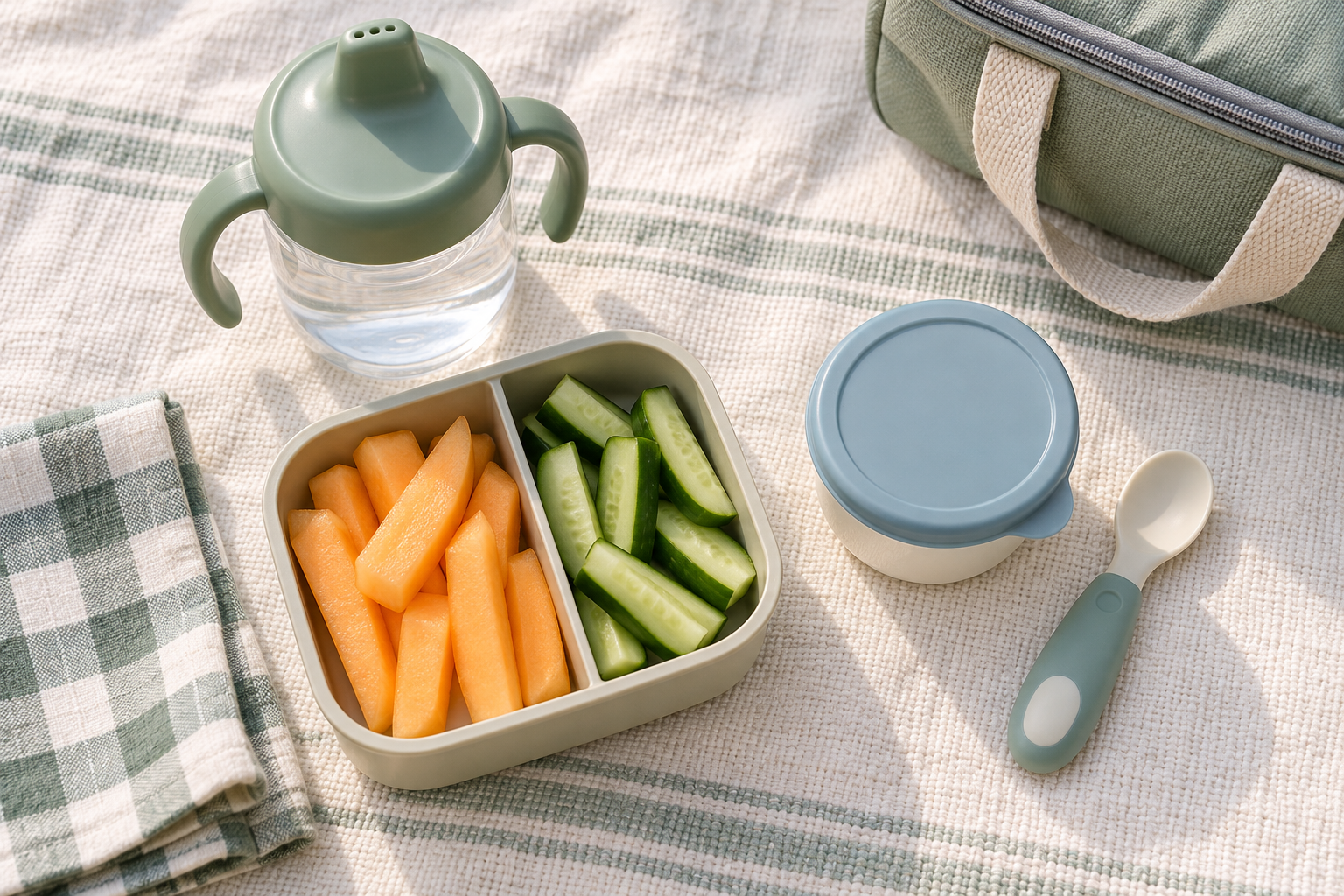
Parents often ask one small snack to do too much. Hydration, hunger and portability are related, but they are not the same problem. Separating them makes the choice easier.
- Cover the drink. Bring the breastmilk, formula, water or other drink that is appropriate for your child’s age and feeding plan. A juicy snack can contribute fluid, but it is less predictable than drinking.
- Choose a water-rich anchor. Start with something your child already accepts, such as unsweetened applesauce, a fruit puree, soft ripe pear or peach, mashed berries, ripe melon prepared safely, or a soft-cooked vegetable.
- Add staying power when you need it. Pair the hydrating item with a familiar food such as plain yogurt, oatmeal, egg, beans, hummus or soft toast. Use only foods and allergens that have already been introduced in a way appropriate for your child.
- Fit the format to the outing. A bowl and spoon work at home. A sealed container or pouch may be easier in a stroller or at childcare. Portability should change the package, not the basic plan.
This produces practical combinations rather than a search for one perfect product. You might serve pear puree with plain yogurt, applesauce with oatmeal, mashed berries stirred into yogurt, or soft ripe fruit followed by a familiar mini meal component. For a shorter gap before lunch, the water-rich item and a drink may be enough. For a long walk or busy afternoon, include the more substantial companion.
Temperature can help with acceptance, too. A chilled puree or cool piece of safely prepared fruit may feel more appealing after warm-weather play. Keep perishable food cold until you serve it, and discard food that has been handled, mouthed or left unrefrigerated rather than saving it for later.
Match the texture to the child, not the outing
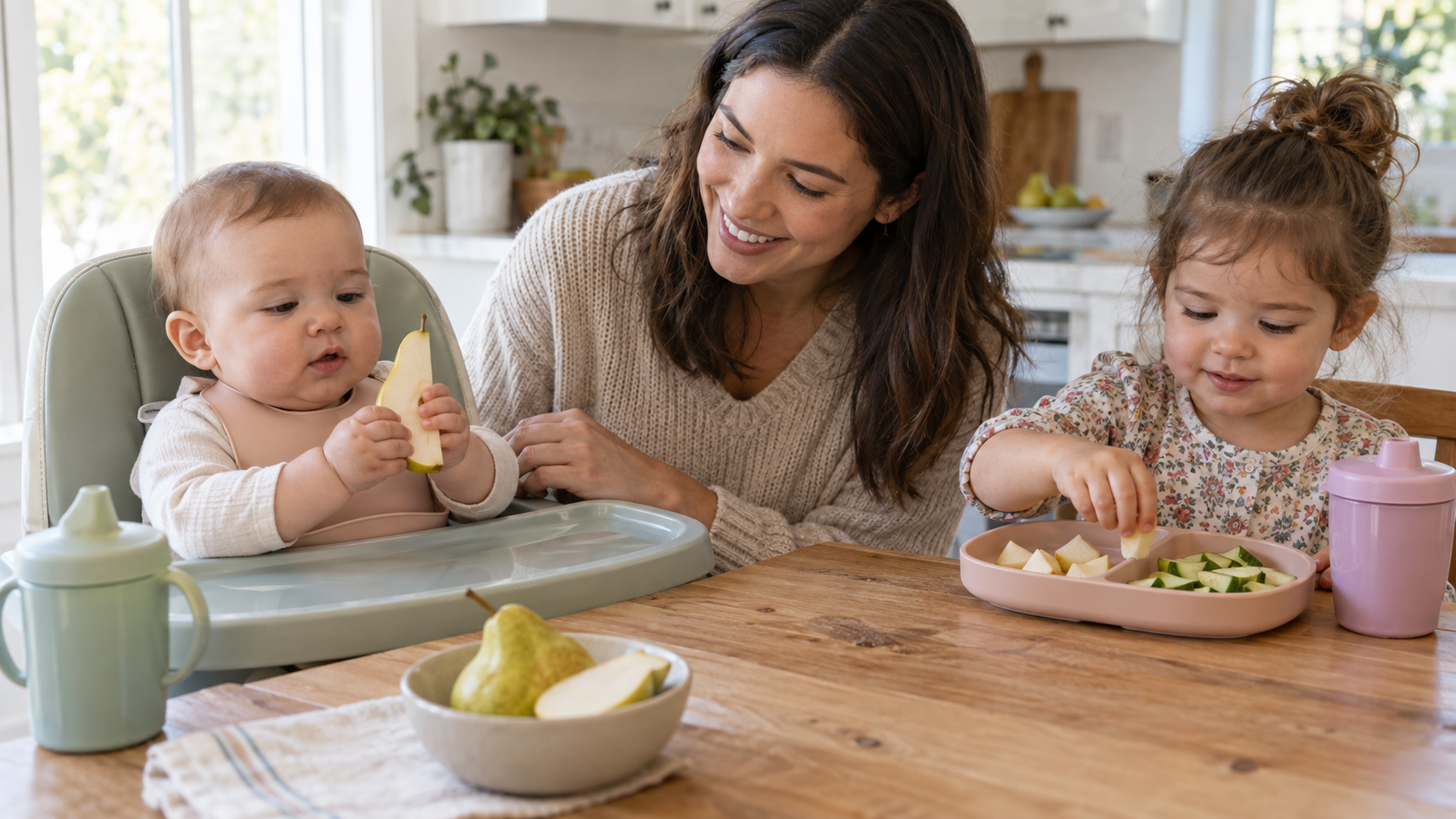
The word “fruit” can describe a smooth puree, a soft mashed spoonful or a firm raw chunk. Those are not interchangeable for a child under three. Start with the texture your child can already manage, then prepare the food accordingly.
- Before solids: A snack is not the tool for hydration. Follow your child’s established milk-feeding plan and ask their clinician for guidance if intake is a concern.
- During early solids: Offer smooth, mashed or appropriately soft food according to your child’s current eating skills. A pouch can be squeezed onto a spoon if that better matches how your baby eats.
- As self-feeding develops: Continue adapting the size, shape and softness of food. Hard raw pieces and firm, round or slippery foods can be choking hazards even when they contain plenty of water.
- For confident toddlers: Keep supervising. Movement, distraction and eating do not mix well, so have your child stop and sit before offering the snack.
A new food is also a poor choice for the five minutes before you leave home. Use outings for familiar foods and introduce new tastes or textures when you have the time and attention to observe how your child handles them.
Treat electrolyte pouches as convenience, not rescue
Electrolytes are minerals involved in fluid balance, but the word on a package does not turn a snack into medical rehydration. During an ordinary active day, the more useful questions are whether your child will eat the food, whether its texture is suitable and whether it solves the actual problem in front of you.
Once Upon a Farm markets its Strawberry Kiwi, Apple Berry Punch and Guava Strawberry Electrolyte Blends as fruit-and-vegetable purees made with ingredients that naturally provide electrolytes. The products are described as organic, Non-GMO Project Verified, free from added sugar and made without artificial flavours or colours. Those features may make them a workable grab-and-go option, but the brand also says the blends are not designed for medical rehydration or sustained energy.
That distinction should guide how you use any product making a hydration claim. A pouch can replace the fruit or vegetable part of a snack when convenience matters. It should not automatically replace the drink, and it may need a filling companion if the next meal is still far away.
Before buying, check the ingredient list for allergens and ingredients your child has not tried. Confirm that the package and texture suit your child’s feeding stage. Then decide whether the convenience is worth it for your routine. “Electrolyte” is a feature to evaluate, not a reason to ignore the rest of the label.
If you suspect actual dehydration, skip the snack experiment. A child who seems unwell, cannot keep liquids down or is taking much less fluid than usual needs individualized guidance from a pediatric clinician. A retail puree pouch is not a substitute for that assessment or for a medical rehydration product recommended by a professional.
Pack for the moment when plans usually fall apart
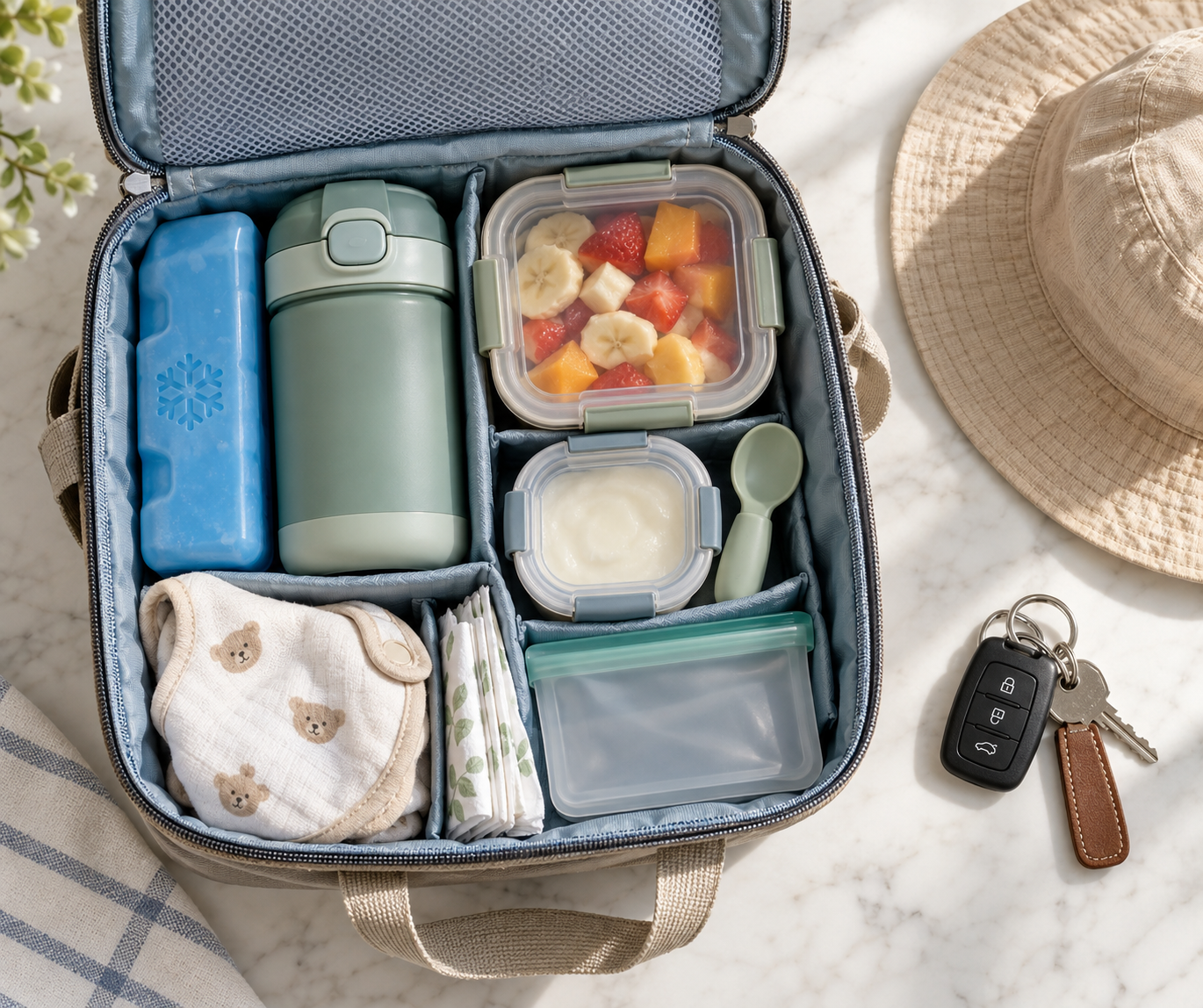
The difficult moment is rarely the beginning of the outing. It is the transition home, the unexpected playground extension or the wait before the next meal. Pack for that handoff.
- Choose two water-rich foods your child already eats in a safe texture.
- Select one filling companion that travels well and has already been introduced.
- Pack your child’s usual age-appropriate drink separately.
- Use an insulated bag and cold pack when the food needs refrigeration.
- Include a spoon, bib and resealable bag if the format calls for them.
- Stop and seat your child before serving, even when the snack itself is portable.
You do not need a different snack system for every trip. Pick two dependable combinations, keep the portable components together and restock them after each outing. The next time active play runs long, you will have a drink for hydration, a water-rich food for support and enough substance to get your child calmly to the next meal.
References




