

You pick up two cans of infant formula and find two walls of unfamiliar names. One highlights whole milk. Another says gentle, organic, palm-oil-free, or made with DHA. The harder you stare, the less obvious the choice can feel.
You do not need to memorize every compound. You need to identify what supplies the carbohydrate, protein, and fat; confirm that the longer list covers essential nutrients; and separate meaningful recipe differences from front-label shorthand.
Start with the four jobs every ingredient list must cover
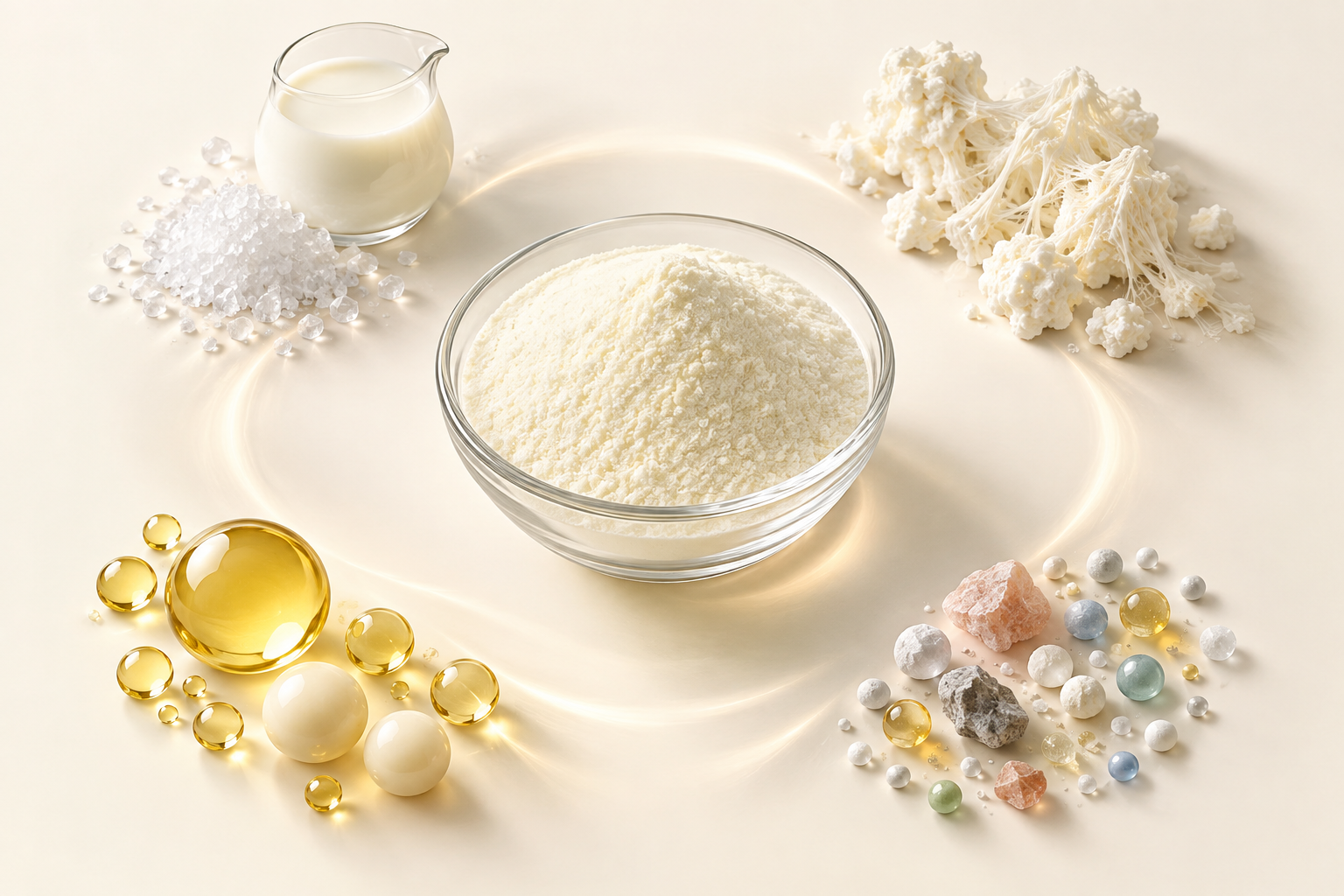
An infant formula is a nutritional system, not a collection of individually impressive ingredients. Its carbohydrate supplies energy. Its protein and fat support growth and development. Its vitamins, minerals, and other nutrients fill specific physiological roles. A long label is therefore expected; the shortest list is not automatically the best one.
| Part of the formula | What it does | Names you may encounter |
|---|---|---|
| Carbohydrate | Provides energy for growth | Lactose |
| Protein | Supplies the building blocks used by a growing body | Milk protein, whey, casein, partially hydrolyzed whey |
| Fat | Provides energy and essential fatty acids | Plant-based oils, milk fat |
| Vitamins, minerals, and other nutrients | Support functions including blood, bone, brain, eye, and immune development | Ferrous sulfate, cholecalciferol, DHA, ARA, choline |
This framework changes the question from, "Do I recognize every word?" to, "What nutritional job is this word doing?" That is a much more reliable way to read the can.
Read the carbohydrate and protein lines in context
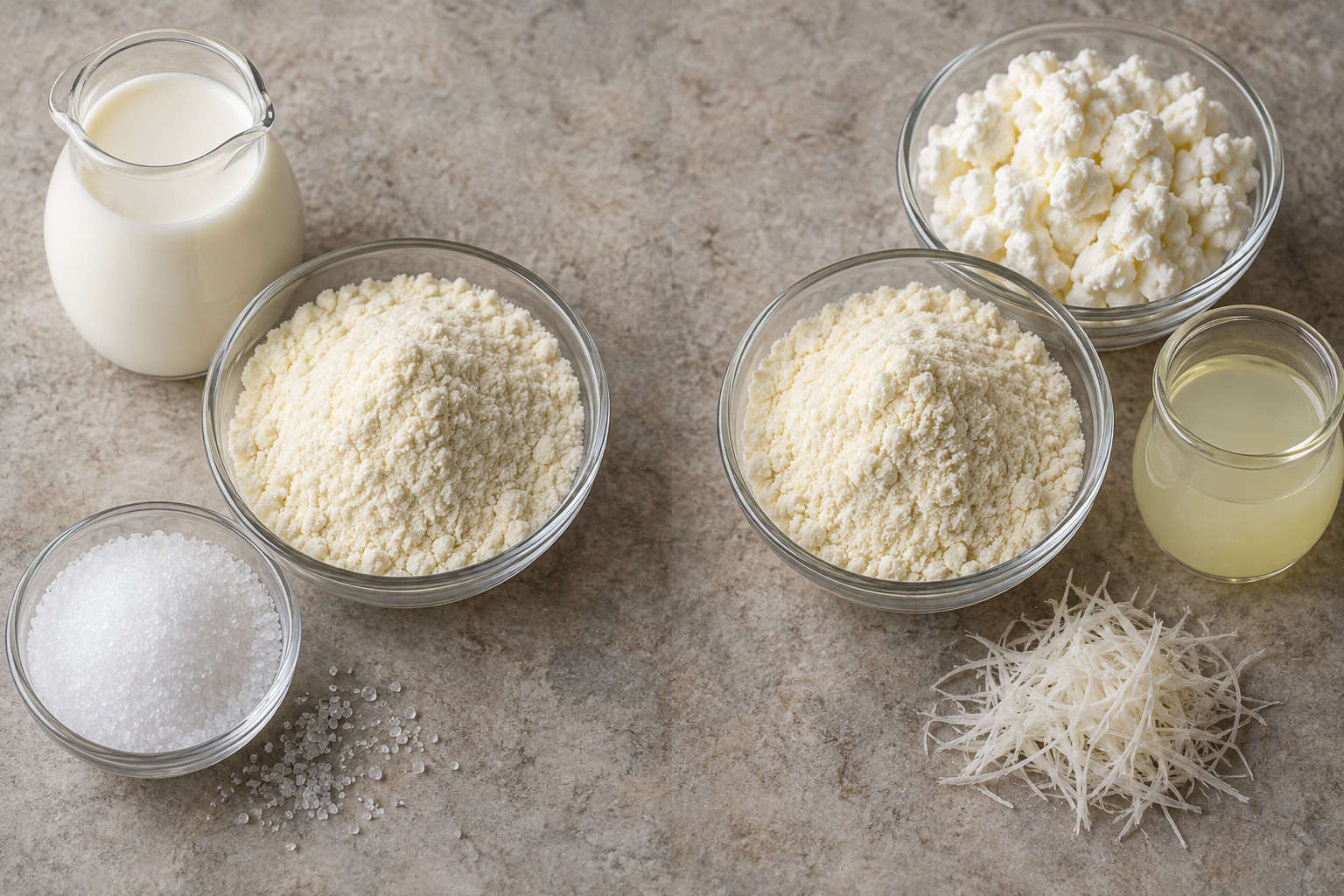
Lactose is the primary carbohydrate in breast milk, and it appears in some milk-based formulas as the carbohydrate source. It provides energy for growth, can help with mineral absorption, and supports beneficial bacteria that may contribute to a diverse gut microbiome. Those are the relevant facts behind lactose on an ingredient list.
A claim such as "no corn syrup" or "no maltodextrin" tells you what a recipe excludes. It does not, by itself, tell you whether the entire formula is more nutritious or more suitable for your baby. Find the carbohydrate that is present instead of stopping at the absence claim.
Protein descriptions require the same discipline. Milk-based recipes may use skim milk, whole milk, whey, casein, or a combination. Milk can also contribute lactose and minerals such as calcium and phosphorus, so a milk ingredient does more than one job.
The form of the protein can vary even within one manufacturer’s range. For example, one whole-milk formula uses a 60:40 whey-to-casein ratio, while a gentle formula in the same range uses partially hydrolyzed whey. That distinction describes the recipe; it does not create a universal ranking in which one protein format is best for every infant.
Do not let a broad front-label word such as "gentle" do all the decision-making. Turn the can around and identify the actual protein. If you are choosing formula because of a suspected allergy, feeding difficulty, growth concern, ongoing reaction, or another medical issue, ask your baby’s clinician before switching. An ingredient list cannot diagnose the cause, and this kind of label comparison should never override a prescribed formula.
Fat, DHA, iron, and vitamin D explain much of the long label

Babies need dietary fat, so formulas use a fat source or blend to provide energy and essential fatty acids. Plant-based oils can supply important fatty acids, while whole-milk formulas may also contain milk fat. The precise blend varies by recipe.
A palm-oil-free claim is another statement about composition, not a complete nutritional verdict. It tells you that palm oil is absent. It does not tell you what the replacement blend contains, how the rest of the formula is constructed, or whether the product addresses a particular medical need. Read the fats that are present, not just the one that is missing.
DHA is an omega-3 fatty acid involved in brain development and function as well as eye development and health. One formula source is Schizochytrium oil, which comes from single-celled sea algae that naturally produce DHA. The unfamiliar oil name and the recognizable nutrient are therefore connected: the oil supplies the DHA.
The same pattern explains several chemical-looking names:
- Ferrous sulfate is a source of iron. Iron is needed for healthy red blood cells, helps transport oxygen to cells, and supports brain and cognitive development.
- Cholecalciferol is a form of vitamin D. Vitamin D promotes calcium absorption, helps maintain calcium and phosphate levels needed for bone development, and also supports immune function and infant growth.
- DHA, ARA, and choline may appear among the added nutrients in a formula even though their names look different from the basic milk, carbohydrate, protein, and oil ingredients.
Seeing ferrous sulfate instead of the word "iron" does not mean iron is missing. Seeing cholecalciferol instead of "vitamin D" does not mean the vitamin has been replaced by an unrelated additive. Often, the technical name identifies the form used to deliver a familiar nutrient.
Put organic, whole milk, and standards claims in their proper place
Organic certification describes how qualifying ingredients are sourced and produced under a defined standard. For a formula carrying USDA Organic certification, that means meeting the requirements of the US organic program. It does not mean a non-organic formula is nutritionally incomplete, and it is not a measure of how committed a parent is to feeding well.
Whole milk is also a compositional detail, not a complete description of the product. It can mean that milk fat contributes to the formula’s fat profile, but the recipe still contains other ingredients needed to deliver carbohydrates, protein, essential fatty acids, vitamins, minerals, and additional nutrients.
Standards language deserves careful reading too. A formula described as "EU-inspired" may be American-made while following selected European Commission approaches or requirements. The phrase does not tell you, on its own, which standards were followed or how the product was manufactured. Look for the manufacturer’s specific explanation rather than treating the phrase as a freestanding seal of superiority.
Ingredients are only part of a formula’s quality story. Sourcing, manufacturing controls, and testing also matter between raw materials and the finished can. If two recipes look equally suitable, examine what each manufacturer actually discloses about those processes. Treat specific, verifiable details as more useful than broad assurances.
Use this five-minute formula-label check

When you are comparing cans, work through the label in the same order each time:
- Start with your baby’s actual requirement. Note whether you are making a routine choice or following clinical advice. Do not replace a prescribed or medically indicated formula with a retail alternative based on an ingredient preference.
- Identify the carbohydrate. Find what supplies energy instead of relying on an absence claim on the front of the package.
- Decode the protein. Look for milk, whey, casein, or partially hydrolyzed whey. Treat words such as "whole milk" or "gentle" as prompts to inspect the recipe, not as conclusions.
- Find the fat sources. Check whether the recipe uses plant oils, milk fat, or both. A palm-oil-free claim answers only one narrow question.
- Translate the nutrient names. Ferrous sulfate supplies iron, cholecalciferol supplies vitamin D, and an algal oil may supply DHA. Confirm that unfamiliar words have a nutritional role before dismissing them.
- Compare the differences that could change your decision. Focus on carbohydrate source, protein form, fat composition, certification, and any clinician-directed need. Do not try to rank two complete recipes by whichever has fewer syllables.
Key takeaways
- Read an infant formula by nutritional function: carbohydrate, protein, fat, then vitamins, minerals, and other nutrients.
- Technical names often identify the form of a familiar nutrient rather than an unnecessary extra.
- "No corn syrup" and "no palm oil" are exclusion claims, not full assessments of a formula.
- Organic, whole milk, gentle, and EU-inspired describe particular attributes; none establishes that a product is best for every baby.
- If your decision involves symptoms, an allergy concern, growth, feeding difficulty, or a prescribed formula, take both labels to your baby’s clinician instead of experimenting from the ingredient list alone.
For your next comparison, choose the two cans you are actually considering and mark the carbohydrate, protein, fat, iron, vitamin D, and DHA. If you can explain what each one contributes, you have reduced a dense label to the few distinctions that can genuinely inform your decision.
References




