
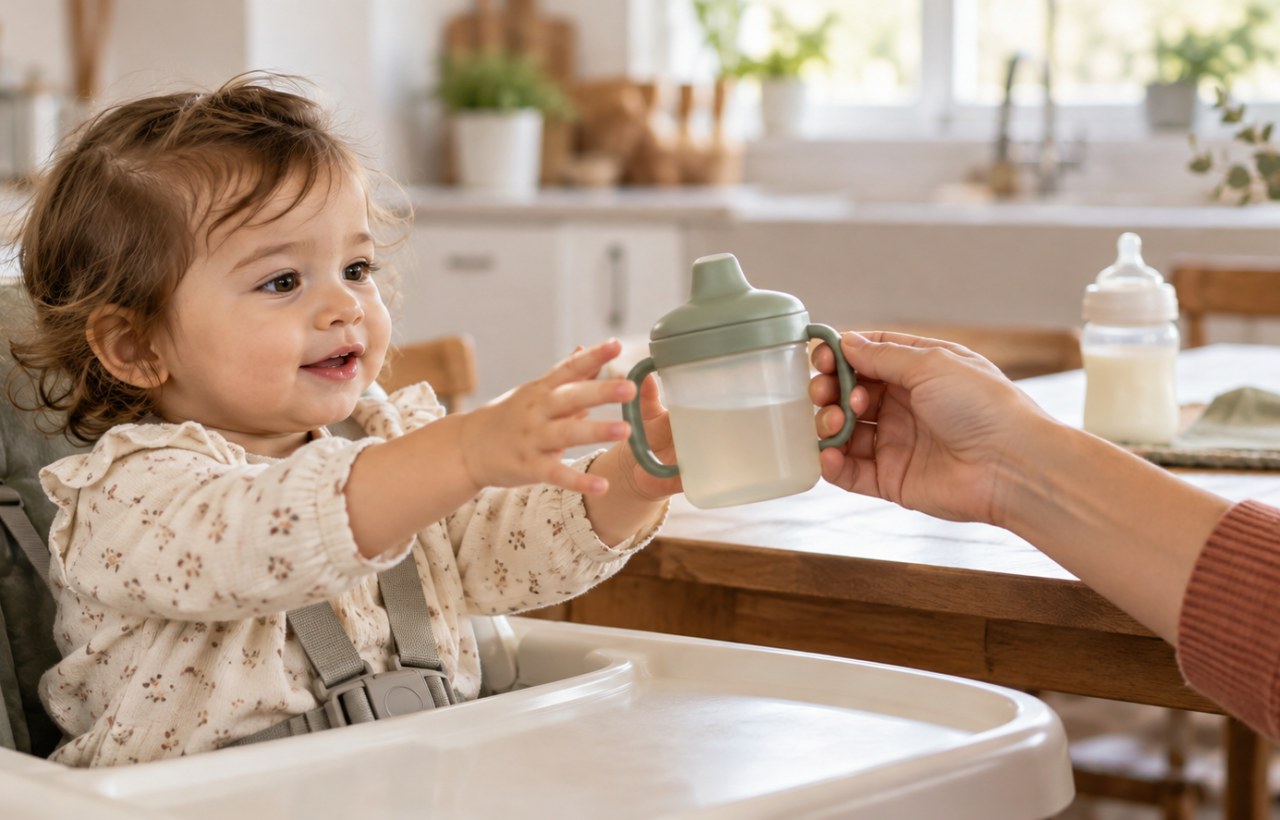
Your toddler drinks water from a sippy cup, then pushes away the same cup when it contains milk. Or they reject every cup and ask for the bottle. Those may look like the same problem, but they call for different responses.
The useful first step is to stop treating every refusal as a failed cup lesson. A toddler may be resisting the cup, the taste of milk, or the loss of a comforting bottle routine. Work out which part is difficult, then help them practise that part without turning every drink into a contest.
First, work out what your toddler is refusing
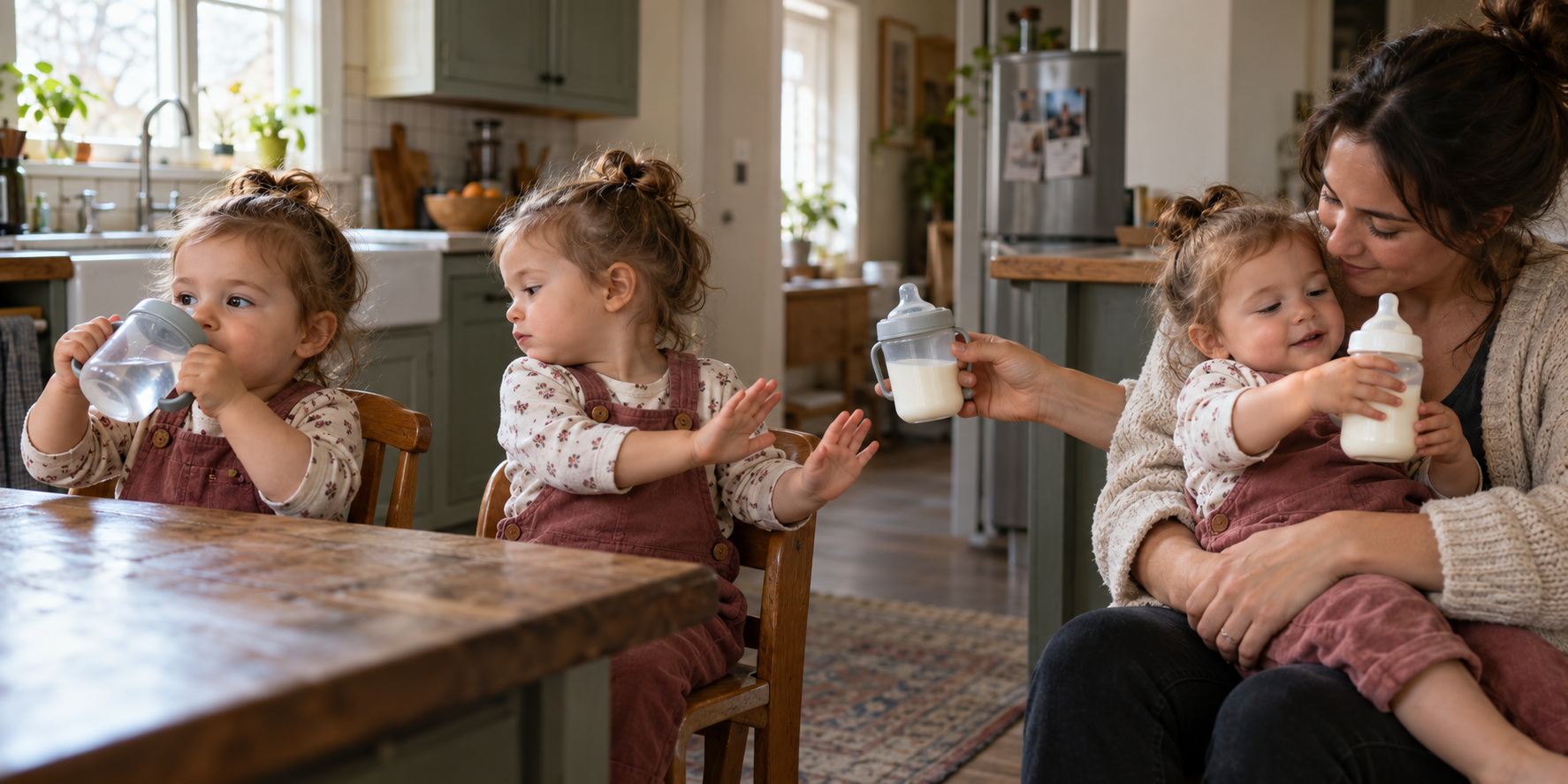
Many toddlers connect milk with the bottle and the comfort that comes with it. A cup can feel unfamiliar or require a different drinking technique. Some children can use a cup perfectly well but do not believe milk belongs in it. Others may simply dislike milk once the pleasure of the bottle is removed.
You can look for the pattern across a few ordinary drink opportunities:
- Offer water in the cup. If your toddler drinks it, they have at least some of the cup skills they need.
- Offer a small amount of milk in the same cup at another low-pressure moment. Accepting water but rejecting milk points more toward a milk-and-bottle association, or a dislike of milk, than a general inability to use the cup.
- Notice what happens with milk elsewhere. If a bottle is still part of the routine, observe whether milk is accepted there. Do not reintroduce a discontinued bottle merely to run this test.
- Watch what happens after dairy. Refusal accompanied by recurring stomach symptoms deserves a different response from a simple preference for the bottle.
This is not a home diagnosis. It is a way to avoid applying the wrong solution. A colourful new cup will not resolve stomach pain, while bargaining over milk will not make an unfamiliar cup easier to handle.
Make the cup familiar before expecting a full serving

The American Academy of Pediatrics guidance summarized here recommends introducing a sippy cup between 6 and 9 months, initially with breast milk, formula, or water, and offering whole cow’s milk at age 1. If your toddler is starting later, that does not mean the transition has failed. It means the cup needs time and repetition to become ordinary.
- Give the cup some appeal. Let your toddler choose a colour or character, or decorate an appropriate cup with stickers. The choice gives them a small amount of control over a change they did not request.
- Begin with a drink they already accept from a cup. If water works, use it to build comfort with holding, tipping, sipping, and swallowing before making milk the test.
- Offer a small amount. The first goal is not an empty cup. It is one manageable interaction: touching the cup, bringing it to the mouth, or taking a sip.
- Let your toddler see cup drinking as normal. Use cups during family meals and drink alongside them. A calm example is more useful than a long explanation.
- Praise the attempt. Notice a sip or a good try without making the amount consumed the measure of success.
- End the offer calmly. If your toddler refuses, put the cup away without pleading, bargaining, or showing frustration. Offer it again at another normal opportunity.
You can describe the cup positively as a growing skill, but avoid shaming your toddler for wanting the bottle. The bottle may be tied to comfort, sleep, or closeness. Calling it a baby habit can add embarrassment without teaching the new skill.
When milk is the sticking point, lower the pressure
A toddler who happily drinks water from a sippy cup does not need an intensive lesson in how cups work. They need time to build a new connection: milk can come from this container too.
Keep offering small amounts of milk in a low-pressure setting, provided there is no medical reason to avoid it. Let your toddler see other family members drink milk if that is already part of family life. If they take one sip, treat that as useful practice rather than immediately asking for another.
It is also possible that your child tolerated milk mainly because the bottle itself was comforting. Once the bottle disappears, their actual opinion of milk becomes clearer. That does not mean you need to make them like it. It means you should separate two goals: learning to drink from a cup and getting the nutrients their diet requires.
Try to change one variable at a time. If the cup, drink, timing, and expectations all change together, you will not know what caused the refusal. A familiar cup with water can build the skill; the same cup with a small amount of milk can test the association. Repeated, neutral offers give you better information than one high-stakes serving.
Protect nutrition while the cup catches up
Milk supplies calcium, vitamin D, protein, and fat, but cow’s milk is not the only possible source of those nutrients. For children ages 1 to 3, the American Academy of Pediatrics benchmark cited here is 700 milligrams of calcium per day and two to three dairy servings. Use that as a planning reference, not a reason to count every bite or force a serving.
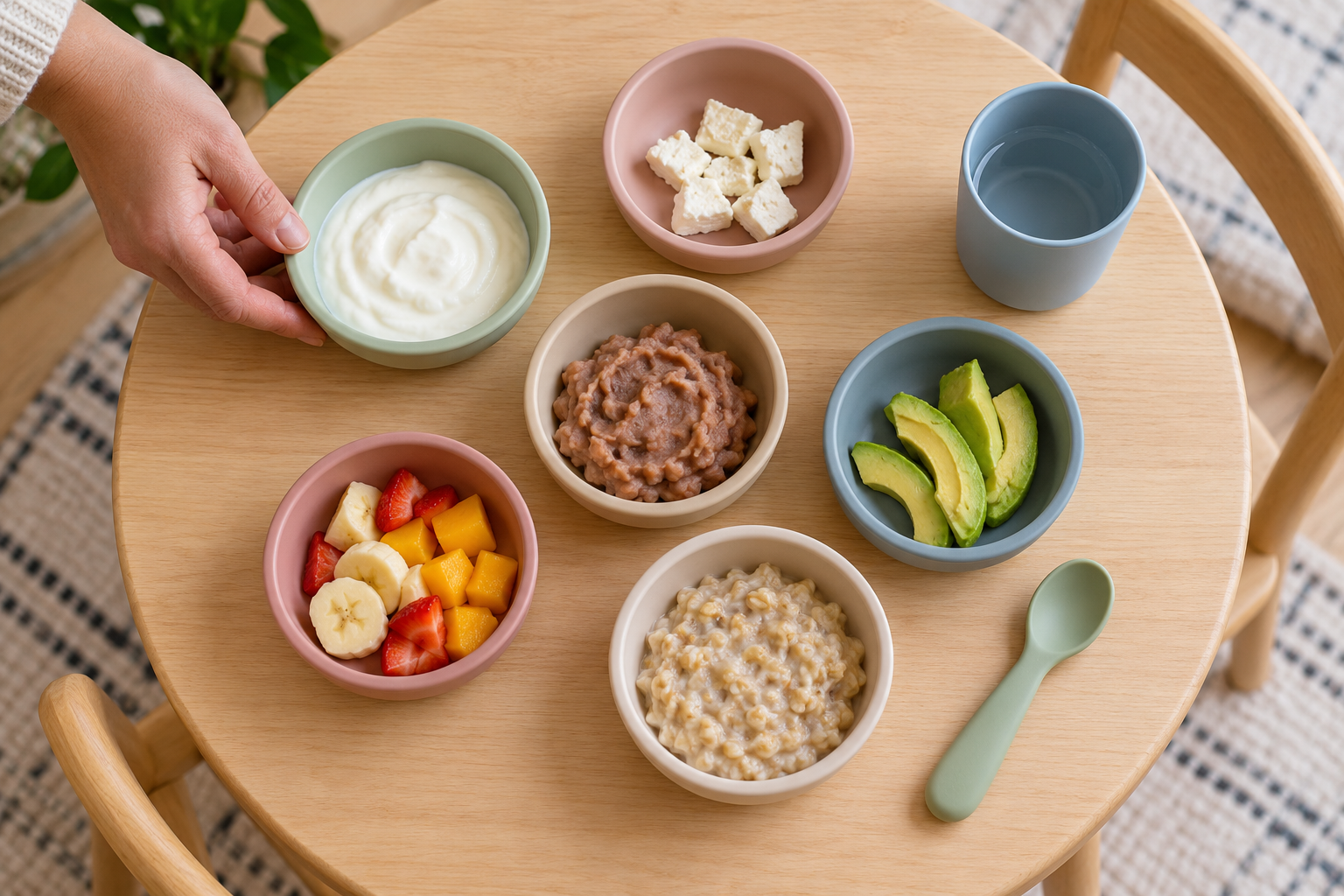
If your toddler will not drink cow’s milk from a cup, foods that can contribute calcium include:
- Yogurt and cheese, if your child can eat dairy.
- Calcium- and vitamin D-fortified plant-based milk without added sweeteners. Products differ, so check the label and ask your child’s health care provider which option fits their needs.
- Calcium-set tofu, beans, lentils, and dark leafy greens.
- Salmon and sardines.
- Calcium-fortified cereals with little or no added sugar.
- Smooth nut or seed butter mixed into suitable foods. Do not give a toddler whole nuts, which are a choking hazard.
You do not have to solve the cup transition and the entire nutrition question in the same drink. Your role is to keep suitable foods and drinks available, watch the overall pattern, and get individual advice if the diet is restricted by allergy, sensitivity, growth concerns, or persistent refusal.
Notice discomfort instead of assuming stubbornness
Cup refusal alone does not show that a toddler is lactose intolerant. Lactose intolerance typically appears after age 3, but recurring symptoms after dairy still warrant attention. Possible symptoms can begin within minutes or several hours after eating or drinking dairy and may include gas, cramping, bloating, nausea, diarrhea, stomach rumbling, or unusual irritability.
Talk with a health care provider if those symptoms repeatedly follow dairy or you suspect an allergy, sensitivity, or other condition. Do not diagnose the cause from a cup refusal or keep pushing milk to prove a point. If your toddler is drinking very little overall or seems unwell, seek prompt medical advice rather than waiting for the cup transition to improve.
Key takeaways
- Drinking water from a cup but refusing milk usually points to a milk, container, or comfort association rather than a complete lack of cup skills.
- Start with small, low-pressure practice. A sip is progress; finishing a serving is not the first goal.
- Let your toddler choose or decorate a cup, model cup drinking, praise attempts, and avoid shaming their attachment to the bottle.
- Keep cup practice separate from nutrient intake. Calcium and other nutrients can come from suitable dairy foods, fortified alternatives, and other calcium-rich foods.
- Recurring symptoms after dairy need professional assessment. Cup refusal by itself is not a diagnosis.
For the next cup offer, choose one small goal: let your toddler explore the cup, accept it at the table, or take one sip. Keep the moment ordinary. Familiarity grows through calm repetition, and that is what eventually allows the cup to replace the bottle.
References




