A Tula print may be what catches your eye, but the pattern is not what determines whether you will reach for the carrier every day. The useful question is whether the exact carrier suits your baby’s stage, fits your body, works in your climate and can survive the way your family actually uses it.
Treat the collection as a shortlist, not a decision. Check compatibility and fit first, fabric and care second, and colour or print last. That order protects you from buying a beautiful carrier that is uncomfortable, unsuitable or too inconvenient to use.
Start with the carrier model, not the collection name
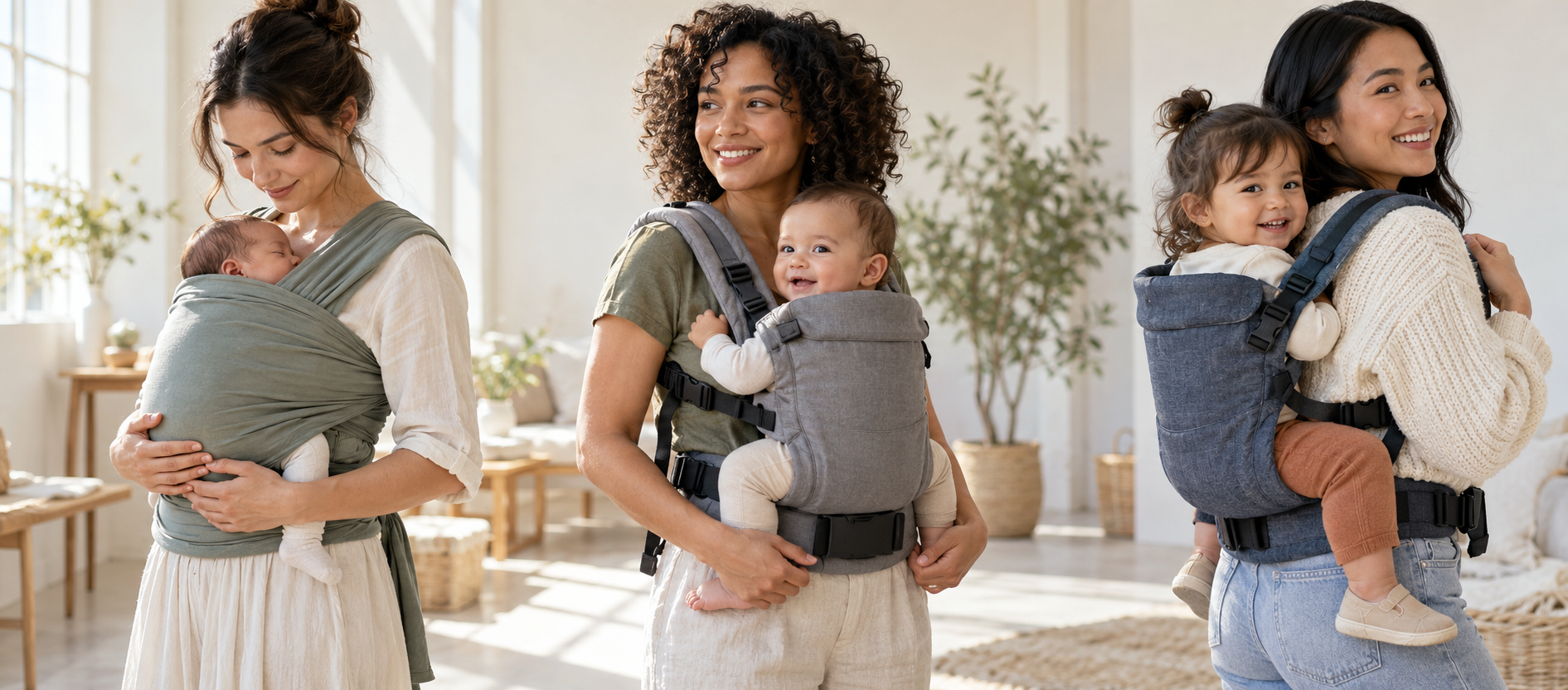
The Tula collection is presented around comfortable designs and a wider choice of fabrics, colours and prints. That is useful if you want baby gear to feel like part of your wardrobe. It does not tell you whether every carrier in the collection has the same specifications, adjustment system or suitability for a particular child.
Before comparing patterns, open the listing for the exact model and variant you are considering. Record the answers to these questions:
- What child size, weight or developmental stage does the manufacturer support?
- Which carrying positions are approved for this exact model?
- Does use with a newborn require a particular adjustment, insert or accessory?
- What fabric is used, and what care instructions apply to it?
- Which parts are included in the listed price?
- Can the straps and belt be adjusted for every adult who expects to use it?
- What are the retailer’s return conditions after the package has been opened or the carrier tried on?
Do not infer those answers from a lifestyle photograph or from another Tula model with a similar name. If the listing is unclear, ask the brand or retailer to confirm the specification before you order. A missing compatibility detail is a reason to pause, especially when you are shopping for a newborn or a child near a model’s stated limit.
A good fit has to work for both baby and wearer
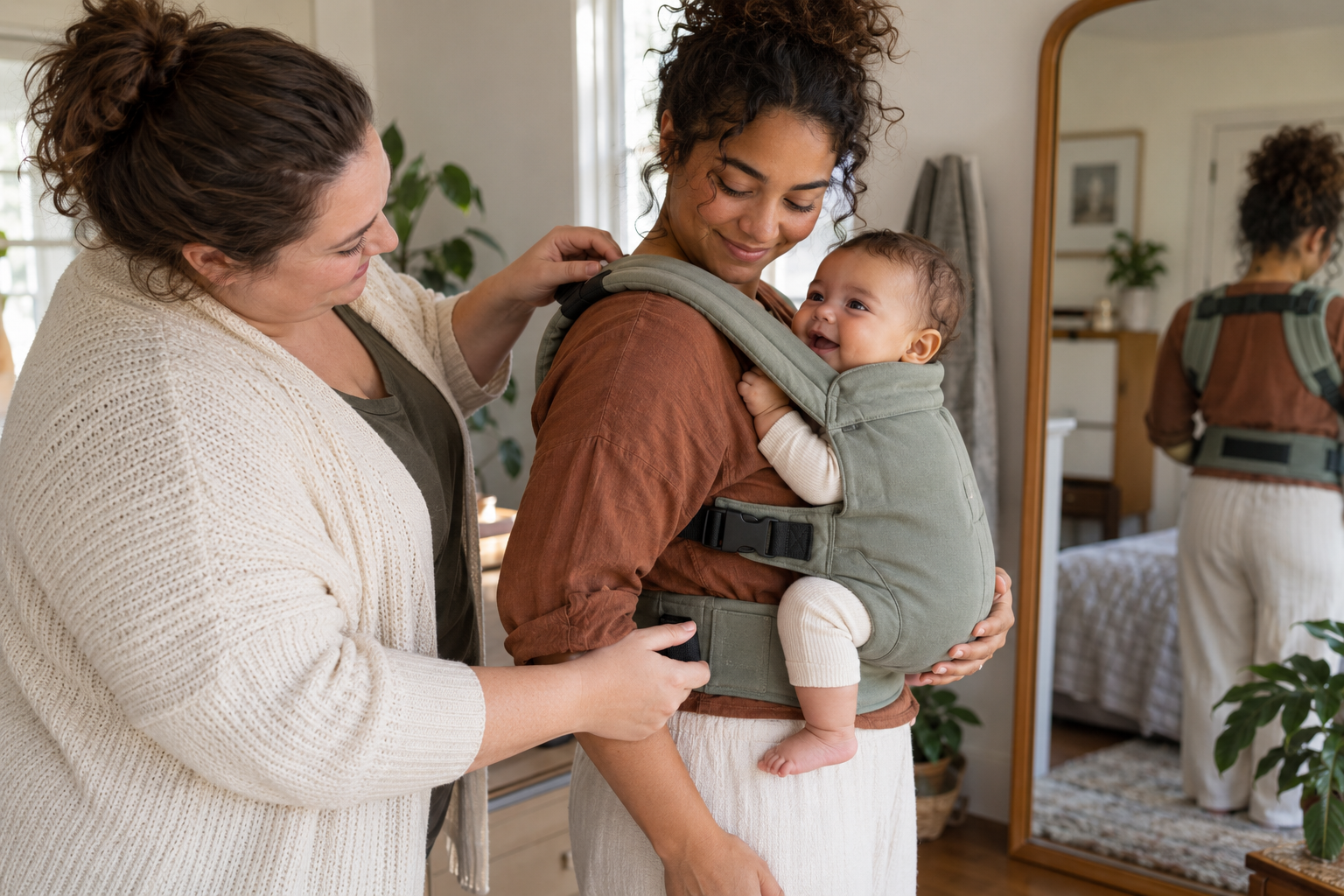
Comfort is not a universal product feature. The same carrier can sit differently on two adults, and an adjustment that works at one stage may need to change as your baby grows. A useful fitting check therefore looks at two bodies separately.
Check your baby’s position and airway first
Follow the instructions for the exact model every time you change position or adjust the carrier for growth. Once secured, your baby’s face should remain visible and uncovered, with a clear airway and the head and neck supported as required for their developmental stage. The carrier should be snug enough to prevent slumping, and the baby’s chin should not be forced down against the chest.
Recheck the position after walking, sitting down or adding a layer of clothing. Fabric can shift even when the initial setup looked correct. If your baby was born prematurely, had a low birth weight, or has a breathing or other medical concern, ask an appropriate pediatric health professional whether and how babywearing is suitable before using a carrier. Any breathing difficulty, colour change or unusual limpness requires immediate removal from the carrier and urgent medical attention.
Notice pressure instead of waiting to get used to it
For the wearer, look for a stable fit that does not depend on repeatedly tightening the carrier as you move. Shoulder pressure, rubbing, numbness or sharp back discomfort are not details to overlook because you like the print. First confirm that the carrier is adjusted correctly. If those problems remain, the model may not suit your proportions or the load distribution you prefer.
If two adults will share the carrier, both should try the full adjustment process. Make sure each person can fasten, tighten and release it without relying on the other. Once you find comfortable settings, a quick photo of the strap positions can make switching users less frustrating, but each wearer should still perform a fresh safety check.
Choose fabric for your routine, then choose the print

New fabrics and colours expand your options, but a fabric name by itself does not tell you how the carrier will feel in your home or climate. Read the fibre composition and care label for the precise variant. Do not assume that two carriers with different prints have identical fabric or washing instructions.
Match the material to where you will wear it
Think through the warmest, messiest and most frequent use you expect. If you will walk outside in warm weather, ask how the material handles heat and airflow. If the carrier will be used under winter layers, make sure you can monitor your baby’s face and temperature without covering the airway. If spit-up, drool or snack residue is likely, check whether the required cleaning routine is realistic for you.
Washability is not just a yes-or-no question. Check whether the carrier can be machine washed, which cycle is permitted, whether any fasteners must be secured and how it must be dried. Follow the label rather than applying care instructions from another model. A carrier that takes longer to clean may still be right for occasional use, but it may become an irritation if it is your daily option.
Use style as a practical tiebreaker
Once two options meet the same fit and care requirements, preference matters. You are more likely to keep an item in rotation when you enjoy wearing it. Instead of asking which print looks best on the product page, compare it with the clothes and outerwear you already use most often.
- Choose a versatile colour if you want one carrier to work across most outfits and occasions.
- Choose a distinctive print if the carrier will function as the main visual piece of what you wear.
- Check the full-carrier view, not only a close-up swatch, so you can judge the scale and placement of the design.
- If more than one caregiver will use it, agree on a design everyone will willingly reach for.
There is no parenting advantage to choosing the most neutral option. The point is simply to let aesthetics decide between suitable carriers, not compensate for missing specifications or a poor fit.
Test the carrier against an ordinary day

A quick mirror check can miss the problems that appear during movement. Before buying, confirm the return policy and find out what kind of try-on is allowed. After purchase, keep the packaging and tags as required while you complete a careful test within the return period.
- Read the complete instructions for the exact carrier before placing your baby in it. Set up the main adjustments without the baby first.
- For the first fitting, use a controlled space and have another adult nearby if possible. Secure your baby exactly as directed, then check the face, airway and support.
- Walk, sit and make the ordinary movements your day requires. If you need to reach downward, support your baby and bend at the knees rather than folding at the waist.
- Recheck every buckle, strap and the baby’s position after moving. Notice whether the carrier has loosened, shifted or created pressure.
- Repeat the setup with any other caregiver who will use it. Do not assume one person’s strap settings are safe for another.
Include the details that usually create friction: putting it on without help, removing it when your baby is unsettled, wearing your usual coat or bag, and storing the carrier between outings. Do not improvise an unapproved carry position to solve a problem. If the instructions do not support what you want to do, choose another model.
A baby carrier also does not replace an approved child restraint in a moving vehicle. Plan separately for car travel, even if the carrier is convenient at your destination.
Key takeaways
- Verify the exact model’s child requirements, approved positions and accessory needs before comparing prints.
- Judge fit with your baby positioned according to the manufacturer’s instructions, not with an empty carrier.
- Keep your baby’s face visible, airway unobstructed and head supported for their developmental stage.
- Read the fibre content and care label for the precise colour or print you plan to buy.
- Have every intended wearer complete the adjustment and safety check independently.
- Let colour or print break a tie between suitable options; do not use style to excuse missing information or persistent discomfort.
Before adding a Tula carrier to your cart, write down your baby’s current stage, your main place of use, the adults who will wear it and the cleaning routine you can realistically manage. Reject any option that leaves one of those needs unresolved. When the practical choices are equally sound, choose the design you will be happy to put on again tomorrow.
References