School uniform shopping can look simple until the basket starts filling up. According to My Baba, the key question for parents is not just where to shop, but which branded school uniform pieces are actually worth buying from the kit shop.
With only limited detail available from the source, the most useful approach is a decision framework: separate required branded items from flexible basics, buy for real school-day use, and avoid paying extra for pieces that do not need a logo.
Start With The School Rules, Not The Shop
The biggest uniform mistake is shopping before the requirements are clear. Schools often distinguish between compulsory branded pieces and acceptable plain alternatives. That difference matters because branded items from a kit shop are usually the least flexible purchases: they are tied to one school, one colorway, and sometimes one supplier.
Before buying, parents should read the uniform list closely and look for words such as required, optional, plain, logo, regulation, or preferred. If the wording is vague, it is worth checking with the school rather than guessing. A quick clarification can prevent buying a logo item that never needed to be branded, or a cheaper alternative that the school will not allow.
When Branded Uniform Is Worth Prioritizing
My Baba frames the issue around deciding which branded pieces are worth buying from the kit shop. A practical rule is to prioritize branded items that are highly visible, clearly required, or difficult to match elsewhere. These are the pieces most likely to cause problems if they are missing or slightly wrong.
- Buy branded when the school explicitly requires a logo.
- Consider branded for standout items such as blazers, jumpers, sports tops, or outer layers if those are part of the official look.
- Be cautious with branded extras that are optional, rarely worn, or easy to replace with plain versions.
- Avoid buying multiples of expensive logo items until it is clear how often they are used.
This is where parents can save without cutting corners. The goal is not to avoid the kit shop entirely; it is to use it for the items that genuinely need to come from there.
Where Generic Basics Can Reduce The Bill
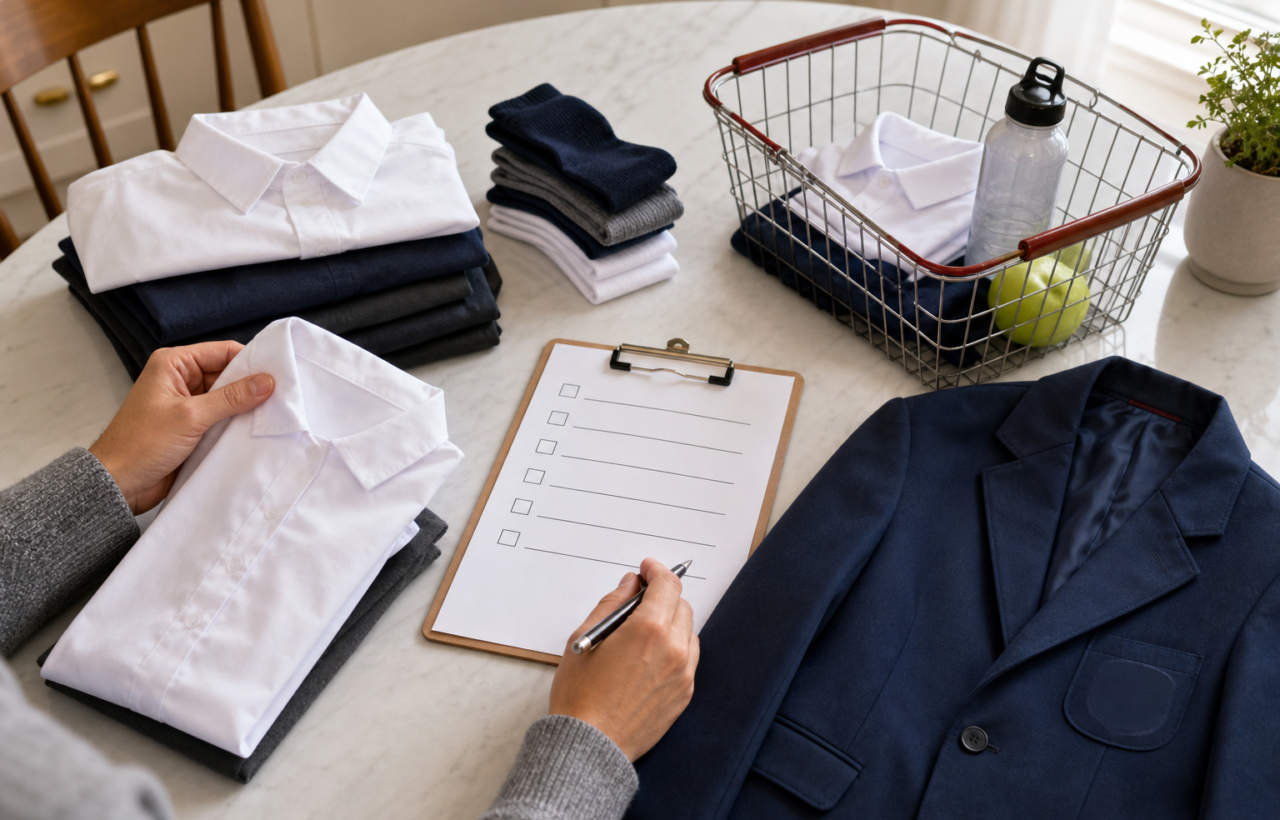
Many uniform wardrobes include basics that may not need to be branded, depending on the school rules. Plain shirts, trousers, skirts, socks, tights, underwear, and some shoes are often the categories where families look for value, durability, and easy replacement.
When choosing non-branded pieces, the important question is whether they fit the school’s requirements and the child’s day-to-day routine. A cheaper item is not a saving if it is uncomfortable, wears out quickly, or is rejected because the color or style is wrong. Equally, paying for a logo on an item that the school allows in plain form may not add much practical value.
Key Takeaways For Uniform Shopping
- Check the official uniform list before buying anything.
- Use the kit shop for compulsory branded pieces first.
- Look for plain alternatives only where the school rules allow them.
- Delay optional purchases until the child is actually using the uniform routine.
- Think in terms of wear, washing, comfort, and replacement, not just the checkout price.
How To Avoid Buying Too Much At Once
Back-to-school shopping can create pressure to solve the whole year in one order. For uniform, that can backfire. Children grow, preferences change, and some pieces that look essential on a list may turn out to be rarely worn.
A staged approach is usually more practical. Buy what is needed to start confidently, then adjust after the first few weeks once the actual routine is clearer. This is especially useful for sports kit, seasonal layers, spare logo items, and accessories that may not be used every day.
It also helps to label everything as soon as it enters the wardrobe. Uniform is designed to look uniform, which means lost items can be hard to identify. Labelling does not reduce the initial bill, but it can reduce replacement costs and avoid unnecessary duplicate purchases.
A More Practical Way To Shop
The most useful takeaway from My Baba’s topic is that school uniform shopping should be selective. The kit shop has its place, especially for required branded pieces, but it does not need to define the entire wardrobe.
Parents can keep costs under control by treating each item as a decision: Is it required? Does it need to be branded? Will it be worn often? Can it be replaced easily? That simple filter turns uniform shopping from a stressful bulk buy into a more controlled, budget-aware process.
Inspired by this post on My Baba.