A newborn who wiggles, squeaks, grimaces, or seems to breathe unevenly during sleep can make a parent wonder whether bedtime is actually restful. According to Newton Hush, much of this noisy, restless-looking sleep can be part of active sleep, a normal newborn sleep stage.
The useful question is not simply whether a baby is quiet. It is whether the patterns look like typical active sleep, whether the sleep space is safe, and whether any signs point to a need for medical advice.
What active sleep looks like in real life
Newton Hush describes active sleep as a lighter, more restless sleep stage that is similar to REM sleep. The source reports that active sleep makes up about 50% of a newborn’s total sleep, and that newborns enter this stage at the beginning of the sleep cycle before moving into quieter non-REM sleep.
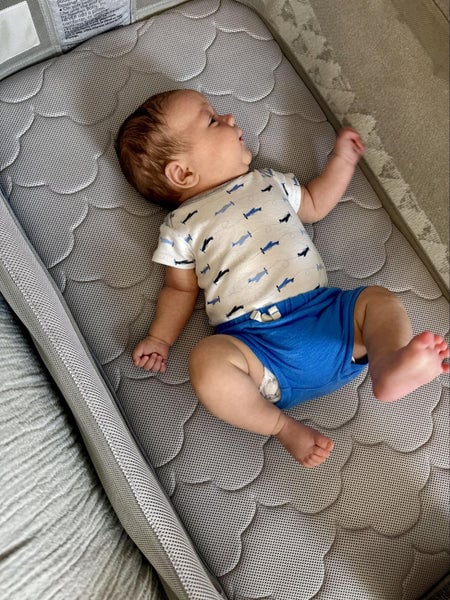
To a tired parent, that can look confusing. A baby may appear partly awake because the body is busy even while the baby is still asleep. The eyelids may flutter. Arms or legs may twitch or flail. Facial expressions may change quickly, including smiles, frowns, or grimaces. Grunts, gurgles, squeaks, and brief cries can also happen during this stage.
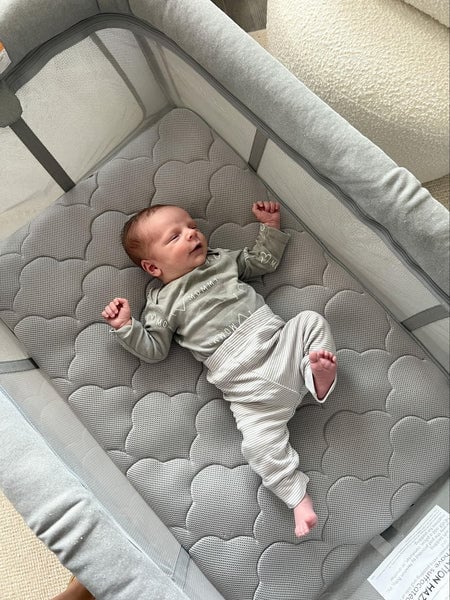
The main takeaway is that movement alone does not necessarily mean a newborn needs to be picked up. In active sleep, the brain and body may be doing a lot while the baby is still in a normal sleep phase.
Why this restless stage matters
Newton Hush frames active sleep as important for newborn development, noting that the baby’s brain is highly active during this phase. The source connects this stage with building neural connections, learning skills, and consolidating experiences and memory.
That does not mean every twitch has to be interpreted as a milestone. It simply means that active sleep is not wasted sleep. For newborns, a sleep period can be biologically busy even when it does not look peaceful from the outside.
Key takeaways
- Active sleep is a normal newborn sleep stage that Newton Hush says accounts for about half of newborn sleep.
- Common signs include eyelid fluttering, limb movement, changing facial expressions, grunts, gurgles, squeaks, brief cries, and a variable heart rate.
- Brief breathing pauses of 5 to 10 seconds are described by the source as normal periodic breathing of infancy.
- Parents should seek pediatric guidance for longer or concerning breathing pauses, labored breathing, frequent rapid breathing, or illness concerns.
- If a baby shows signs of rolling over, Newton Hush says swaddling should stop.
Breathing changes: normal pattern or warning sign?
The part of active sleep that can feel most alarming is breathing. Newton Hush says newborns may have irregular breathing during this stage, including pauses of 5 to 10 seconds followed by faster breathing before the rhythm settles again. The source also notes that this pattern usually does not continue after six months of age.
There are limits to the wait-and-see approach. Newton Hush advises contacting a pediatrician right away if breathing pauses last longer than 10 seconds or if pauses are long or frequent. The source also lists other reasons to consult a doctor: breathing consistently over 60 breaths per minute while at rest, rapid breathing through the night, high-pitched squeaking with each breath, grunting with each breath, breathing that seems labored, or signs the baby may be sick or congested.
Parents do not need to diagnose the pattern perfectly at home. If the breathing looks wrong, the baby seems unwell, or feeding, bowel movements, pain, or crying patterns change in a worrying way, medical advice is the better next step.
When to pause before intervening
Because active sleep can look like waking, parents can accidentally interrupt sleep that might have continued on its own. Newton Hush suggests watching from a little distance and waiting about 30 seconds to one minute before picking the baby up, assuming the baby is safe and there is no sign of distress.
That short pause gives parents time to distinguish active sleep noises from true waking or escalating crying. It also reduces the chance of fully waking a baby who was still asleep.
The source also mentions a separate three-minute rule for older babies: if a baby is at least four months old, has been fed, and is safe, waiting three minutes after fussing may allow time to self-soothe. That guidance should not be confused with ignoring signs of illness, hunger, or breathing trouble.
Safe sleep still comes first
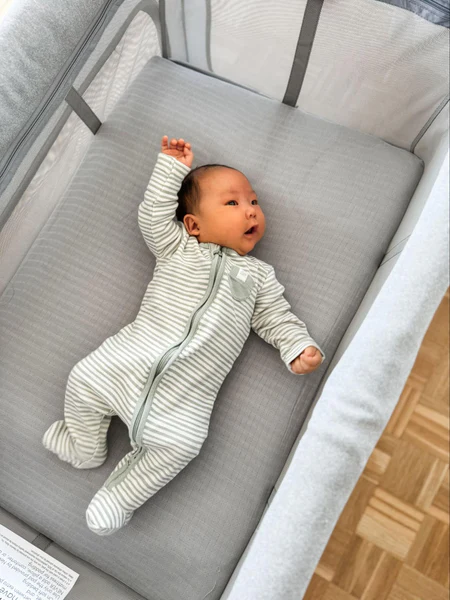
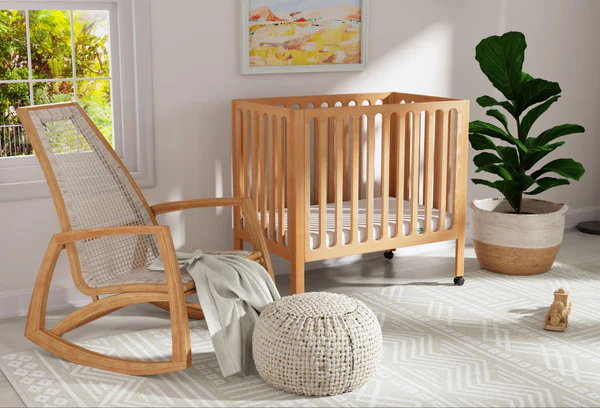
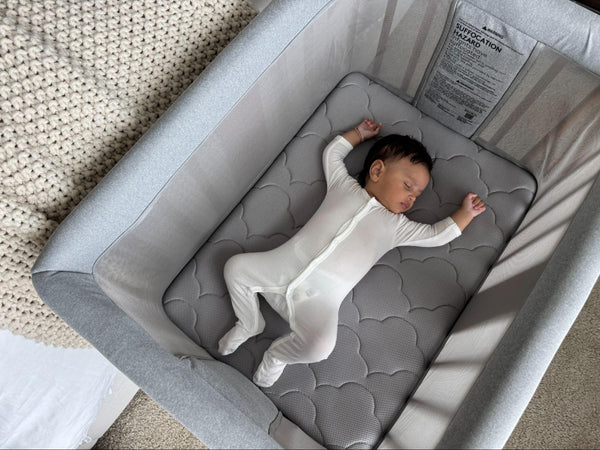
Active sleep does not call for a special sleep setup. Newton Hush emphasizes the same safe sleep basics throughout the night: put the baby down on their back, use a firm mattress, keep the crib bare except for the mattress, fitted sheet, and baby, and use only a sleep surface approved for infant sleep such as a crib, travel crib, or bassinet.
The source also advises dressing a baby for the room temperature, avoiding hats or bows during sleep, and sharing a room without sharing a bed. If the baby is beginning to roll, the source says swaddling should stop.
Over time, Newton Hush reports, babies spend less time in active sleep. The source says active sleep generally decreases between three and five months, and by one year it accounts for about 25% to 30% of total sleep. Until then, a newborn’s noisy night may be less unusual than it sounds. The priority is to keep the sleep space safe, observe calmly when the pattern looks typical, and call a pediatrician when the breathing, behavior, or parent instinct says something needs attention.
Inspired by this post on Newton Hush.