Early walking can feel like a headline moment in a baby’s first year, especially when it happens before other babies in the same playgroup or family circle. Parents reports that research has linked being early to major movement milestones with stronger cognitive skills, while also raising the question many caregivers ask next: can walking too early be a problem?
The useful answer is more measured than the milestone itself can feel. Early walking may be one interesting clue in a child’s development, but it is not a forecast of future success, and it should not turn ordinary baby movement into a race.
What Parents Reported About Early Milestones
According to Parents, research suggests that babies who reach certain early movement milestones first could have stronger cognitive skills. The source frames that finding around crawling or walking, two highly visible changes that tend to make caregivers wonder what those skills might signal beyond movement itself.
That wording matters. A suggestion from research is not the same as a guarantee for an individual child. It points to a possible association, not a simple rule that the first baby to walk will later be the highest achiever. Development is shaped by many overlapping factors, and a single milestone cannot carry that much meaning on its own.
Why Walking Is More Than a Physical Skill
Walking looks like a leg-and-balance milestone, but it also draws on attention, planning, spatial awareness, confidence, and the ability to coordinate several actions at once. That is why researchers may be interested in the relationship between motor development and cognitive development in the first year.
Still, parents should be careful about turning that relationship into a ranking system. Babies do not develop in identical sequences or at identical speeds. Some focus on language-like social engagement, fine-motor exploration, sleep consolidation, feeding skills, or cautious observation before they become bold movers. Those differences can be meaningful without being worrying.
The Real Question Is Not Whether Your Baby Is First
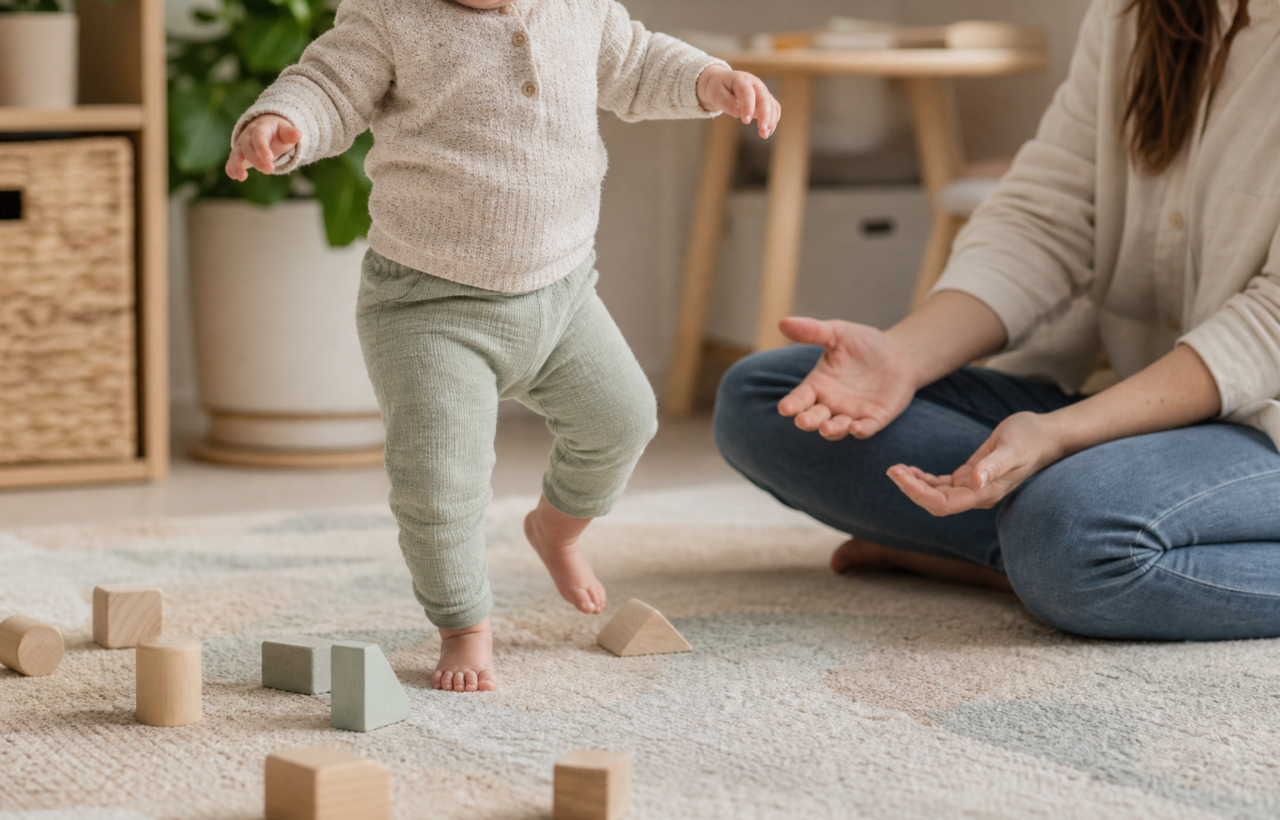
The better question is whether a baby is gaining skills in a steady, self-directed way. A baby who pulls up, experiments, falls safely, tries again, and gradually becomes more stable is showing an active learning process. That process matters more than comparing the calendar against another child.
Parents’ summary asks whether there are dangers of walking too early, but the source material provided does not list a specific danger. In general developmental terms, there is an important distinction between a baby who begins walking independently and an adult trying to push a baby into skills before the baby is ready. Independent progress and forced practice are not the same thing.
Caregivers can support movement without pressuring it by offering safe floor time, space to explore, sturdy surroundings, and supervision. The goal is not to train a baby into walking sooner; it is to give the baby room to build strength, balance, and confidence at their own pace.
Key Takeaways
- Parents reports that research suggests early crawling or walking may be associated with stronger cognitive skills.
- That association should not be read as a prediction of future success for any one baby.
- Early independent walking is different from pressuring a baby to perform a milestone before they are ready.
- Caregivers should focus on safe exploration, steady progress, and the baby’s overall development rather than milestone competition.
When Parents Should Look Beyond the Milestone
Milestones are most useful when they help parents notice patterns, not when they create anxiety over a single achievement. A baby who walks early may simply be eager to move. A baby who walks later may still be developing well in other areas. Either way, the broader picture matters: strength, curiosity, interaction, coordination, and ongoing progress.
If a caregiver has concerns about how a baby moves, seems unusually uncomfortable, loses skills, or is not progressing in a way that feels right, that is a reason to ask a pediatric clinician for individualized guidance. For most families, though, the healthiest response to early walking is neither panic nor pressure. Notice it, make the space safer, and let the next stage unfold with the same patient attention.
Inspired by this post on Parents.