You pumped earlier, put that milk away, and have just finished another session. Can the new milk go into the same container, or will that make the stored milk unsafe?
In most situations, you can combine milk from different pumping sessions. The safe method depends on where the earlier milk is now: at room temperature, refrigerated, frozen, or thawed. Two rules simplify every version of the decision.
The two rules that control every combined batch
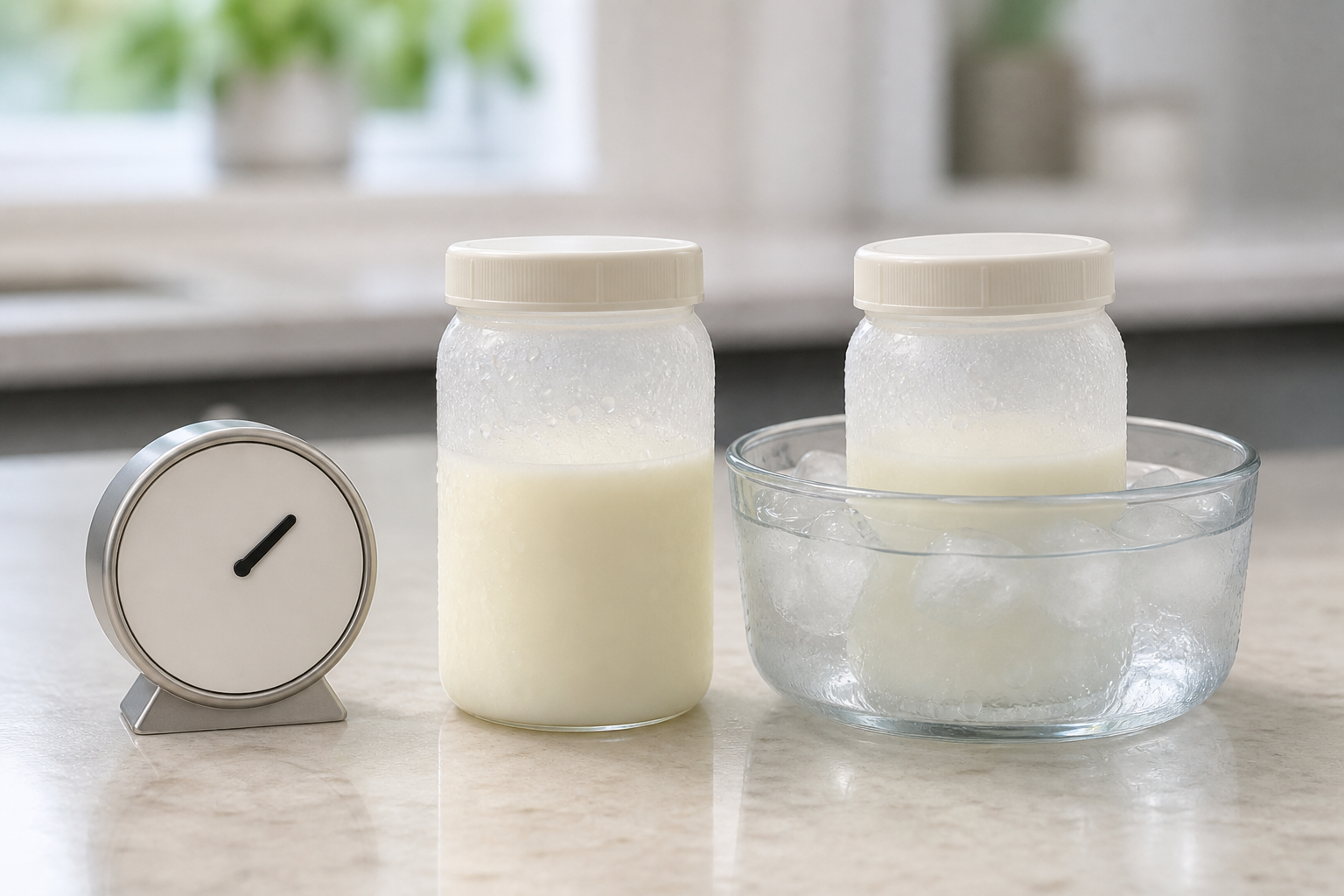
First, the oldest milk controls the clock. Adding newly pumped milk does not restart the storage period. If you combine today’s milk with an earlier batch, label and use the entire container according to the date and time of the oldest milk.
That matters most when the older milk is already close to a limit. For example, freshly pumped milk can remain at room temperature for up to four hours. If the first milk has been out for three hours when you add a new expression, the combined bottle is three hours old, not brand new. Refrigerate or freeze it before the first batch reaches four hours.
Second, match temperatures before adding fresh milk to cold milk. Freshly expressed milk is warm. Pouring it directly into refrigerated or frozen milk warms the stored batch and can start thawing frozen milk. Cool the new milk separately before combining it with milk that is already cold.
A useful shorthand is: oldest date, coldest destination. Keep the oldest date on the label, and cool the new milk to the temperature of the stored milk before combining them.
What to do for each storage state
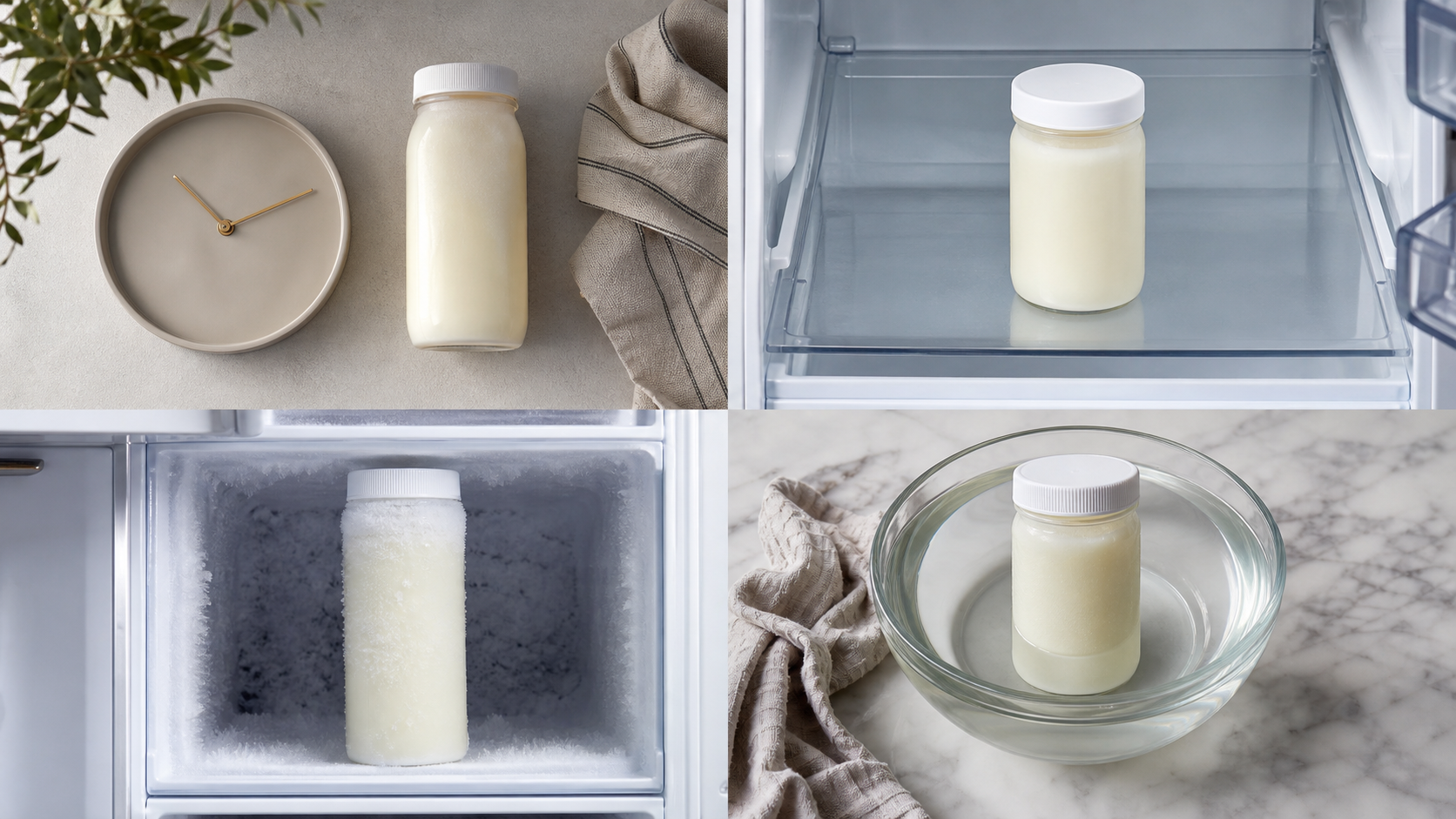
If the earlier milk is at room temperature
You may add freshly pumped milk directly to room-temperature milk if the earlier batch is still within its safe storage period. Treat the combined container as though all of it was pumped at the time of the first expression.
Write down the time of that first session rather than relying on memory. If the older milk is approaching the four-hour limit, refrigerate or freeze it promptly instead of leaving the newly enlarged batch out.
If the earlier milk is refrigerated
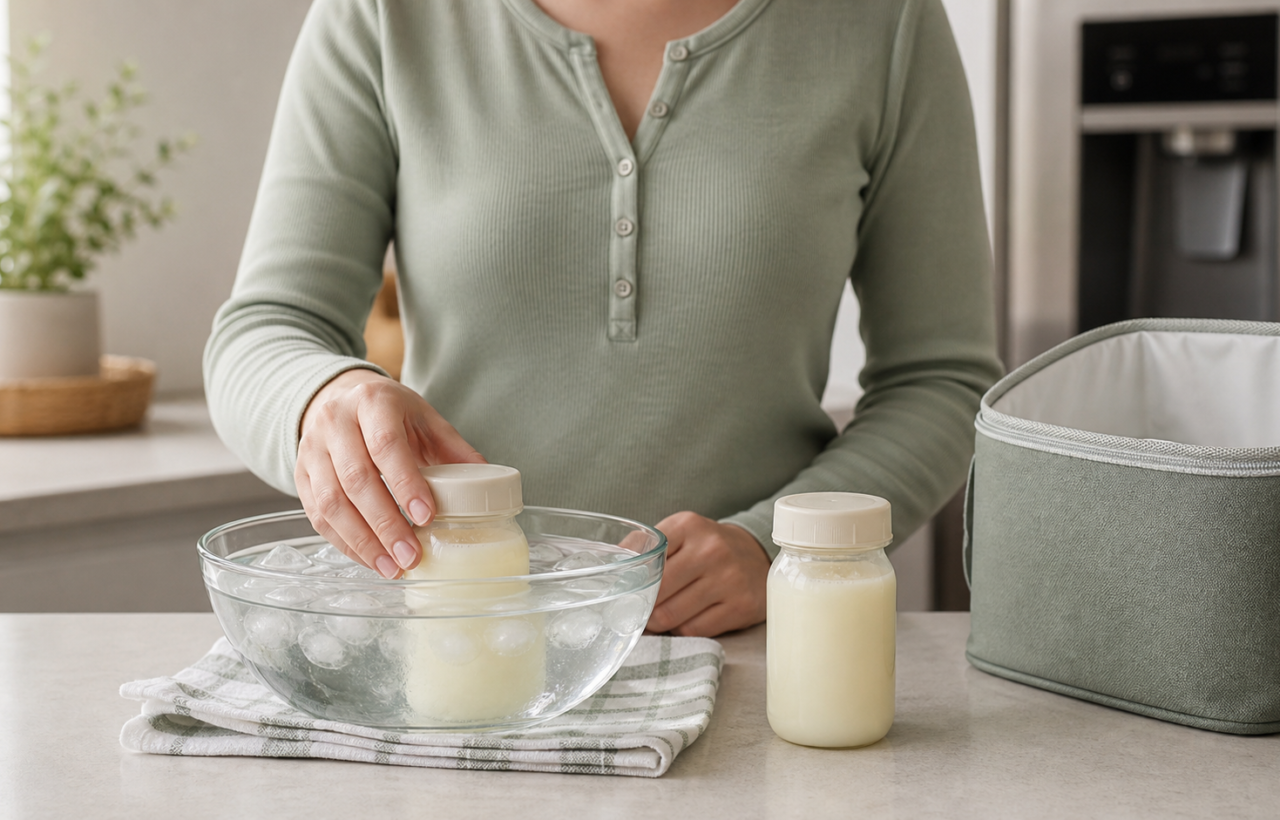
Place the newly pumped milk in its own clean container and refrigerate it for 30 minutes to one hour. Once it is cool, pour it into the refrigerated batch. Relabel the combined container with the oldest collection date.
Do not pour body-temperature milk straight into a cold storage container. The extra temporary container may feel inconvenient, but it prevents the warm expression from raising the temperature of milk that has already been chilled.
If the earlier milk is frozen
Do not add warm milk directly to frozen milk because the warm milk can begin thawing it. Refrigerate the new expression until it is cold, then add the cold milk to the frozen container. This method is sometimes called layering.
Continue to use the oldest collection date on the container. If any part of the frozen milk has thawed, do not treat it as a fully frozen batch or assume that adding colder milk resets its status.
If the earlier milk has been thawed
Fresh and thawed milk may be combined for a feeding when they are at about the same temperature. The important consequence is that the entire mixture then follows the thawed milk’s deadline: use thawed milk within 24 hours and never refreeze it.
If you may not need all the milk for that feeding, keep the fresh portion separate. Offer a smaller amount first and add more if your baby is still hungry. This preserves your options: unused fresh milk has not been tied to the thawed milk’s shorter clock, and less milk is likely to be left in a bottle after the feeding.
Once your baby has fed from a bottle, any milk left in it should be used or discarded within two hours. It cannot be returned to long-term storage or refrozen.
A practical routine for pooling several pumping sessions
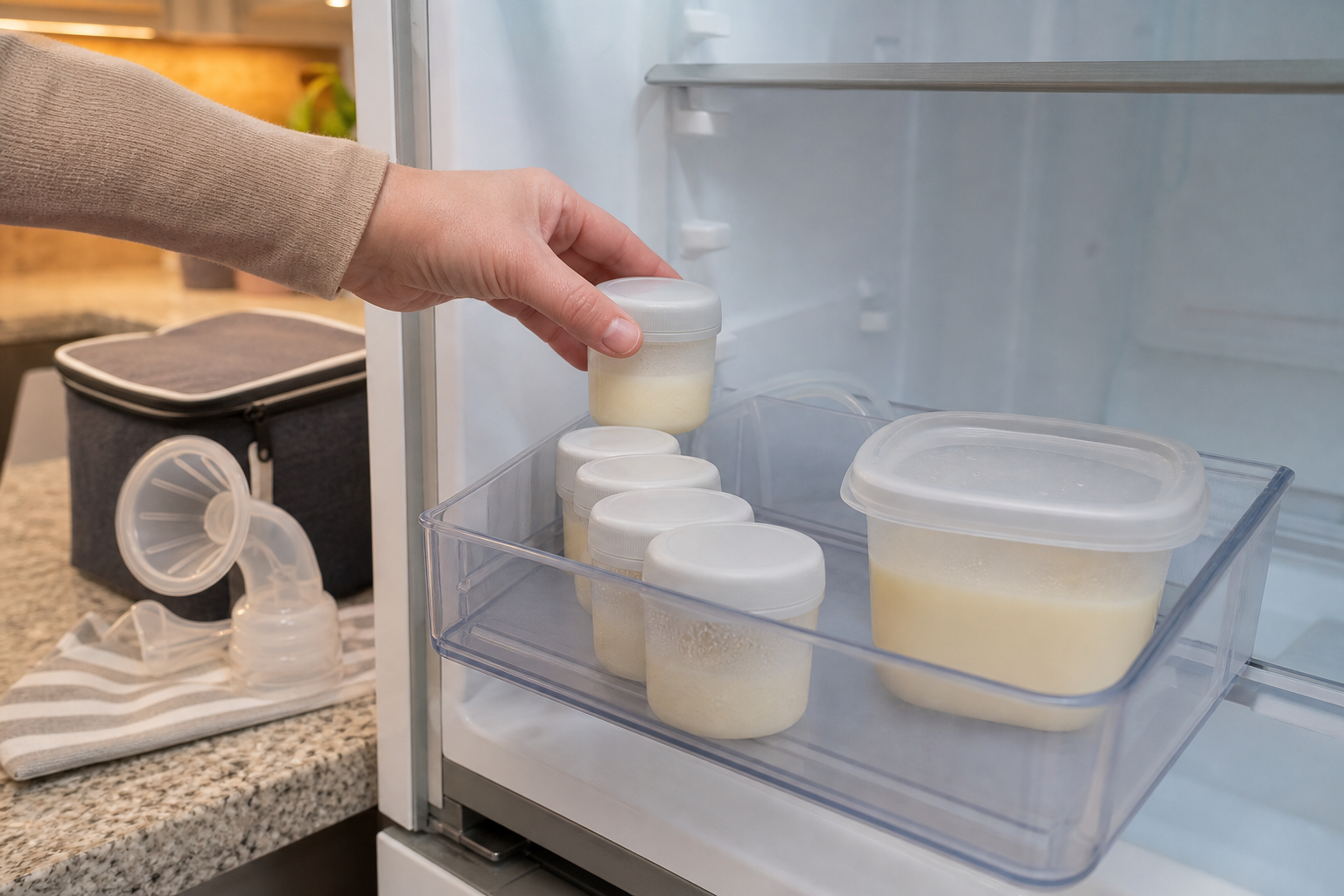
- Start with clean hands and equipment. Use clean pump parts, collection bottles, lids, and storage containers. Pooling is reasonable only when each session has been collected cleanly.
- Label the first batch immediately. Record its collection date and, when hours matter, its time. That becomes the label for the final combined batch.
- Collect new milk separately. This gives you time to notice a cleanliness problem before it affects milk you have already stored.
- Check the destination. Fresh milk may join eligible room-temperature milk immediately. If the stored milk is refrigerated or frozen, chill the new milk before adding it.
- Keep the oldest deadline. Never calculate storage time from the newest expression or from the moment the batches were poured together.
- Store useful portions. Avoid putting more into one feeding container than your baby is likely to finish. Smaller portions let you offer more as needed and reduce the amount that may have to be discarded.
This routine also creates a clean decision point. If something about the newest session is questionable, you can deal with that milk alone rather than losing a larger pooled supply.
When you should keep milk separate
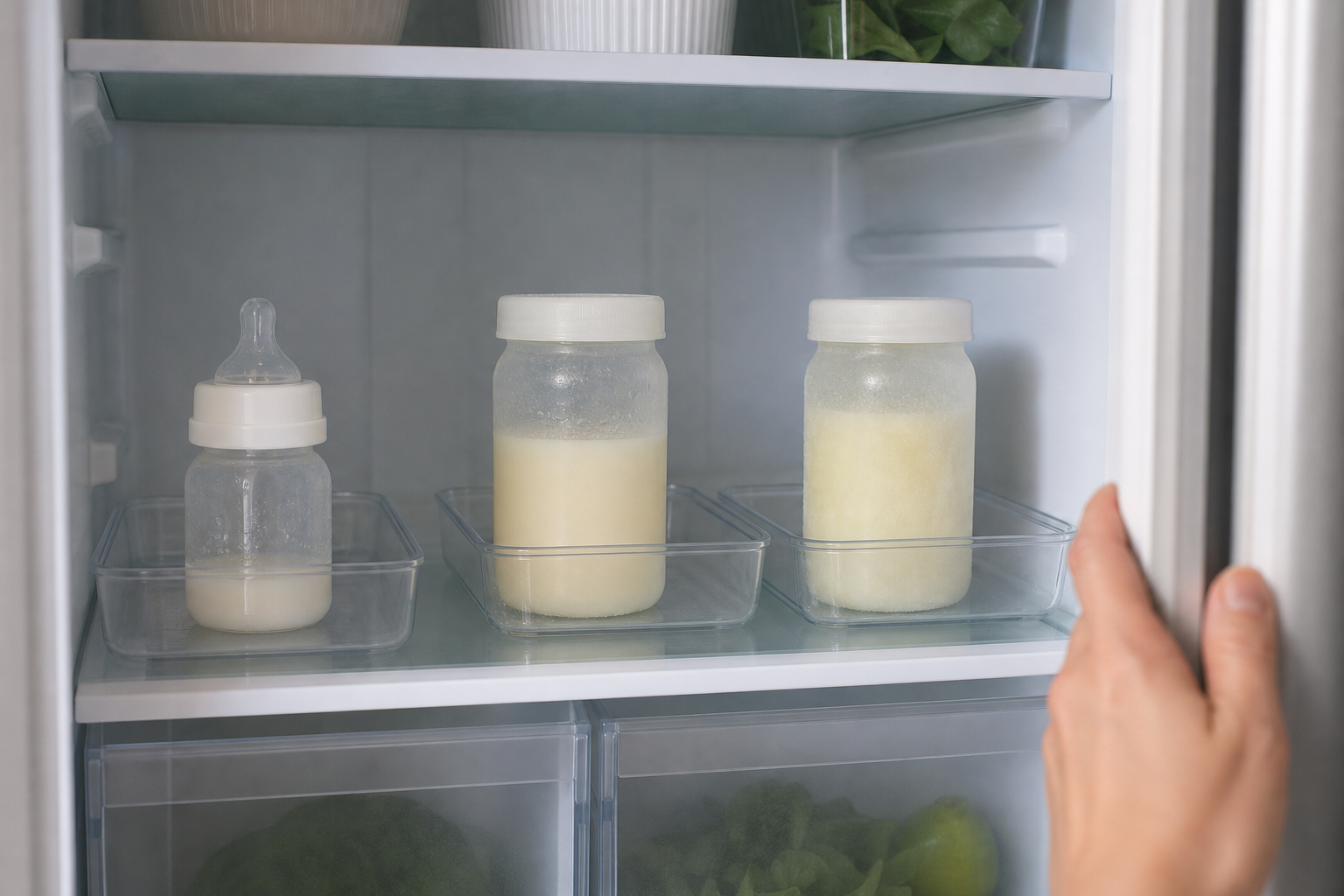
Do not add a questionable expression to milk you trust. If you could not wash your hands, the pumping area was unclean, or you believe the milk or equipment became contaminated, keep that session away from your existing supply. If contamination is likely, discard the affected milk rather than risking the whole pooled container.
General pooling advice is also not enough for a baby who was born prematurely, is sick, or has a compromised immune system. In these situations, milk may need to be sealed and stored immediately, then left unopened until use. Follow the collection and storage plan from your baby’s health care team or lactation consultant.
If you are taking milk to a hospital or donating it to a human milk bank, follow that institution’s rules even if they are stricter than your routine at home. Hospital and milk-bank instructions take priority because their recipients and handling processes may require different precautions.
Key takeaways
- You can usually combine milk from different pumping sessions when your hands, pump, and containers are clean.
- The oldest milk determines the date, time, and storage deadline for the entire combined batch.
- Fresh milk may join eligible room-temperature milk, but the four-hour clock begins with the oldest expression.
- Chill newly pumped milk for 30 minutes to one hour before adding it to refrigerated milk.
- Never pour warm milk onto frozen milk; chill the fresh milk first.
- When fresh milk is mixed with thawed milk, use the thawed milk’s 24-hour deadline and do not refreeze the mixture.
- Use individualized instructions for a premature, sick, or immunocompromised baby and for milk going to a hospital or milk bank.
For your next pumping session, label the first container before putting it down and keep one clean container available for cooling new milk. Those two small habits make the later decision much easier: you will know which clock applies, and you can match temperatures before you combine anything.
References