You may be ready to start solids, yet still feel stuck when the next food is peanut. For most babies with no identified allergy risk, the first peanut feeding can happen at home; sitting in a hospital parking lot is usually unnecessary.
The safer plan begins before you open the jar. Decide whether your baby needs medical guidance, use a texture they can swallow safely, introduce a small taste slowly, and know exactly what would make you stop.
Key takeaways
- Introduce peanut at around 6 months, once your baby is developmentally ready for solid food.
- Ask your baby’s clinician for a plan first if your baby has eczema, an egg allergy, a suspected previous food reaction, or a strong family history of food allergy.
- Never give a baby whole peanuts or a thick spoonful of peanut butter. Thin smooth peanut butter with water or breast milk so it is easy to swallow.
- Start with a taste from the tip of a spoon, wait 10 minutes, then continue slowly if there are no symptoms.
- Watch for a reaction during the feeding and afterward. Call emergency services for breathing problems, collapse, or rapidly worsening symptoms.
- After peanut is tolerated, keep serving it in an age-appropriate form a few times each week.
Decide whether the first feeding belongs at home or in a clinic

A hospital parking lot may feel like a compromise between home and medical supervision, but it is still an unsupervised feeding. No clinician is watching your baby, and you would still have to recognize a reaction, call for help, and get your baby inside. Medical experts do not formally recommend this approach, and it is unlikely to be necessary for most babies.
Your baby’s risk factors are more useful than your distance from an emergency department. Speak with your baby’s doctor or nurse before introducing peanut at home if:
- Your baby has eczema or an egg allergy. These are recognized reasons to discuss how peanut should be introduced.
- Your baby has already developed a rash, swelling, vomiting, coughing, wheezing, or another concerning symptom after eating peanut or another food. Do not repeat the food at home to see whether it happens again.
- Peanut or other food allergies run strongly in your family. Raise this before starting the introduction rather than trying to manage the uncertainty from a parked car.
- You are so worried that you may delay peanut indefinitely or be unable to complete the feeding. A clinician may be able to arrange an in-office introduction.
Depending on your baby’s history, the clinician may recommend testing, a supervised feeding in a medical office, or a home introduction with clear precautions. If supervision is appropriate, arrange a real clinical appointment. That gives your baby medical observation rather than proximity alone.
Use a texture your baby can swallow safely
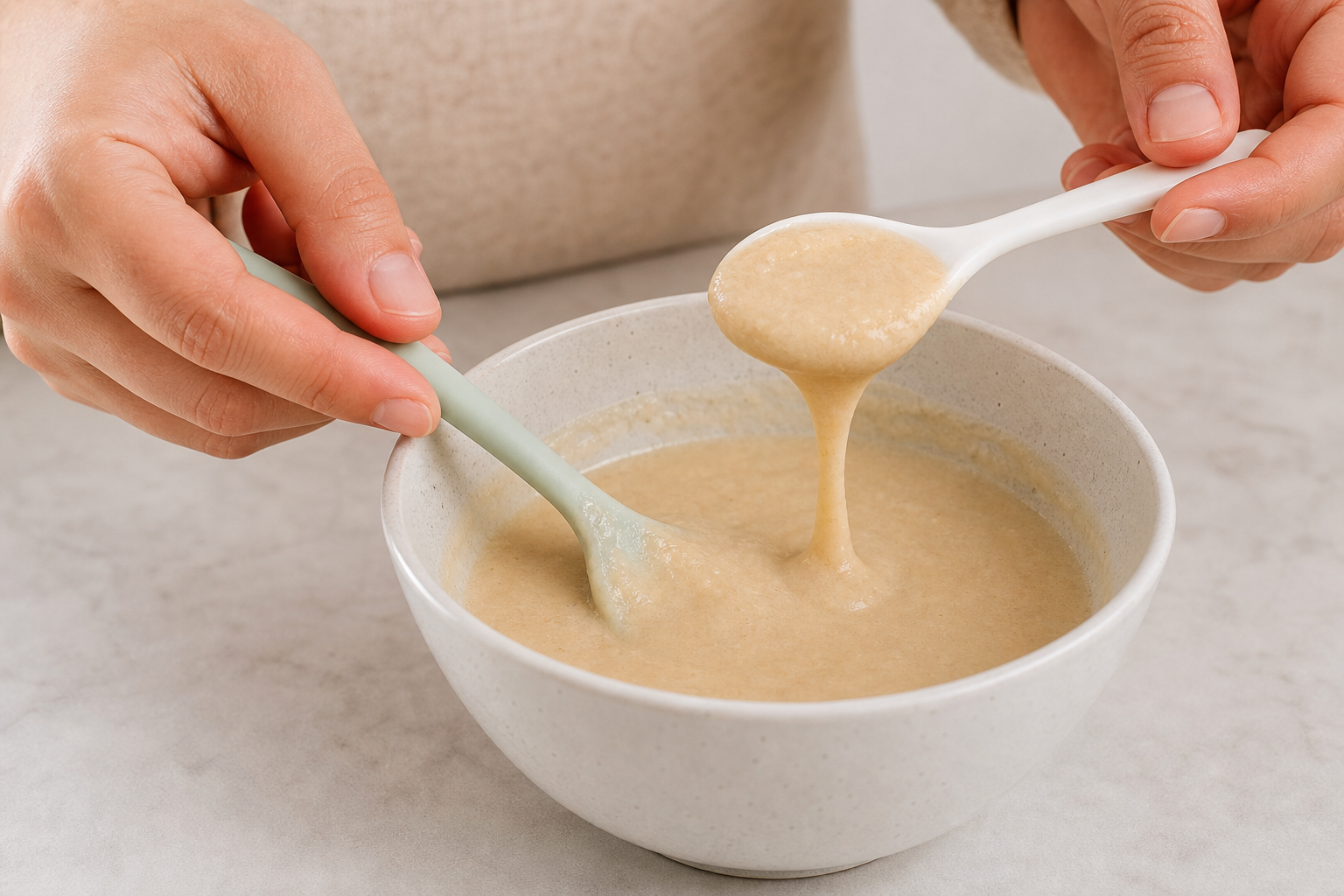
Allergy introduction and choking prevention are separate parts of the same feeding. Your baby needs exposure to peanut in a form suited to their feeding skills. Whole peanuts, peanut pieces, and a sticky spoonful of thick peanut butter are not safe infant textures.
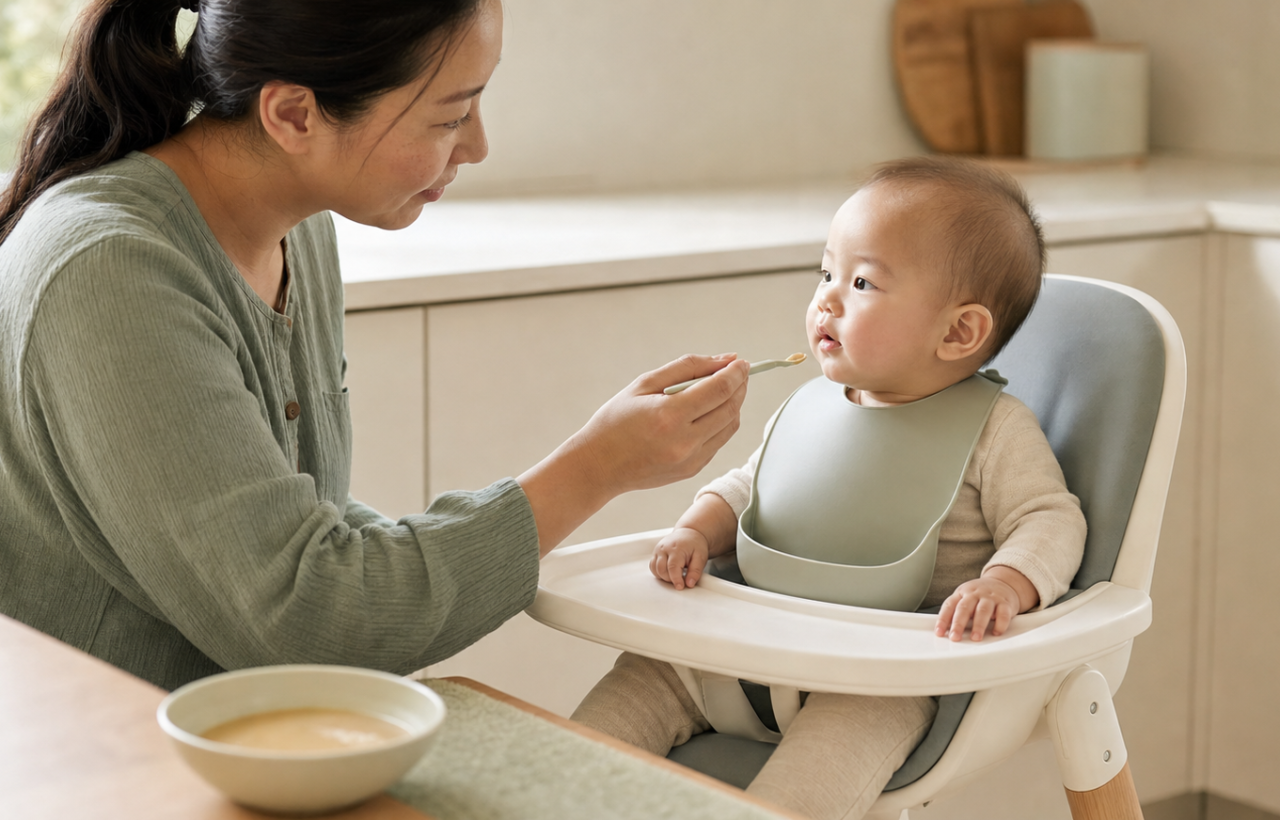
For a baby who is ready for solids, use smooth peanut butter thinned with water or breast milk. Mix it thoroughly until it is loose enough to come off the spoon easily. Seat your baby upright in their usual feeding position, and choose a time when you can stay with them during the meal and afterward.
Do not make the first taste a large mouthful. The useful precaution is controlled pacing:
- Put a very small taste of the thinned mixture on the tip of a spoon.
- Offer it to your baby, then stop and wait for 10 minutes.
- If your baby has no concerning symptoms, slowly offer the remainder of the age-appropriate portion at their normal eating pace.
- Stay close and continue observing your baby after the feeding.
The 10-minute pause is not a guarantee that no reaction will occur. It is a checkpoint before you continue. Do not rush the remainder simply because the first taste seemed fine.
Watch for allergy symptoms and know when to stop
Most peanut reactions begin within minutes to about two hours after eating. Watch your baby during that window rather than relying only on the first few minutes.
Concerning symptoms can include:
- Hives or a new widespread rash
- Swelling of the face or lips
- Vomiting
- Coughing or wheezing
- Trouble breathing
- Unusual lethargy, limpness, or reduced responsiveness
Stop the feeding at the first concerning sign. Do not offer another bite to confirm that peanut caused it. For hives, swelling, vomiting, coughing, or another new symptom, seek immediate medical guidance and do not serve peanut again until a qualified healthcare professional tells you how to proceed.
Trouble breathing, wheezing, collapse, markedly reduced responsiveness, or symptoms that are worsening quickly can indicate a medical emergency. Call 911 or your local emergency number immediately. Do not wait for the reaction to pass and do not spend time driving from a parking lot to another location. If you cannot tell how serious the reaction is, call emergency services and follow their instructions.
A symptom-free first feeding is encouraging, but it is not a permanent all-clear. Serious reactions often appear with the first exposure, yet a reaction can occur after a later feeding. Keep paying attention when peanut returns to the menu, and report any later symptoms rather than testing the food again yourself.
Keep peanut in the routine after a successful introduction
One taste is an introduction, not the full prevention strategy. After your baby tolerates peanut, continue offering it in a safe texture a few times a week through the first year and beyond.
Make that repetition easy to remember. Attach peanut to a few recurring meals each week, prepare the same smooth, thinned texture your baby has already managed, and adjust the texture only as their eating skills develop. Whole nuts remain inappropriate for a baby even after peanut allergy introduction has gone well.
You do not need to recreate the first-feeding ritual in a hospital parking lot every time. What matters is a medically appropriate starting plan, a safe texture, regular continued exposure, and ordinary attention to your baby’s response.
Before your baby’s next week of solid foods, make one decision: home introduction or a call to their clinician. If home is appropriate, set aside a calm period when you can complete the small-taste process and observe your baby afterward. If medical guidance is warranted, make that call before offering peanut.
References