
If your toddler is calling for you before the household is ready to start the day, an alarm clock can look like a simple fix. But a clock cannot make a child sleep. What it can do is give them a clear, repeatable cue for what happens next.
The right choice depends less on the number of features and more on the job you need it to perform. For a toddler, that may be showing when quiet time is over. For an older child or teen, it may be taking responsibility for getting up without a parent providing the final wake-up call.
Match the clock to your child’s actual job
The category includes both OK-to-wake clocks for toddlers and conventional alarms for tweens and teens. Those products may sit on the same store shelf, but they solve different problems.
For a baby who cannot understand and remember a visual rule, a clock is primarily a tool for you. It can display the time, provide a dim night-light or help you keep a routine, but it should not be treated as something the baby is expected to obey.
An older toddler may be ready for an OK-to-wake cue when they can follow a simple instruction and connect the same signal with the same action. The clock might show one colour or symbol during rest time and another when you will come in. Success depends on teaching that connection; buying the clock is only the first step.
For a school-age child, the job often changes from waiting to waking. A readable display, an audible alarm and controls the child can operate become more useful than a colour-changing face. For a tween or teen, the question is whether the alarm supports independent mornings without creating a new nightly argument over settings, snoozing or phone use.
| Child’s stage | Useful job for the clock | Features to prioritize |
|---|---|---|
| Baby or very young toddler | Help the caregiver keep track of the routine | Low brightness, simple controls and safe placement |
| Toddler who understands simple cues | Show whether it is still rest time or time to get up | Clear light or symbol, dimmable display and parent-controlled settings |
| School-age child | Wake at a set time and begin a morning routine | Readable time, manageable alarm sound and easy shutoff |
| Tween or teen | Take ownership of waking up | Reliable alarm, backup power, suitable volume and limited setup friction |
Choose features that remove friction, not add it
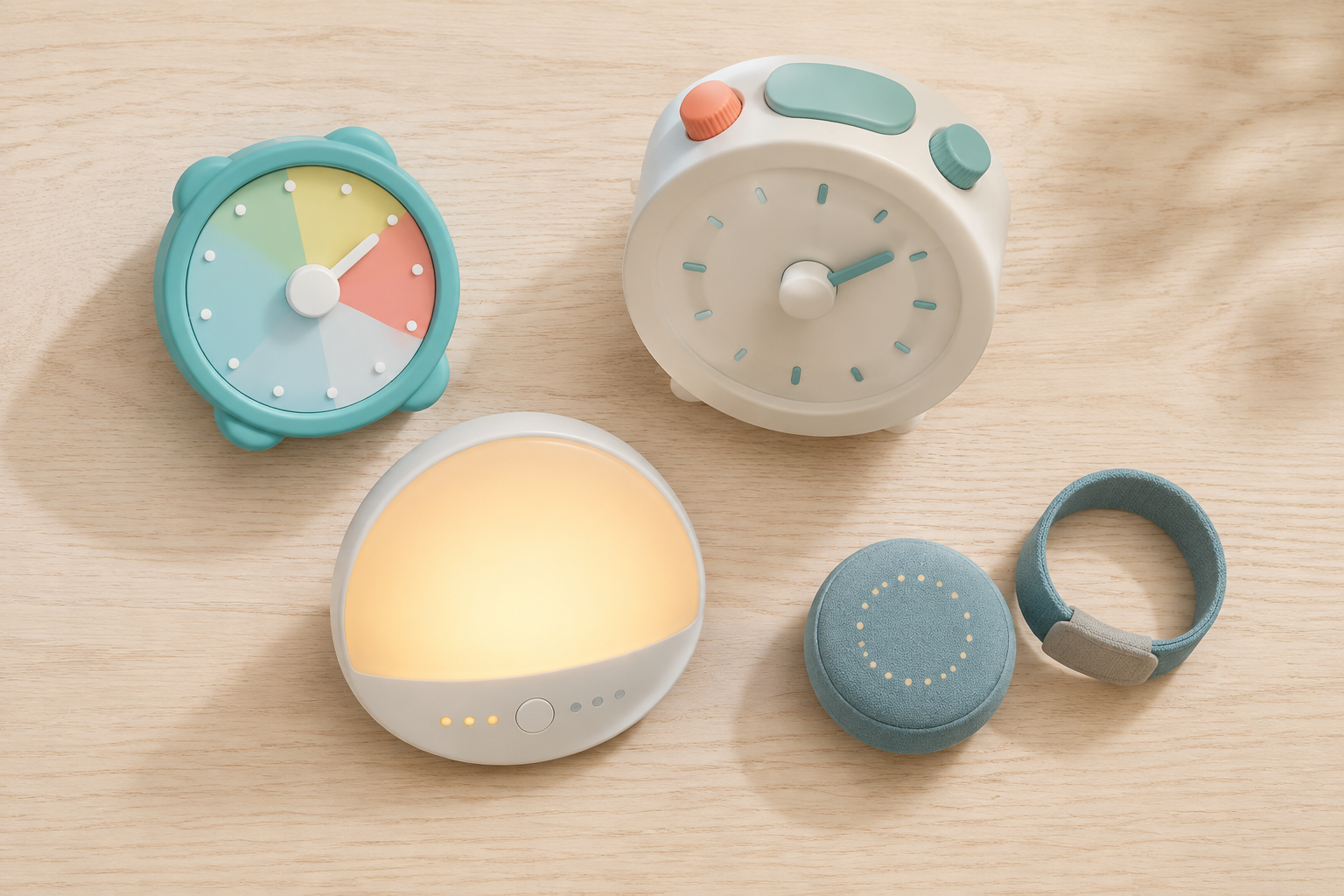
A complicated clock can create more work than it removes. Before buying, picture yourself changing the wake time in a dark room while a child is asleep. If the basic settings require an app, a manual or a long sequence of button presses, decide whether those extra steps are worth it.
For a toddler’s room, focus on these practical details:
- A cue your child can recognize. A colour is useful only if your child can reliably distinguish it. An icon, facial expression or combination of light and symbol can make the rule easier to understand.
- Adjustable brightness. You should be able to dim the display enough that it does not dominate a dark room. If the light itself is the morning cue, it still needs to be visible from the child’s usual sleeping position.
- Protected controls. Look for settings that are difficult for small hands to change accidentally. A toddler who can reset the wake time has been given a toy, not a dependable cue.
- Safe construction and placement. Keep cords, loose batteries and small removable pieces out of reach. Do not place a clock, cable or other device inside a crib or sleep space.
- Settings that survive ordinary disruptions. If power interruptions are common where you live, check whether the clock retains its time and schedule or has an appropriate backup option.
- No unnecessary dependence on a phone. App control may be convenient, but it should solve a real problem for your household. A clock that works only when an account, connection or nearby phone behaves correctly has more possible failure points.
For an older child or teen, put reliability ahead of novelty. Check whether the alarm is easy to hear but can be set at a comfortable level, whether the buttons make sense without adult help and whether snooze can be limited or disabled if it repeatedly derails the morning. If the clock is meant to replace a phone at the bedside, make sure it covers the functions your child actually uses, such as separate weekday and weekend schedules.
Accessibility also changes the choice. A child who does not respond well to sound may need a visual or vibrating alert designed for that purpose. A child who is sensitive to bright light or abrupt noise needs fine control over intensity. The best alarm is not the most forceful one; it is the cue your child can notice and act on consistently.
Teach an OK-to-wake cue before expecting it to work
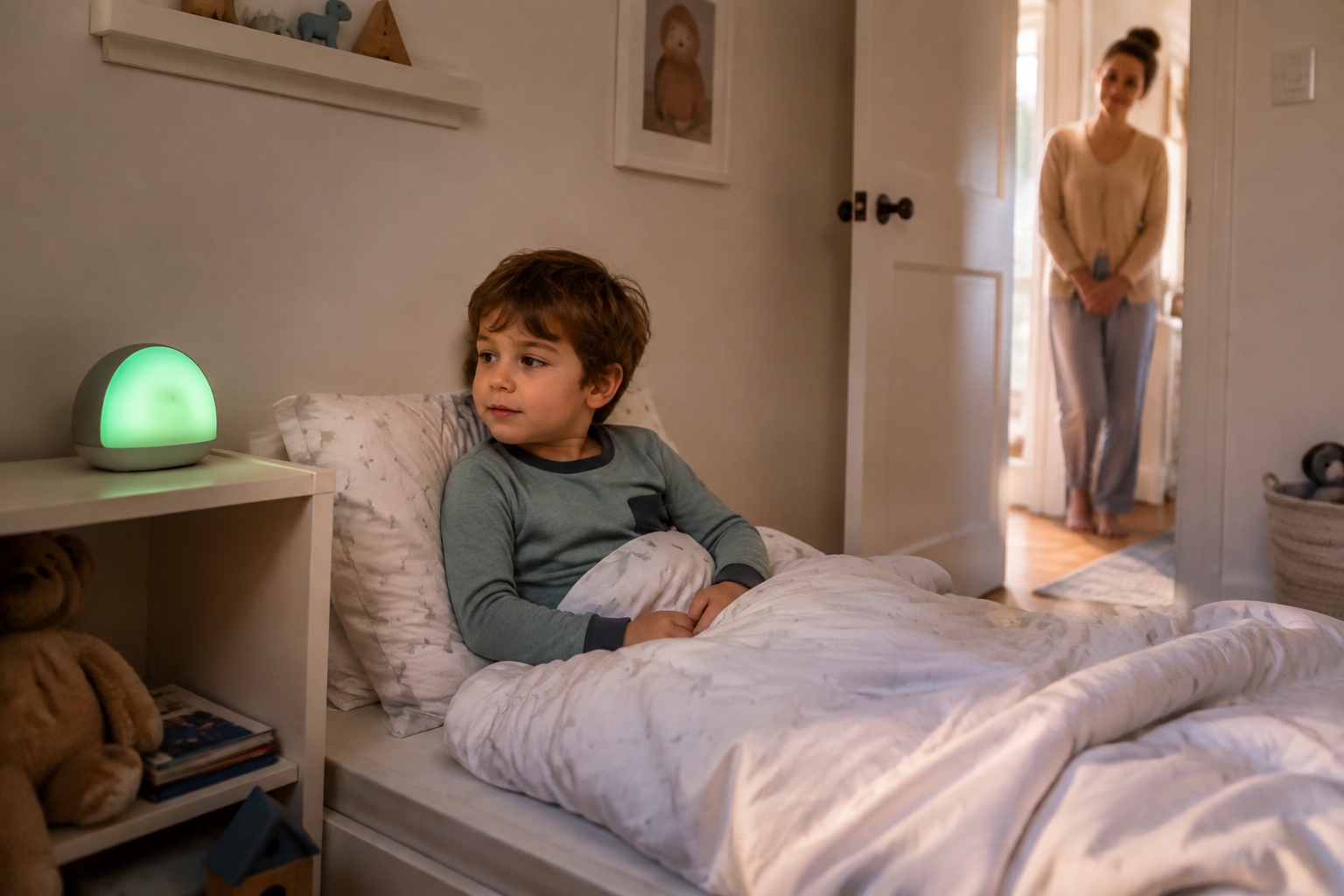
A toddler sees a glowing object, not a household boundary. You have to give the signal meaning through repetition. Start when everyone is awake and calm, rather than explaining it for the first time during an early-morning standoff.
- Choose one simple rule. For example: when the sleeping symbol is showing, it is still rest time; when the morning symbol appears, you will come in and start the day.
- Demonstrate the change. Switch the clock between its two states during the day. Ask your child what each state means and practise the matching action.
- Explain the exception. Make it clear that your child can always call for you when they are hurt, frightened, sick or need help. The clock is a routine cue, not a rule that removes access to a caregiver.
- Begin with a realistic setting. Set the morning cue near the time your child usually finishes sleeping. Establish the connection between cue and response before asking them to wait substantially longer.
- Respond consistently. Before the cue, keep your response quiet and brief while meeting genuine needs. When the cue changes, mark the transition clearly by opening curtains, greeting your child and beginning the normal morning routine.
- Notice the action you want repeated. Use specific praise such as, “You saw the morning light and waited for me.” That tells the child exactly what they did, without turning every morning into a negotiation over prizes.
If your toddler wakes before the signal, the safe expectation depends on their sleep setup and development. A child in a crib should not be given loose activities or devices in the crib to pass the time. An older toddler in a child-safe room may be able to look at books or play quietly, but only if that arrangement is appropriate for your household and the space has been secured for unsupervised waking.
A clock also needs a predictable parental response. If the signal sometimes means “wait” and sometimes disappears as soon as your child protests, the child is learning to test the response rather than follow the cue. Consistency does not require ignoring distress. It means keeping the boundary and the way you provide comfort as steady as you reasonably can.
When the alarm is not solving the morning problem

Repeated clock failures usually point to a mismatch between the tool and the problem. If a toddler does not understand the cue, simplify it and practise during the day. If they understand it but cannot yet wait, move the cue closer to their normal waking time and work on the skill gradually. If they are frightened, uncomfortable or calling for a real need, address that need rather than treating the clock as the answer.
With older children, separate failure to hear the alarm from failure to act on it. If the child sleeps through it, test a different sound, a visual or vibrating option, or a safe position that makes the alarm easier to notice. If they turn it off and return to sleep, put the clock where they must sit up or stand to reach it, while keeping the path clear of trip hazards.
If your tween or teen stays awake too late, adding more alarms may only make the morning louder. Work backward from the required departure time and assign a start time to each part of the routine: getting out of bed, dressing, eating and gathering belongings. The alarm then marks the first step in a plan rather than carrying responsibility for the entire morning.
A clock is also a poor place to fight a larger independence battle. Agree in advance on what the child owns and what you will do if the alarm is missed. A school-age child might be responsible for getting dressed after the first alarm while you retain responsibility for the final departure check. A teen may own the whole waking routine, with one agreed backup call rather than repeated reminders.
Pay attention when sleep changes suddenly or when a child is regularly very difficult to wake, unusually tired during the day, or affected at school or in daily activities. Those concerns deserve a conversation with the child’s health-care professional; a louder alarm is not a substitute for understanding why waking has become difficult.
Quick questions before you buy
Can an OK-to-wake clock make a toddler sleep later?
No. It can show when the household is ready to start the day and help a child practise waiting, but it cannot create sleep. If your child is awake, the goal is a clear and safe routine, not pretending the clock controls their body.
Does the wake-up cue have to be green?
No. Use a colour or symbol your child can recognize reliably, and describe it in the same words every time. If colour alone is confusing, pair it with an icon or facial expression.
When should a child move to a sound alarm?
Use sound when the job becomes waking at a required time, rather than waiting for permission to start the day. Readiness matters more than a universal age: the child should understand the alarm, know the next step and be able to operate the controls they are expected to use.
Is a sunrise-style light better than a traditional alarm?
It is better only if gradual light is a cue your child notices and prefers. Some children still need sound, while others find a sudden alarm unpleasant. Adjustable light and sound give you room to find a workable combination without immediately replacing the clock.
Choose the smallest set of features that fits your child’s current job. Then teach one cue, keep your response predictable and adjust only after you can see what is actually getting in the way.
References