
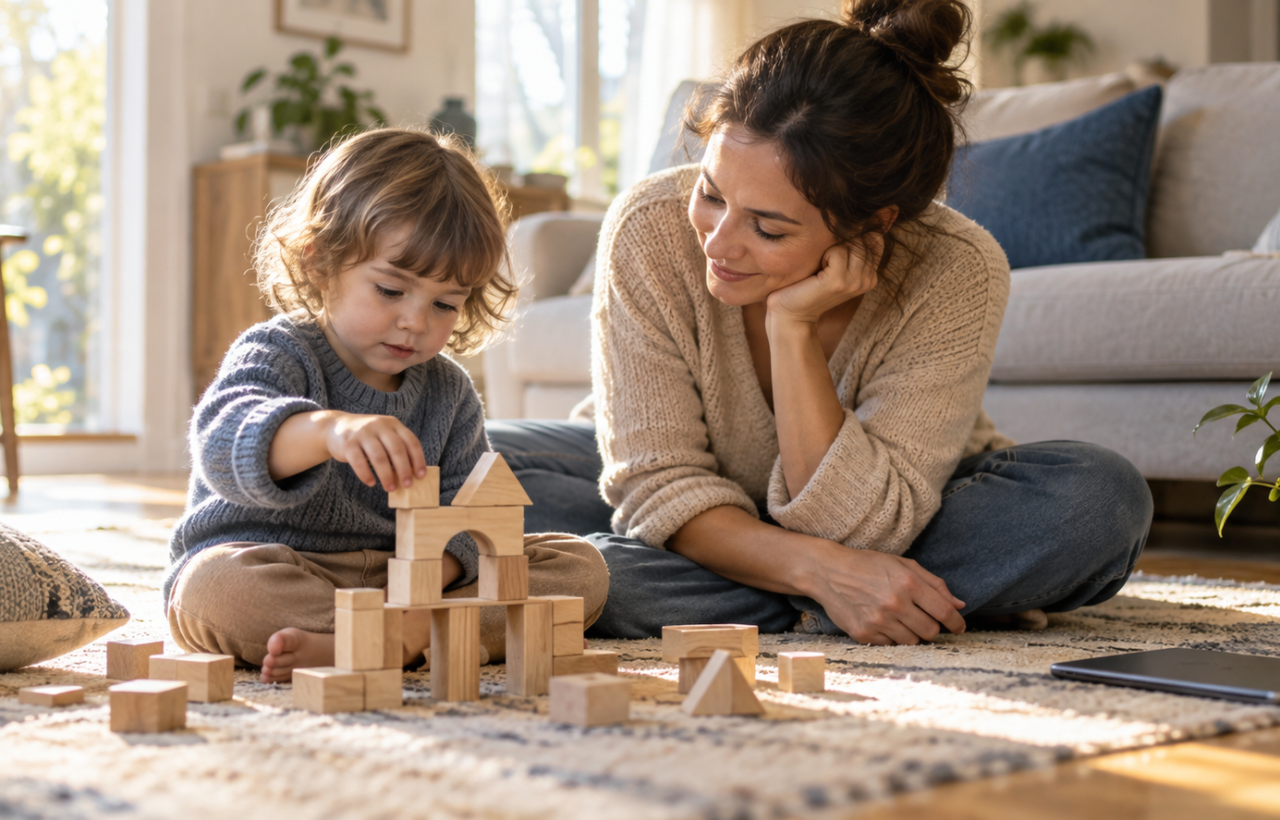
If your baby was born in 2025 or later, you may already be seeing confident predictions about how Generation Beta will think, learn and live. It is tempting to treat those forecasts as a preview of the child in front of you.
They are not. A generation label can help you consider the environment surrounding your child, but it cannot tell you their temperament, interests or future abilities. The useful question is not, “What will Generation Beta be like?” It is, “Which capabilities will help my child meet an uncertain future without losing curiosity, privacy or connection?”
What the Generation Beta label can and cannot tell you
Generation Beta commonly refers to children born from 2025 through 2039. That is a 15-year birth window. Children at opposite ends of it will grow up with different devices, schools, public events and family circumstances. The label identifies a cohort; it does not describe an individual child.
This distinction matters because predictions can quietly turn into expectations. If you assume your child will be naturally comfortable with technology, you may overlook the need to teach judgment and privacy. If you expect constant adaptability, you may mistake a normal need for routine as a weakness. If you imagine an environmentally conscious generation, you may hand children adult-sized worries before they have adult-sized power.
Use any list of predicted Generation Beta traits as a prompt to examine the world around your child. Do not use it as a checklist for evaluating your child. Before accepting a claim, ask:
- Does this describe an environment children may encounter, or does it claim to describe their personalities?
- Would this still be true for children in families with different incomes, cultures, locations and access to technology?
- Does acting on the claim support my child now, even if the prediction turns out to be wrong?
That final question is the most practical filter. Teaching a toddler to communicate, wait, try again and protect private information remains useful under almost any version of the future.
Five capabilities worth nurturing instead of predicting
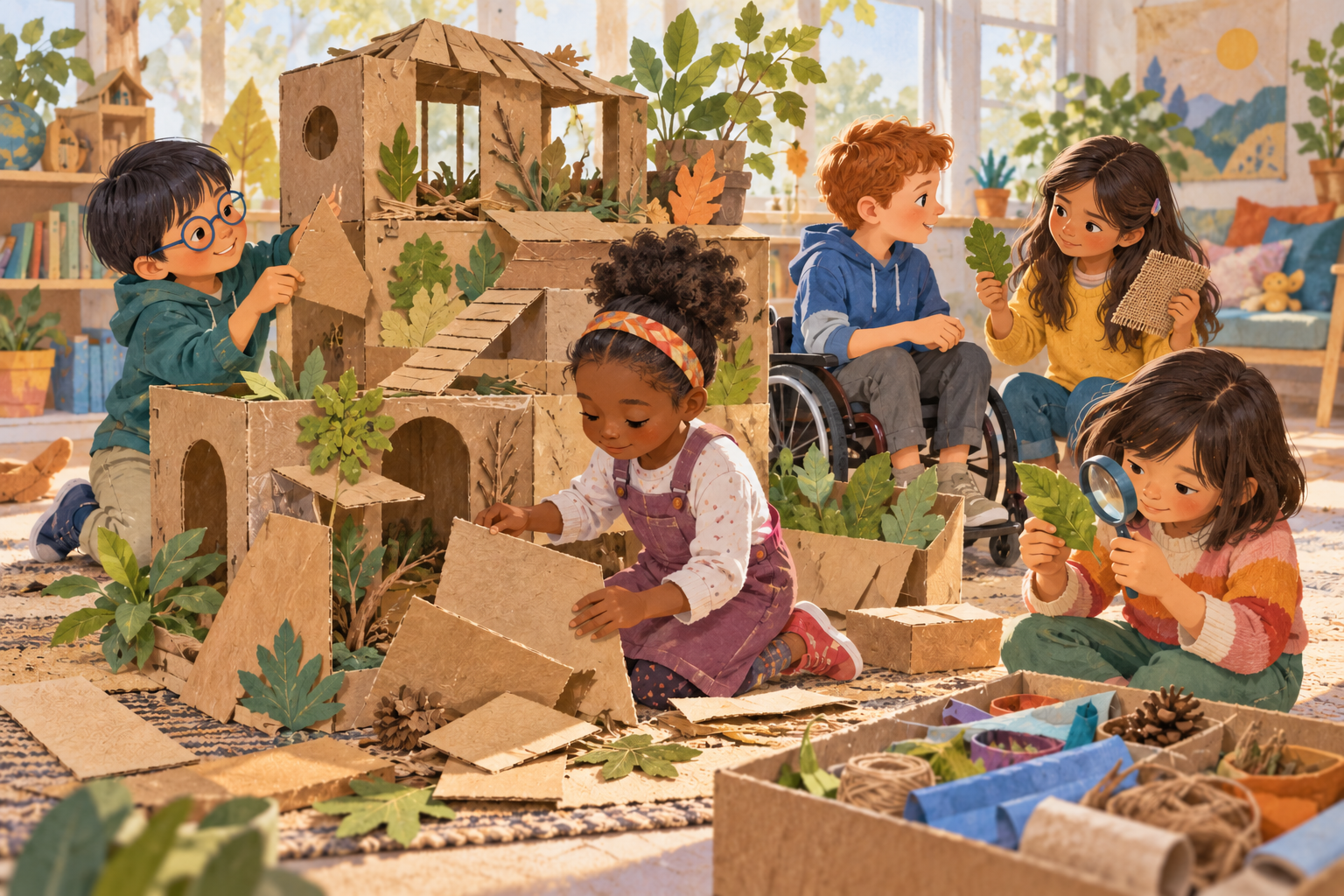
No parent can install a future-ready personality. You can, however, create repeated experiences that let useful capabilities develop. For children from birth to age three, those experiences are usually small and ordinary.
1. Adaptability supported by reliable anchors
Adaptability does not mean being comfortable with nonstop change. Young children often handle a new experience better when something familiar stays in place. A regular bedtime sequence, a familiar phrase before leaving the house or the same comfort item can provide an anchor while the setting changes.
Try changing one manageable element at a time. Visit a new place while keeping the usual snack and nap rhythm. Offer a different material at playtime without replacing every familiar toy. When plans change, say what is happening in simple language: “The park is wet, so we are going to the library.” Your child gets practice with change while also learning that adults make the situation understandable.
2. Agency without an overwhelming number of choices
Personalized products and services can make it seem as if more choice always creates more independence. For a toddler, a small choice is usually more usable than an open-ended question. Instead of asking, “What do you want to wear?” offer two acceptable options. Instead of asking what to do next, let your child choose between two activities you can genuinely support.
The point is not to make every moment negotiable. Keep health, safety and necessary routines with the adult. Offer agency where either answer works. This teaches your child that their preferences matter without suggesting that they are responsible for running the household.
3. Digital judgment that begins with adult behaviour
A baby cannot assess an algorithm, an AI-generated answer or the permanence of an online post. Parents therefore set the first digital norms long before a child can operate a device. Notice whether phones interrupt play, meals and eye contact. Decide which childhood moments stay within the family. Remove identifying details before sharing, and ask other adults not to post your child without permission.
As your child begins to notice screens, name what the device is doing instead of presenting it as magic: “We are using the phone to see Grandma,” or, “The map is helping us find the street.” That language makes technology a tool with a purpose. Later conversations about AI, advertising and unreliable information will have somewhere to begin.
4. Communication that includes listening and repair
Communication is more than early vocabulary. It includes taking turns, noticing another person’s response and reconnecting after frustration. Pause after you speak to a baby as though leaving room for an answer. With a toddler, name the situation without assigning a fixed identity: “You did not want the game to end” is more useful than “You are difficult.”
Let your child see simple repair when you get something wrong. You might say, “I spoke too loudly. I am going to try again.” The practical lesson is that relationships can recover after a mistake. That skill will matter in person, in group settings and eventually through digital communication.
5. Care for shared resources through concrete participation
Environmental responsibility is easier for a young child to understand as an action than as a global problem. Let a toddler help carry a reusable bag, put paper in the correct bin, water a plant or place an outgrown item in a donation box. Use direct explanations such as, “We turn off the tap when we are finished so we do not waste water.”
Avoid asking a small child to carry fear about problems they cannot solve. Give them a role that matches their size, then let the adults remain responsible for the larger decisions. Participation can build care without making worry the price of caring.
A practical plan for your child’s current stage

The age bands below are prompts, not deadlines. Follow your child’s communication, mobility and interest rather than moving to a new activity simply because a birthday has passed.
- Birth to 12 months: narrate ordinary routines, pause for your baby’s sounds and expressions, offer supervised time to explore simple objects, and agree on a family photo-sharing rule. At this stage, your own habits are the main lesson.
- 12 to 24 months: offer two workable choices, use the same short phrase before common transitions, involve your toddler in simple household tasks and explain what a screen is being used for. Keep boundaries clear when something is not optional.
- 24 to 36 months: ask simple prediction questions such as, “What do you think will happen if we stack another block?” Practise short turns during play, name feelings without turning them into labels and begin asking before taking or sharing a photo. When possible, respect a child’s refusal so that the question has meaning.
You do not need a separate activity for every capability. One routine can do several jobs. Preparing a snack together can include a choice, turn-taking, new sensory information and care with food. A walk can include noticing change, asking questions and putting the phone away. Repetition matters more than novelty.
Avoid these generational-label traps

Generation labels become unhelpful when they replace close observation. Watch for these common misreadings:
- Calling ordinary development a generation trait. A toddler’s impatience, repetition or resistance to transitions is not evidence about an entire cohort. Respond to the need and context in front of you.
- Confusing device fluency with digital wisdom. Quickly learning where to tap does not demonstrate an understanding of privacy, persuasion or truth. Those require ongoing teaching and adult modelling.
- Buying products to make a baby “future ready.” A futuristic label does not prove that a toy, app or subscription supports your particular child. Ask what the product enables your child to do that cannot be done more simply.
- Treating a forecast as destiny. Words such as “tech-driven,” “adaptive” or “independent” are broad possibilities, not standards your child must meet. Leave room for temperament, disability, neurodiversity, culture and preference.
- Optimizing every minute. Unstructured play, familiar routines and quiet connection do not need to produce a measurable advantage. Childhood is not preparation time that must constantly justify itself.
A useful forecast should widen your attention, not narrow your idea of who your child is allowed to become.
Key takeaways and one useful next step
- Generation Beta is a birth-cohort label, not a personality assessment.
- Prepare for an uncertain future by nurturing adaptable routines, manageable agency, digital judgment, communication and practical care.
- For children under three, these capabilities begin in ordinary play, family routines and the behaviour adults model.
- Protect your child’s privacy now; they cannot understand or meaningfully manage a digital footprint yet.
- Judge advice and products by what they help your child do, not by how futuristic they sound.
This week, choose one household practice rather than trying to prepare for every prediction. You might put phones away during one daily routine, set a clear family rule for sharing photos or give your toddler one repeatable helping job. Keep the practice small enough to sustain. Your child does not need to perform the traits of a generation; they need room to become a person within it.
References




