

The chair method is aimed at parents who want to help a baby fall asleep more independently without leaving the room right away. Instead of a sudden separation at bedtime, the parent stays nearby at first, then gradually increases the distance over several nights.
Newton Hush describes it as a middle-ground approach: less abrupt than cry-it-out, but less hands-on than repeatedly picking a baby up and putting them down. Here is how to think about whether it fits your family, what the nightly progression looks like, and where the common hard spots tend to appear.
Key takeaways
- The chair method keeps a parent in the room at first, then moves that parent farther away over roughly one to two weeks, according to Newton Hush.
- It may suit families who want a gradual sleep-training option and are not comfortable leaving immediately after bedtime.
- Newton Hush says many families begin sleep training after 4 to 6 months, depending on development, feeding, and pediatrician guidance.
- Consistency matters: the same bedtime routine, sleep environment, and response style make the change easier for a baby to understand.
Who the chair method is for
The chair method, also known as the Sleep Lady Shuffle after sleep consultant Kim West, is designed around parental presence. The parent sits beside the crib while the baby falls asleep, then moves the chair farther from the crib in stages until the parent is outside the room.
That makes it most useful for a specific problem: a baby can fall asleep with a parent close by, but struggles to settle independently in the crib. Newton Hush notes that it can also appeal when frequent night waking has continued after hunger and illness have been ruled out.
Timing still matters. The source cautions against starting during a growth spurt, an ear infection, or a developmental leap. In plain terms, the method works best when bedtime is the main pattern being changed, not when a baby is already dealing with another temporary disruption.
How the distance changes at bedtime
The core of the method is simple, but not necessarily easy. Newton Hush says each phase often lasts two to three nights, with some families moving faster and others staying longer at a stage if their child needs more time.
Start beside the crib
On the first nights, the chair is placed directly next to the crib. After the usual bedtime routine, the baby is put down drowsy but awake. The parent stays seated and may offer quiet reassurance, such as a shush, a brief touch, or a gentle pat, while keeping interaction low.
Move toward the door
Once the first stage is established, the chair moves to the middle of the room, then to the doorway. The point is not to disappear all at once. It is to make the parent less central to the falling-asleep process while still being visible or nearby.
Shift outside the room
By around night seven and beyond, Newton Hush says the parent may be outside the room, with quiet check-ins if needed. Some babies will need extra nights at one position, and that does not mean the process has failed. The useful question is whether the overall trend is moving toward more independent settling.
What can make the first week harder
Parents should not assume a difficult night means they chose the wrong method. Newton Hush points out that night two is often especially challenging because the baby has begun to understand that bedtime is changing. Protest can increase before it decreases.
Progress can also look uneven. A better night may be followed by a harder one, especially around travel, nap changes, or developmental shifts. The method depends on a predictable response from the parent, so changing the plan repeatedly can make the pattern harder for the baby to read.
Early morning waking is another common wrinkle, according to the source. Newton Hush says many families aim for a consistent start time, often around 6 to 7 a.m., rather than treating a very early wake-up as the beginning of the day.
The setup that supports the method
The chair method is not only about where the parent sits. The surrounding sleep cues matter because they tell the baby what to expect. A steady routine, such as bath, feed, book, and song, gives bedtime a repeatable structure before the harder work of settling begins.
Newton Hush also emphasizes consistency in the sleep environment. If white noise or a dim nightlight is present when the baby falls asleep, the same cue should still be there during night wakings. That continuity can reduce confusion when the baby wakes between sleep cycles.
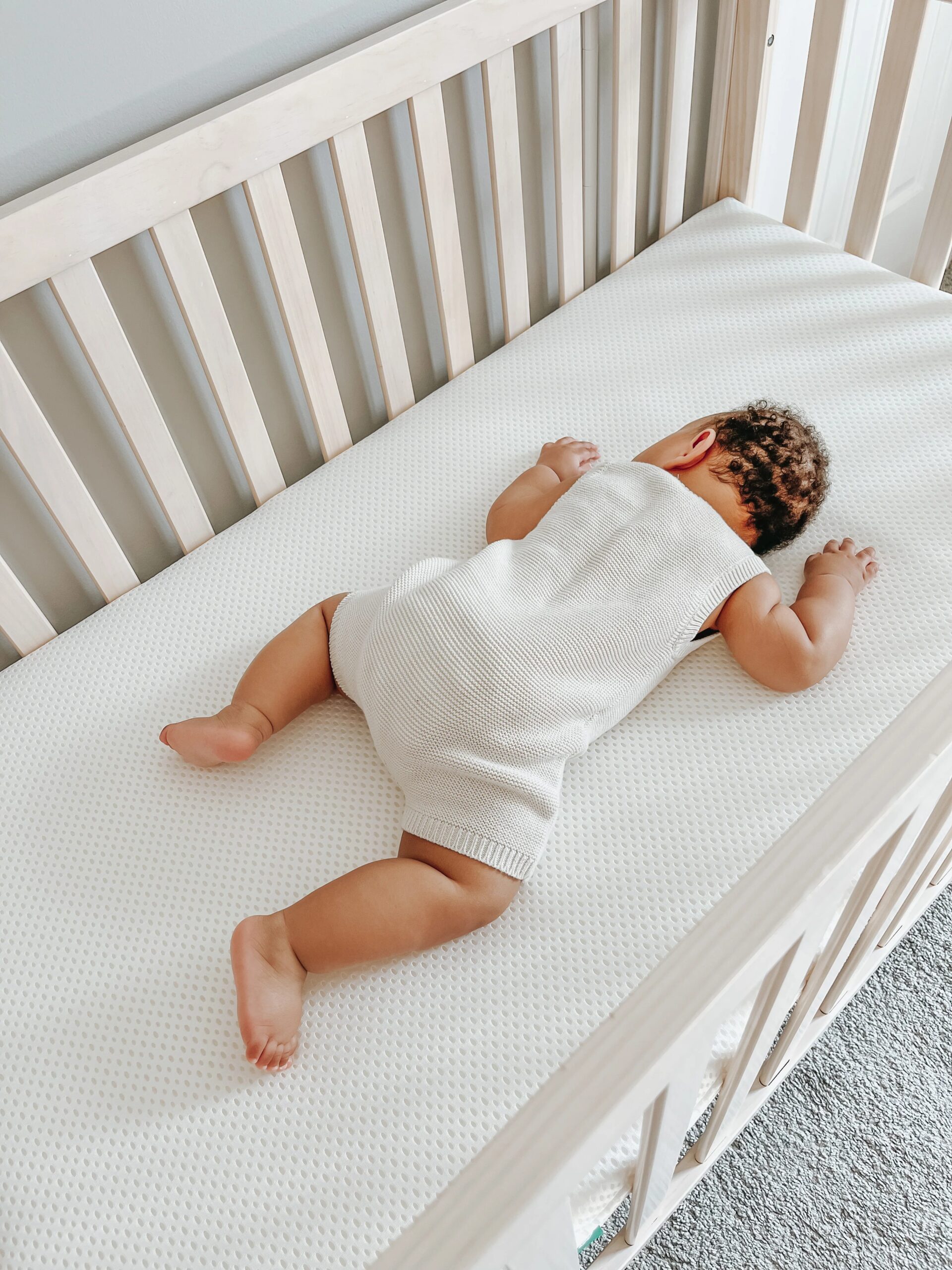
The source also discusses the sleep surface, noting that babies may spend more awake time in the crib during training. Newton Hush specifically describes its crib mattresses as using Wovenaire technology, with a patented core it says is 90% air and designed for airflow. That product claim comes from the source; the broader takeaway for parents is to make the crib setup consistent, firm, and ready before the first night.
Bedtime timing can also affect the process. Newton Hush suggests aiming for a tired-but-not-overtired window, with 7 to 8 p.m. working for many babies in the age range discussed by the source. An overtired baby may take longer to settle and wake more often overnight.
When to pause or get extra help
Newton Hush says many families notice meaningful improvement in seven to ten days, though full consolidation may take a few more weeks. That is a useful expectation: the goal is better independent settling and longer stretches, not an instantly perfect sleeper.
If two consistent weeks pass with no real change, the source suggests considering a pediatric sleep consultant. A schedule issue, feeding pattern, or developmental factor may be making the method harder to apply.
The chair method asks parents to stay present without responding in every familiar way, which can feel emotionally difficult. Its value is that it gives families a gradual path: close at first, farther away over time, and eventually out of the room as the baby practices falling asleep with less help.
Inspired by this post on Newton Hush.