When dinner has to fit between feeds, daycare pickup and bedtime, another clever gadget is rarely the answer. A small set of dependable tools is more useful: pieces that shorten prep, work across different meals and do not create a second job at cleanup time.
The goal is not to build a perfect kitchen. It is to notice where summer meals keep getting awkward, then spend only where a tool removes that repeated problem.
Start with your meal loop, not the kitchen aisle
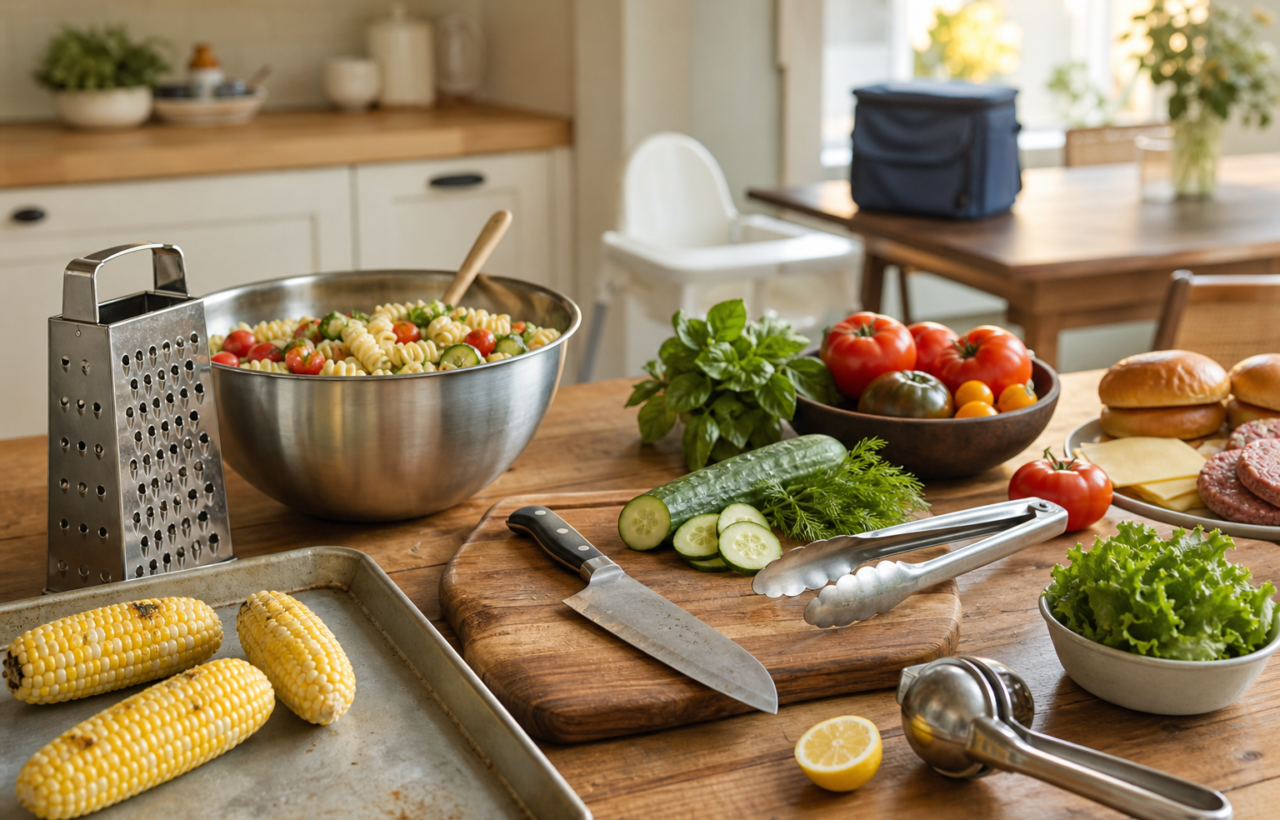
Summer cooking changes shape quickly. You might make burgers and corn, a cold pasta salad, roasted vegetables or enough food for later meals. Buying a separate gadget for every dish is how a bargain drawer becomes an expensive drawer.
Instead, look at the full loop: prepare, cook, serve, store and clean. Which stage makes you improvise? That is the stage worth fixing.
- If chopped ingredients keep spilling between the board and the pan, a bench scraper may help more than another knife.
- If you rinse produce in a bowl and then struggle to drain pasta, beans or vegetables, a stable colander solves a recurring problem.
- If roasted food crowds a small dish, a properly sized rimmed sheet pan may improve both cooking space and cleanup.
- If turning corn, burgers or vegetables feels clumsy, long locking tongs give you reach and control without adding a highly specialized tool.
- If leftovers disappear behind mismatched lids, compatible storage containers may save more time than new cookware.
Before buying, ask where the item will live and which existing item it will replace. If you cannot name a repeated task or a storage spot, leave it on the shelf. A low price does not make unused equipment a bargain.
Build a shortlist of tools that do more than one job
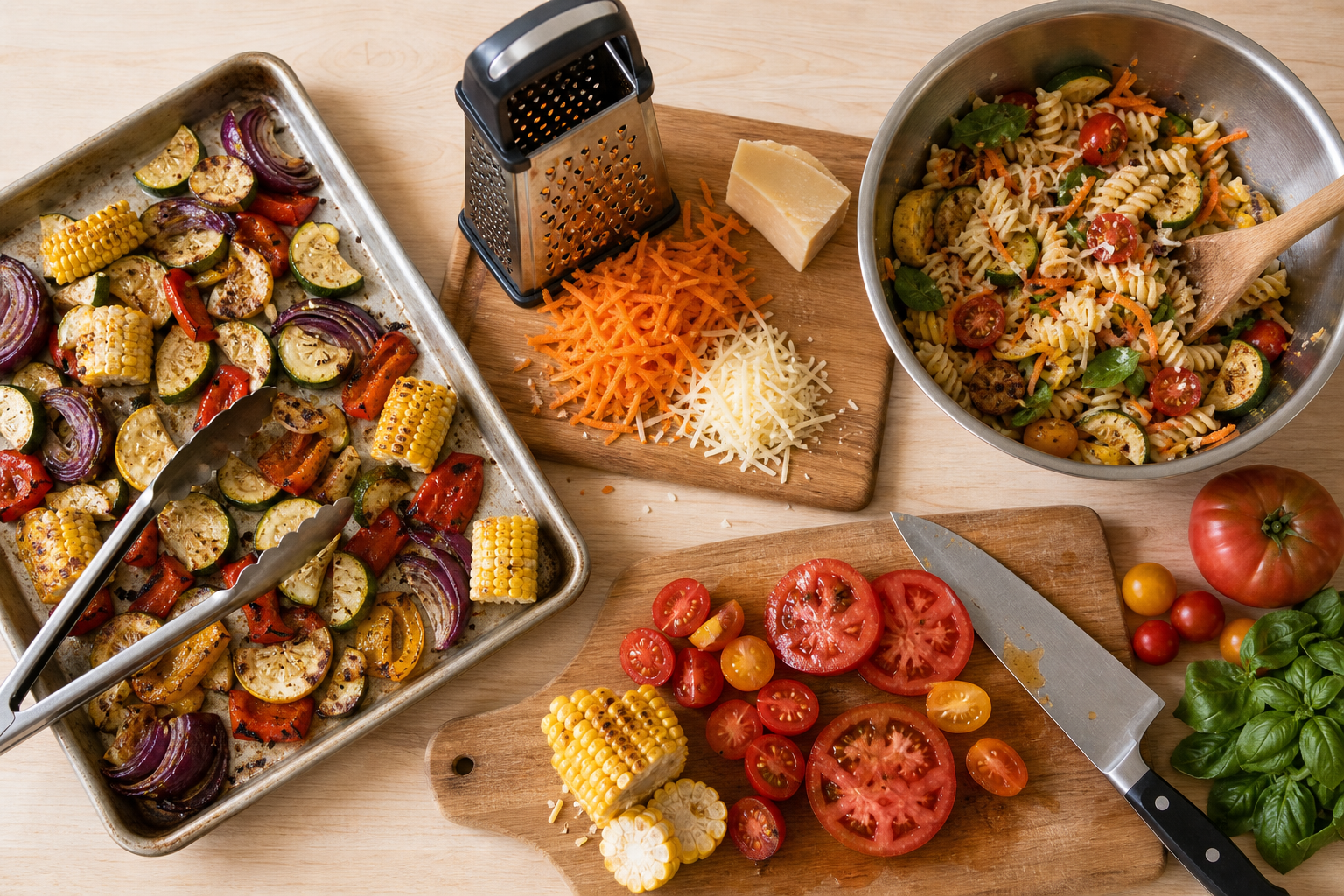
This is a menu, not a mandatory shopping list. Choose the pieces that match food your household actually makes.
- A large, stable mixing bowl: Use it for pasta salad, fruit, chopped vegetables, dressings and serving. A broad base is easier to work with than a lightweight bowl that spins while you stir.
- A rimmed sheet pan: Roast vegetables, cook tray meals or use it as a contained staging area for ingredients. If the surface held raw meat, wash it before it is used for cooked food or serving.
- A wide colander: Drain pasta, rinse produce and rinse canned ingredients. Look for a base that stays steady in the sink and handles you can grip without placing your fingers near hot food or water.
- Long locking tongs: Turn food, move roasted vegetables and serve salad. Metal tips suit some surfaces, while coated tips are gentler on cookware that can scratch. Match the tongs to the pans you already own.
- A bench scraper: Move chopped food from board to bowl, divide dough and gather crumbs from a work surface. It is especially useful when meal prep involves many small pieces.
- A flexible spatula: Mix dressings, scrape bowls and get the last portion into a storage container. Read the package before using it near heat; material and heat limits vary.
- Stackable storage containers: Choose shapes that fit your fridge and lunch bag, with lids that are easy to match. A coordinated lid system is usually more useful than a large assortment of unrelated sizes.
- An instant-read food thermometer: This can serve across burgers, poultry and other cooked foods. Choose a display you can read quickly, clean the probe after use and follow the operating instructions supplied with it.
Your current knife and cutting board also deserve attention before you replace them. If the board slides, place it on a stable, nonslip surface. If the knife is damaged or difficult to control, have it assessed for sharpening or replacement rather than adding more specialty cutters around the underlying problem.
Inspect a budget tool before it comes home
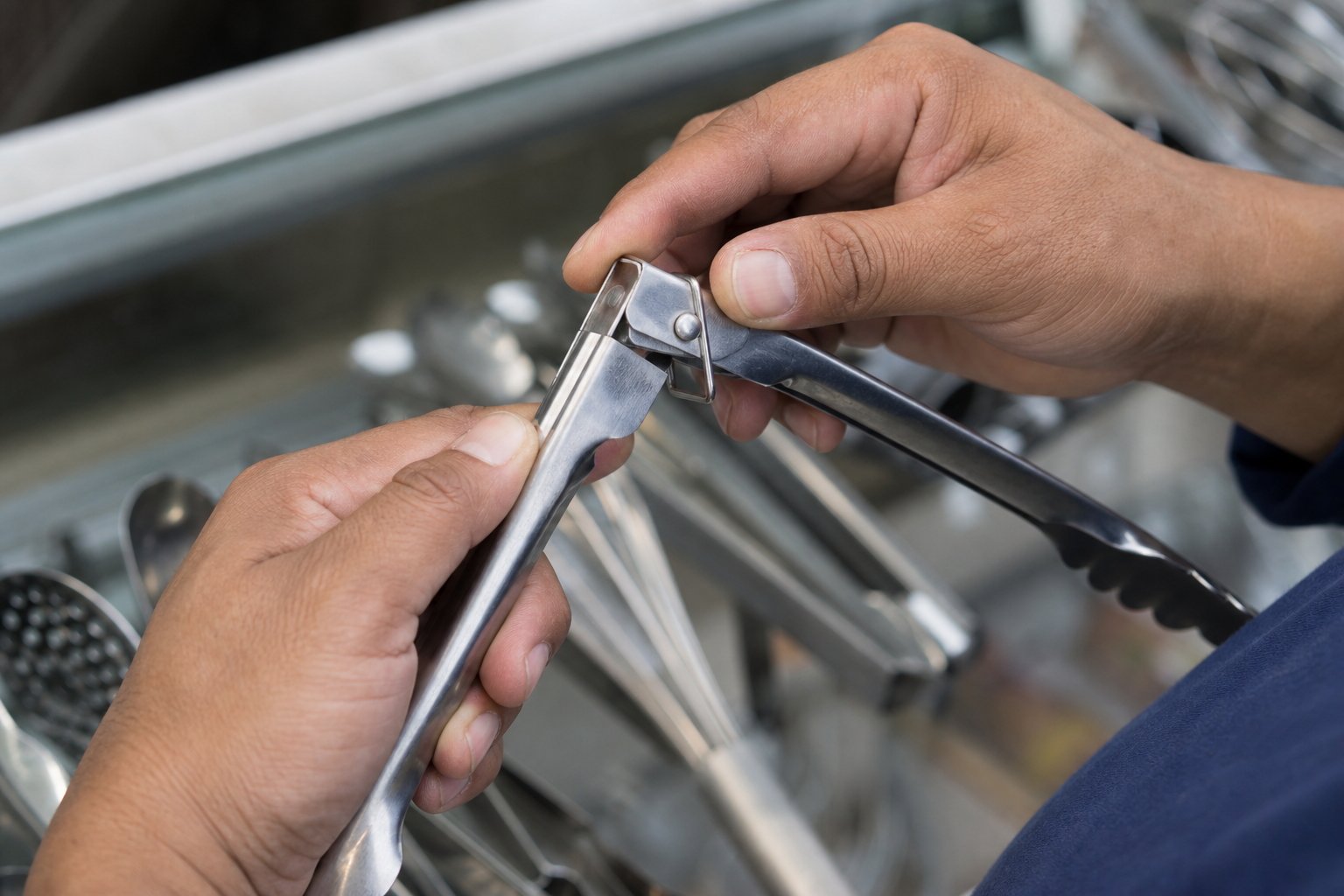
Cheap tools tend to disappoint at their joints, edges and moving parts. A quick inspection can reveal whether you are buying a useful basic or future clutter.
- Hold it as you would use it. A handle that pinches, slips or feels unbalanced in the shop will not become more comfortable during a rushed dinner.
- Test the moving parts. Tongs should meet evenly and lock without a fight. Container lids should sit flat without force. Removable pieces should attach securely.
- Check stability. Set bowls, colanders and pans on a flat surface. Skip anything that rocks, twists or has a handle that shifts under light pressure.
- Inspect every food-contact surface. Avoid sharp unfinished edges, cracks, peeling coatings, deep rust and seams that are already separating.
- Read the care label. Do not assume a utensil is suitable for high heat, a container can go in the microwave or freezer, or a pan is dishwasher-safe. Buy for how you genuinely cook and clean.
- Measure the storage space. A sheet pan that does not fit your oven, sink or cupboard is not useful. The same applies to a container set that takes over the refrigerator once the pieces are filled.
- Check compatibility. Make sure utensils will not damage your cookware and that storage lids are practical to replace or match. A cheap piece becomes costly when it shortens the life of something you already own.
For secondhand finds, be stricter about anything used near heat. Loose handles, warped cookware and flaking surfaces are reasons to walk away, however attractive the price may be.
Plan for the baby or toddler who can suddenly reach farther
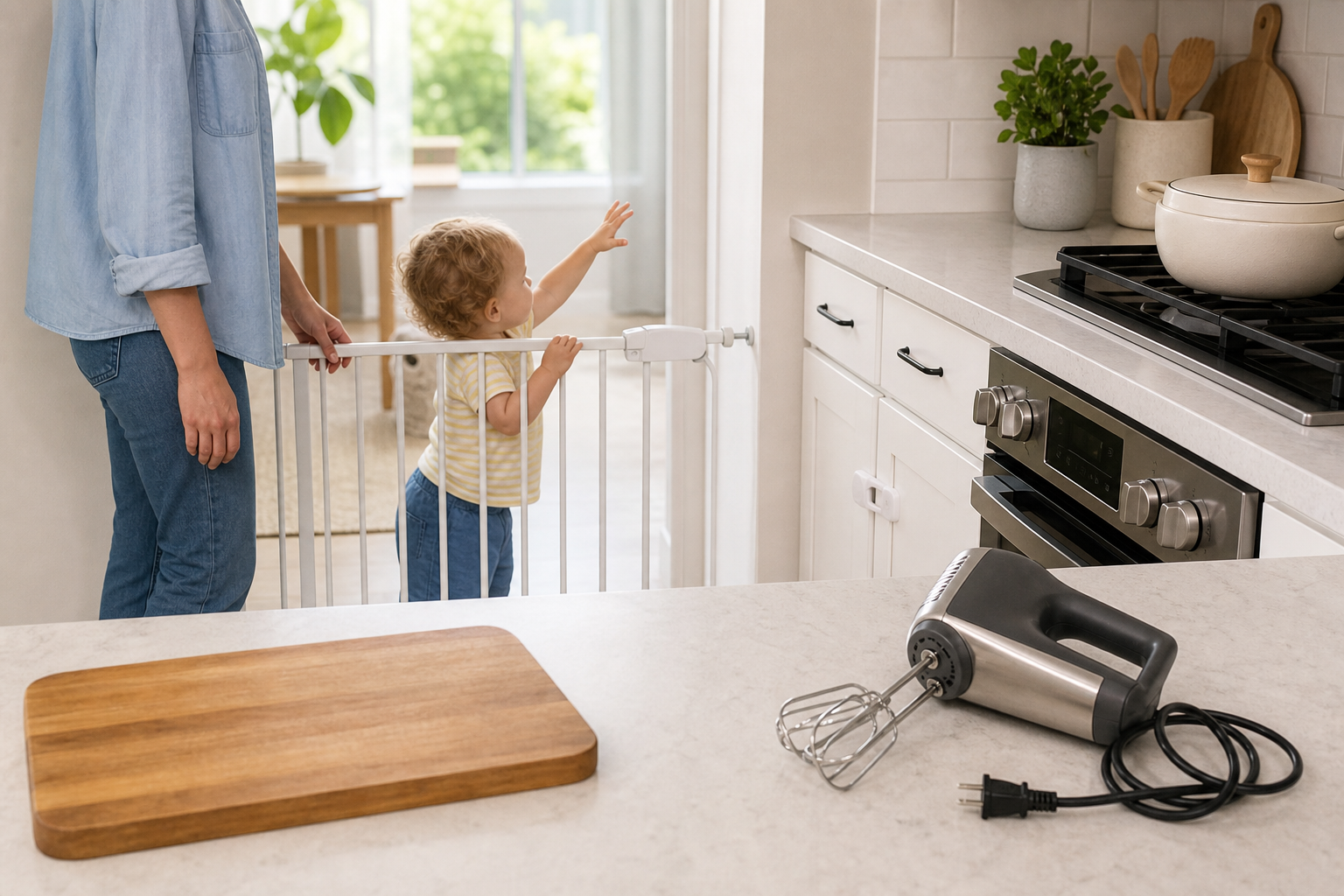
A kitchen setup that worked before your child became mobile can change overnight. The safest purchase is not merely sturdy in your hand; it also has a secure place to go when you put it down.
- Decide on storage before bringing home blades, peelers, scrapers or thermometers. Keep them in a secured drawer or cabinet rather than a countertop cup within reach.
- Close locking tongs before storing them. Keep hot or recently used utensils away from counter edges, even when you expect to pick them up again immediately.
- Turn cookware handles away from the accessible edge of the stove and keep appliance cords from hanging over counters.
- Check containers for cracked corners, broken lid tabs or loose pieces before they enter the fridge, diaper bag or play-adjacent space.
- Keep heavy pans and bowls in storage your child cannot pull open. A low cabinet is convenient for adults but becomes a tipping and pinching risk when its contents are accessible.
- Repeat a physical reach check whenever your child’s mobility changes. Look from their height and include stools, open drawers and anything else that could extend their reach.
No utensil is child-safe simply because it is colourful, silicone or sold for family cooking. Storage and supervision still matter.
Key takeaways
- Buy for a repeated bottleneck in prep, cooking, serving, storage or cleanup.
- Prefer tools that work across cold meals, cooked meals and leftovers.
- Test handles, joints, lids, stability and surface condition before paying.
- Confirm heat, cleaning and storage compatibility from the product label.
- Give every sharp, hot or heavy tool a child-inaccessible storage place.
- Skip a bargain when it duplicates something you own or solves no recurring problem.
At your next summer dinner, notice the moment when you reach for an awkward substitute, lose time searching for a lid or avoid a meal because cleanup feels too involved. Choose the tool that removes that moment first. Let repeated use, not the sale aisle, decide what earns the next spot in your kitchen.